
As an Amazon Associate I earn from qualifying purchases. This article contains affiliate links that may earn a commission at no extra cost to you.
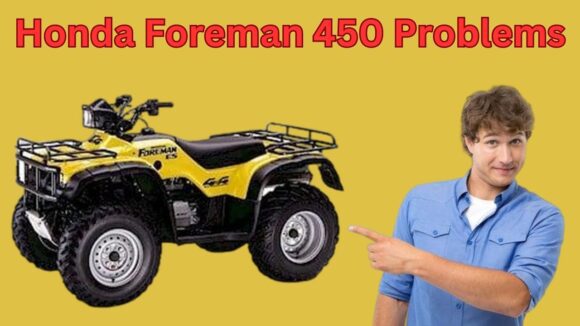
The Honda Foreman 450 is one of the most dependable utility four-wheelers ever sold, but it has a few weak spots that come up year after year in owner forums. Electric shift problems top the list, with overheating and carburetor trouble close behind on the older bikes, plus a steering recall that covered the 2012-2013 TRX500FE and TRX500FM.
The name carries on in today’s lineup as the FourTrax Foreman 4×4, a fuel-injected 518cc machine with a locking front differential. Here’s what actually goes wrong and how to fix it, plus what to check before you buy one used.
Before we dig in, a quick note on names. The Foreman 450 proper was sold from 1998 through 2004 in foot-shift (S) and electric-shift (ES) versions. Honda kept the Foreman name on later bikes with bigger engines, and today’s FourTrax Foreman 4×4 packs a fuel-injected 518cc single. Most of the problems in this article come from the 1998-2004 bikes, and we call out the current model where it differs.
Electric Shift (ESP) Failures on the 450 ES
If you own a 450 ES, this is the problem you’re most likely to meet. The Electric Shift Program shifts with a motor and a position sensor, driven by handlebar up and down buttons instead of a foot lever. When any piece of that chain gets flaky, the bike refuses to shift and the dash flashes a code, which usually means you’re stuck in gear on the trail.
The shift motor is rarely the guilty part. In a long thread on atvconnection about a 2004 450 ES that would not shift, the owner fed his motor a direct 12-volt signal and watched it move through the gears on the display. By the time he posted, he had already replaced the wire harness and the ECU, plus the shift sensor. The real problem turned out to be the handlebar buttons, which were rusted and corroded inside.
The thread walks through the full diagnosis step by step.
That diagnosis order saves money because it tests before it replaces. With the key on, check for at least 11 volts on the red and yellow wire at the ECU’s five-pin connector. Verify the green wire has continuity to ground. Check the orange and green and blue wires for continuity between that connector and the two-pin plug at the shift motor. Then test the up and down buttons with an ohmmeter on the ECU’s 22-pin connector.
A five-flash code points at the ECU circuit, while a two-flash code points at the buttons.
Most ESP failures end the same way: the switches have taken in water, mud, or corrosion and need cleaning or replacement. Pull the handlebar switch housing apart, clean the contacts, and test again before you buy an ECU you may not need. The error codes reset when you cycle the key, but they come right back until the fault is actually fixed, which is how the owner in that thread knew his repairs were not done yet.
The same shift-by-wire family of problems shows up in the Honda Pioneer 500, which shifts its five-speed automatic with paddle buttons.
Overheating After Long Rides
The 1998-2004 bikes occasionally overheat, and it usually shows up on long, hard rides. One owner described a ’98 Foreman that ran fine for years, then started overheating and running poorly after a 40-50 mile trip. From then on the warning light came on within about a mile of riding.
The confusing part for new owners is that the 450 has no coolant radiator up front. What looks like one is an oil cooler with an electric fan, and it plugs up easily with mud and grass. The checks that come up over and over in owner threads: confirm the oil level first, then clean the cooler fins. Make sure the fan runs well before the warning light comes on.
If the fan is dead, check its fuse before anything else, then test the motor by wiring it straight to the battery. If the motor spins and the fuse was fine, suspect the thermal switch that tells the fan to turn on; the thread suggests tracking it down with a service manual, since it can sit disconnected for years without anyone noticing.
A warm right calf is normal on these bikes because the exhaust and engine sit close to the frame. A warning light with rough running is not normal, and you should chase the fan circuit first, because that is where the failures live. The cooler fins are thin and the fan is small, so one hard mud crossing can pack enough dirt to cut airflow. Owners report that a thorough wash of the cooler and a confirmed fan cycle keeps the light off on hot days.
The cooler sits low on the frame, so it catches trail debris that never touches the rest of the bike, and washing the fins from the back side clears most of it. If you are cross-shopping Honda utility machines, the Pioneer 700 has its own cooling and driveline complaints.
Carburetor Problems and Hard Starting on the Older 450
The 1998-2004 Foreman 450 runs a constant-velocity carburetor with three jets and a plunger, and it does not tolerate neglect. Owners who pick up a used 450 often pull the carb for an ultrasonic cleaning as their first job, which tells you how common gummed-up carbs are on these bikes.
Hard starting is the classic symptom. The engine cranks fine but fires slowly or not at all, especially after the bike has sat for weeks with old fuel in the bowl. A stuck plunger or a clogged pilot jet starves the engine at idle, and that is why so many threads end with someone pulling the carb apart.
The fix is straightforward: drain the old fuel, remove the float bowl, clean the jets and the plunger passages with carb cleaner or an ultrasonic bath, and reinstall with fresh fuel.
If the bike has sat for a season, expect the float bowl to smell like varnish. Drain it before you even try to start, because old fuel is what re-plugs a freshly cleaned carb. While the carb is off, look at the fuel line and the rubber vacuum lines for cracks, since dry rubber is a common second problem on bikes that have been parked. Run fresh fuel with a stabilizer if the bike sits.
This whole section applies to the 1998-2004 bikes; Honda moved the Foreman line to programmed fuel injection years ago, so a current 4×4 will not have these problems.
The Steering Shaft Recall on 2012-2013 Models
If you’re looking at a used Foreman from the 2012-2013 model years, stop and check the VIN. In December 2013 American Honda recalled about 21,000 FourTrax TRX500FE and TRX500FM Foreman four-wheelers because the steering shaft could break and cause a loss of steering control. Honda had 18 reports of broken shafts, two of them in crashes. The fix was a free repair at any dealer.
The recall notice published by ATV Connection lists the full VIN ranges.
The recalled bikes sold between May 2011 and September 2013 for roughly $6,900 to $7,900. The model number is stamped on the left front frame down pipe above the front wheel, and the VIN is easy to read from the same spot. If the machine you’re considering falls in those ranges, ask the owner for the repair receipt. A 2012-2013 Foreman with the recall work done is fine, but one with an open recall is not the bargain it looks like.
Honda’s support line and any dealer can look up a VIN in seconds, so there is no reason to guess whether a bike was repaired. The bigger Pioneer 1000 line has a different set of driveline issues if you’re shopping up-market.
4×4 Engagement and the Front Driveline
The current FourTrax Foreman 4×4 sends power through direct front and rear driveshafts with a TraxLok locking front differential, per Honda’s 2025 spec sheet for the model. It also lists a five-speed with reverse and an automatic clutch.
Fuel capacity is 3.9 gallons including a 1.3-gallon reserve, with 848 pounds of towing capacity and a 635-pound curb weight (648 with electric power steering). The same sheet shows 25-inch tires and dual 190mm front discs with 160mm rear drums.
TraxLok locks the front wheels together on demand for mud and climbs, which is a real upgrade over the front setup on the 450-era bikes. Front driveline work shows up more on those older 450s. Owners have posted about pulling the front driveshaft on a ’98 450S, and a 2000 ES owner asked about the 4×4 temp sensor, so mud and water are hard on the front shaft boots and the small seals around the front differential.
A torn boot lets water into a joint that costs real money to replace.
Before you buy any used Foreman with four-wheel drive, shift it into 4×4 in a low gear with the front wheels off the ground and confirm the front tires actually pull. It takes thirty seconds and tells you whether the system works end to end, from the differential through the shaft to the shift linkage. The main rival in this class, the Can-Am Outlander 450, brings its own set of recurring issues.
Battery Voltage and the ESP System
A weak battery shows up in strange places on the ES models. The shift thread’s diagnostic routine starts with voltage because the ECU needs at least 11 volts on its feed wire with the key on, and the shift motor needs full current to move the shift drum. A battery that cranks the engine fine can still sag below what the ESP wants, which produces shifting that feels random and flash codes that send owners down the parts-replacement path.
Keep the terminals clean and run a battery tender when the bike sits. Load-test any used bike’s battery before you chase electrical ghosts. If the battery checks out and the ESP still misbehaves, the next suspects are the connectors: unplug and re-seat every plug in the shift circuit and look for green corrosion on the pins, since water finds its way into those connectors on bikes that live outside.
The current Foreman 4×4 starts with an electric starter and offers an optional recoil backup, which is a nice safety net on a work machine.
synthetic atv oil
Owners of this machine rave about it. See today’s price on Amazon.
What to Check Before Buying a Used Foreman 450
- Test every gear, up and down, with the engine running. On an ES model, watch the dash for flash codes: two flashes points at the shift buttons, five flashes at the ECU circuit.
- Ask about the steering recall if you’re looking at a 2012-2013 TRX500FE or TRX500FM, and confirm the repair receipt exists.
- Check the oil cooler fins up front for packed mud, and ride long enough to watch the cooling fan cycle on.
- Test the 4×4 in low gear with the front wheels off the ground.
- Plan on a carburetor service for any 1998-2004 bike that has been sitting, and factor that into your offer.
- Inspect the front driveshaft boots and the steel racks for rust and abuse.
The foot-shift S models avoid the ESP circuit entirely, and that is where most of the shifting complaints live. If you’re handy, bring a multimeter on the test ride, because the voltage checks in this article take minutes and separate a simple fix from an expensive guessing game. Prices have softened across the board.
On a Honda forum, members guessed a clean 2020 Foreman 520 with under 1,000 miles at around $6,500 in late 2024, and the market has only cooled since. If you’re comparing utility machines, the Yamaha Grizzly 700 covers similar ground with its own quirks.
Maintenance That Keeps a Foreman Running
None of these problems are exotic, and most trace back to maintenance that got skipped. Change the oil and filter on the schedule in your manual, and keep the oil cooler fins clean. Check the air filter after dusty rides. Run fresh fuel with a stabilizer if the bike sits, because the carbureted 450s are the most sensitive to old gas. Keep the battery charged with clean terminals, and give the front driveline fittings the grease they call for.
Brake pads and shoes are simple to inspect on these bikes, and the dual front discs on the current model make brake service easy.
The OHV engines are simple to work on, and a valve check now and then per the manual keeps the top end quiet. The ESP bikes reward a light touch: shift at low speed with the engine settled, and if a code appears, run the voltage and continuity checks before you buy parts. On the current 4×4 the story is simpler thanks to fuel injection, but the oil and the fan still matter, along with the battery.
The Foreman 450 is a tough, honest workhorse, and the problems owners report are predictable and mostly cheap to fix. The electric shift components fail from water and corrosion, the fan circuit plugs up, and old fuel gives the carbureted bikes fits. A slice of 2012-2013 models also had a serious steering recall. None of that makes the Foreman a bad buy.
A clean one that shifts through every gear and cools itself properly will still outwork most newer machines, as long as its recall work is done.
If you’re ordering supplies, synthetic ATV oil and battery maintainer are the items owners reach for first when they start working on these machines.

