
As an Amazon Associate I earn from qualifying purchases. This article contains affiliate links that may earn a commission at no extra cost to you.
If you own a Honda Foreman 500, chances are you’ve had at least one of these moments: the electric shift blinks a code and refuses to pick a gear, or the bike drops into a safe idle mode halfway down a fire road. The Foreman 500 is one of the most durable utility four-wheelers ever made, but it has a handful of weak spots that come up year after year in owner forums. The most common Foreman 500 problems are electric shift faults on the ES and Rubicon drivetrains, overheating with a bad coolant temperature sensor, and an engine that won’t rev past about 2,000 RPM. This guide walks through each one, what causes it, and how to fix it, plus what to check before you buy one used.
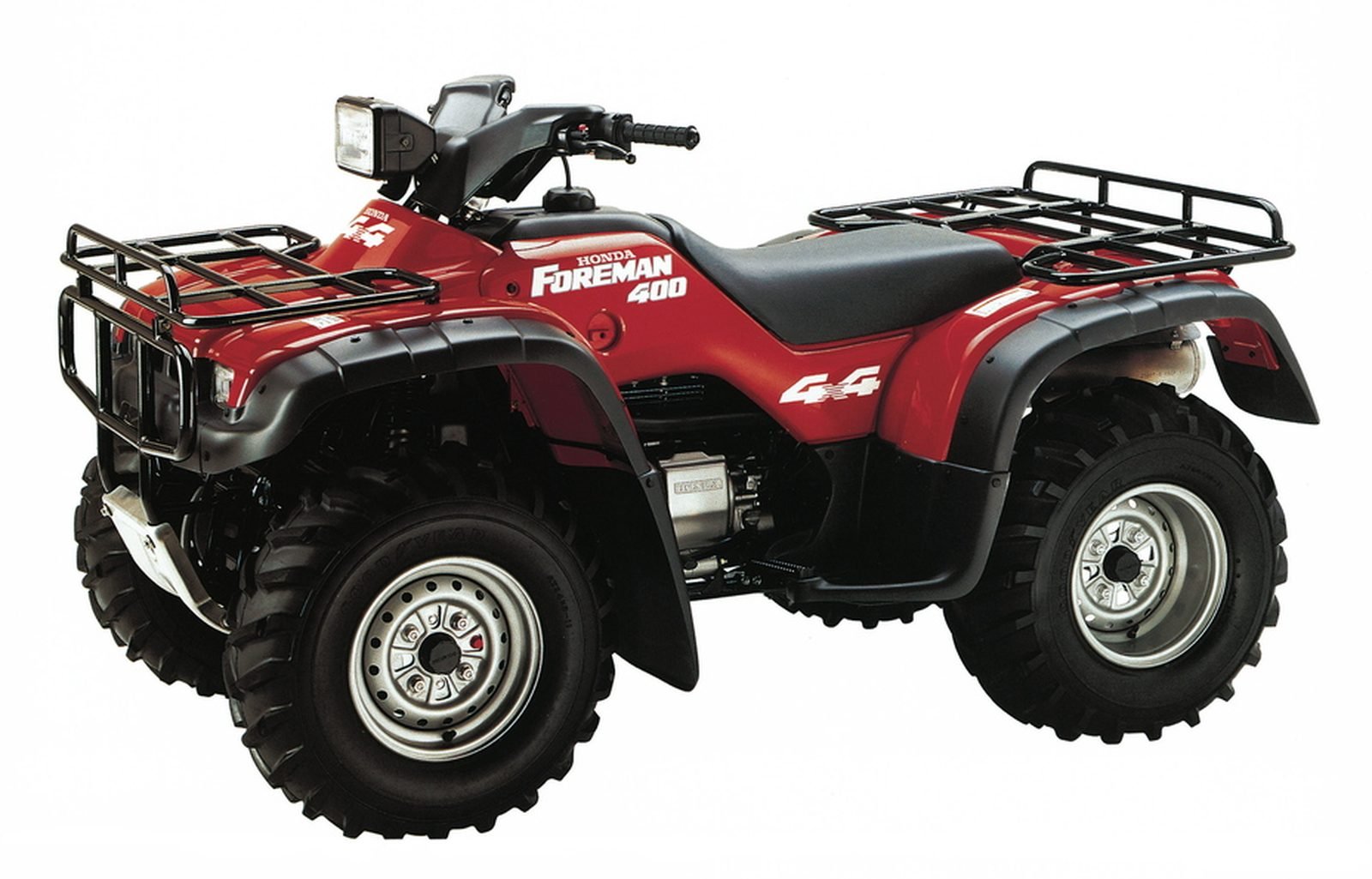
A quick note on names first, because Honda made it confusing. The Foreman 500 proper is the TRX500FM family sold from 2005 onward, and it came in foot-shift, electric-shift, and (later) fuel-injected EPS versions. Honda also reused the Foreman name on the closely related Rubicon and on today’s 518cc FourTrax Foreman 4×4. Most of the problems below come from the 2005 to 2012 models, and I call out the current machine where it differs. If you drive one of the older bikes, the sibling guide on the Honda Foreman 450 covers the 1998 to 2004 machines.
The number one complaint: electric shift (ES/ESP) faults
If you search any Honda ATV forum for “Foreman 500,” electric shift trouble dominates. Owners describe the same pattern: the display flashes a two or three digit code, and the machine stops shifting into the gear you asked for. On a 2005 Foreman 500 ES, one owner posted that it showed neutral, he shifted into first, and it started flashing at him. He replaced the angle shift sensor and the 13 blink flash went away, but the fault came back as a three blink code that points to no power reaching the shift motor.
The electric shift program on the TRX500FM uses a small motor, an angle sensor, and the PCM to select gears. These components sit low on the engine case, where mud and water find them. Corroded connectors and a failing angle sensor are the two repeat offenders. Owners who live in wet climates report cleaning the harness connectors with dielectric grease and reseating them before the codes come back. If you get a blinking code, the first checks are the angle sensor connector and the shift motor ground, not a full gearbox teardown.
The same shift system shows up in the Rubicon, so a lot of the troubleshooting carries over. The Honda Rubicon problems guide covers the electric shift and DCT side of that family in more depth if you own the bigger sibling.
Why does the Foreman 500 stop shifting and flash codes?
The flash codes are the board talking to you. A steady number usually means the angle shift sensor cannot confirm where the shift drum is, so the PCM refuses to trust the gear selection and stays put. A code that changes after you replace the sensor often points to the shift motor not getting power, or a dirty connector stealing the reference voltage. One 2012 owner on the Foreman forums describes the exact moment it happens after getting stuck in mud and spinning the tires; once the harness picks up water, the codes start.
The practical fix order is: clean every connector on the shift harness with contact cleaner, apply fresh dielectric grease, verify the shift motor has a clean ground, and then check the angle sensor only if the codes persist. Most owners solve it without replacing anything. When you do need parts, the shift angle sensor is the common swap and it is cheap compared to a gearbox job.
Overheating and limp mode: the ECT sensor fault
A 2012 Foreman 500 owner posted a textbook case. The bike felt like it was bogging, then it went into limp mode, and neither the cooling fan nor the temperature light would come on. He tested the fan by jumping the connector and it spun fine, which ruled out the fan motor. The problem turned out to be the engine coolant temperature (ECT) sensor sending a wrong voltage to the PCM, so the board never told the fan to switch on. When he unplugged the sensor, the fan kicked on instantly.
That is the classic Foreman 500 overheating trap: the cooling system is fine, but a failed ECT sensor puts the bike into a safe mode and keeps the fan off. The service manual says the sensor should read roughly 0.86 to 1.55 kilo-ohms at about 104 degrees Fahrenheit. If yours reads far off that at a cool engine, or you see a blinking engine light, test the sensor before you start flushing coolant and replacing radiators. The sensor itself is the usual culprit and a relatively simple swap.
The engine that won’t rev past 2,000 RPM
Another recurring Foreman 500 problem is a bike that starts and idles fine but will not rev past around 2,000 RPM, and sometimes backfires while it hunts for power. A 2006 Foreman 500 ES owner described going through a new top end, carburetor, CDI box, coil, and rectifier before asking the forum for help. The machine still sat at the same rev limit and surged up and down without dying.
The frustrating part is that many owners replace parts in order and never solve it, because the cause sits somewhere they did not look. I’ve seen the same thread play out more times than I can count on the Foreman and Suzuki KingQuad forums. Someone throws a stator and a CDI at a bike that still limps at 2,000, and the real problem is a clogged fuel tank pickup or a failing TPS the whole time.
Work through it in order and you’ll save money. Pull the fuel line and confirm you get a strong, steady stream of fuel with the petcock open; a weak dribble means the in-tank pickup screen is varnished or the line has a kink. Clean or replace the pickup, then verify the throttle position sensor reads smoothly through its full sweep with a multimeter. On a carbureted bike a fresh carb and clean tank fixes most no-rev cases. If yours is injected, the same fuel-delivery logic applies, just with a fuel pump and pressure spec instead of a float bowl. The how to clean an ATV carburetor guide is the right place to start if yours has been parked for a season.
Starting and charging gremlins on the Foreman 500
Cold starting trouble and a battery that dies fast come up constantly. On the ES bikes the electric shift and the starter share the same battery, so a weak battery can make both feel broken at once. A common owner mistake is chasing a shift or start fault that is really a battery voltage problem. Load-test the battery first, clean the terminals, and make sure the regulator rectifier plug is tight, because corrosion on that connector shows up here just like it does on the Honda Recon 250 and other Honda singles.
Owners also report the fuel-injected 2011 and 2012 bikes dropping into limp mode in hot weather even when the coolant is fine. In those cases the reliable fix is the ECT sensor test above rather than a radiator swap. Keeping the harness connectors sealed and greased prevents most of the intermittent electrical faults that drive owners to the forums in the first place.
Foreman 500 problems by model year
It helps to know which machine you have. The 2005 to 2007 Foreman 500 ES bikes are carbureted and carry the electric shift, so fuel varnish and shift codes are your likely problems. The 2008 to 2012 fuel-injected models lose the carb worries and instead bring the ECT sensor and limp-mode cases. The modern FourTrax Foreman 4×4, sold as a 518cc fuel-injected machine with five speeds and reverse, is the newest chapter, and its owner complaints skew toward the same electric shift and electrical connector issues plus comfort complaints on long rides.
What to check before you buy a used Foreman 500
If you are shopping a used Foreman 500, run these checks so you don’t inherit a project. First, prove the electric shift changes through every gear with the engine running, because a fault there is the most expensive single repair on these bikes. Second, let it reach operating temperature and confirm the cooling fan comes on, which catches the ECT sensor problem before you own it. Third, ride it hard enough to confirm it revs past 2,000 RPM without surging. Fourth, load-test the battery and look at the shift harness connectors for corrosion or evidence someone has been in there with contact cleaner.
Ask how long it sat between rides. Sealed-drum rear brakes and the driveshaft drive are the strong points of the platform, so most used bikes are sound underneath. The weak links are electrical, and those are all visible to a careful test ride. If the bike has a working electric shift, a fan that cycles on, and a clean rev, you have a dependable machine.
One more thing worth checking on a used buy: how the seller stores it in winter. Ethanol fuel left in a carbureted 500 for months is exactly how the float bowls and jet passages gum up, and it is why so many “ran great last fall” bikes come home with a stumble. Ask if they drained the carb or ran the tank dry before storage. If they did not, budget for a carb clean before you trust it on a long ride, and treat anything they mention about a hard start as a fuel problem until you prove otherwise. The rest of the machine is a worker, and most Foreman 500s go many thousands of miles on nothing but oil changes and grease.
For a cold, hard-to-start carbureted model, a fresh set of jets and a clean float bowl usually sorts it. You can find maintenance parts like a Honda ATV electric shift angle sensor or a Foreman ECT coolant temperature sensor online and do most of these fixes in a weekend.
Honda ATV Electric Shift Components and Parts
Most Foreman 500 owners reach for a shift-related part first. See today’s prices on Amazon.
Bottom line: the Honda Foreman 500 is a tough, dependable utility ATV whose real weakness is electrical. Clean and sealed connectors, a working ECT sensor, and a carburetor that has not varnished handle the overwhelming majority of owner complaints. Learn the flash codes, test the fan, and rev the bike out before you buy, and the Foreman 500 will outwork most of what else sits on a dealer lot.

