
As an Amazon Associate I earn from qualifying purchases. This article contains affiliate links that may earn a commission at no extra cost to you.
If you ride a Honda Rubicon, the 500, the 520, or one of the earlier DCT models, the story you keep bumping into is the transmission. Owners on several forums describe the same handful of failures: a stuck gear with a blank gear readout, a click that never becomes a shift, and error codes no dealer can clear for long.
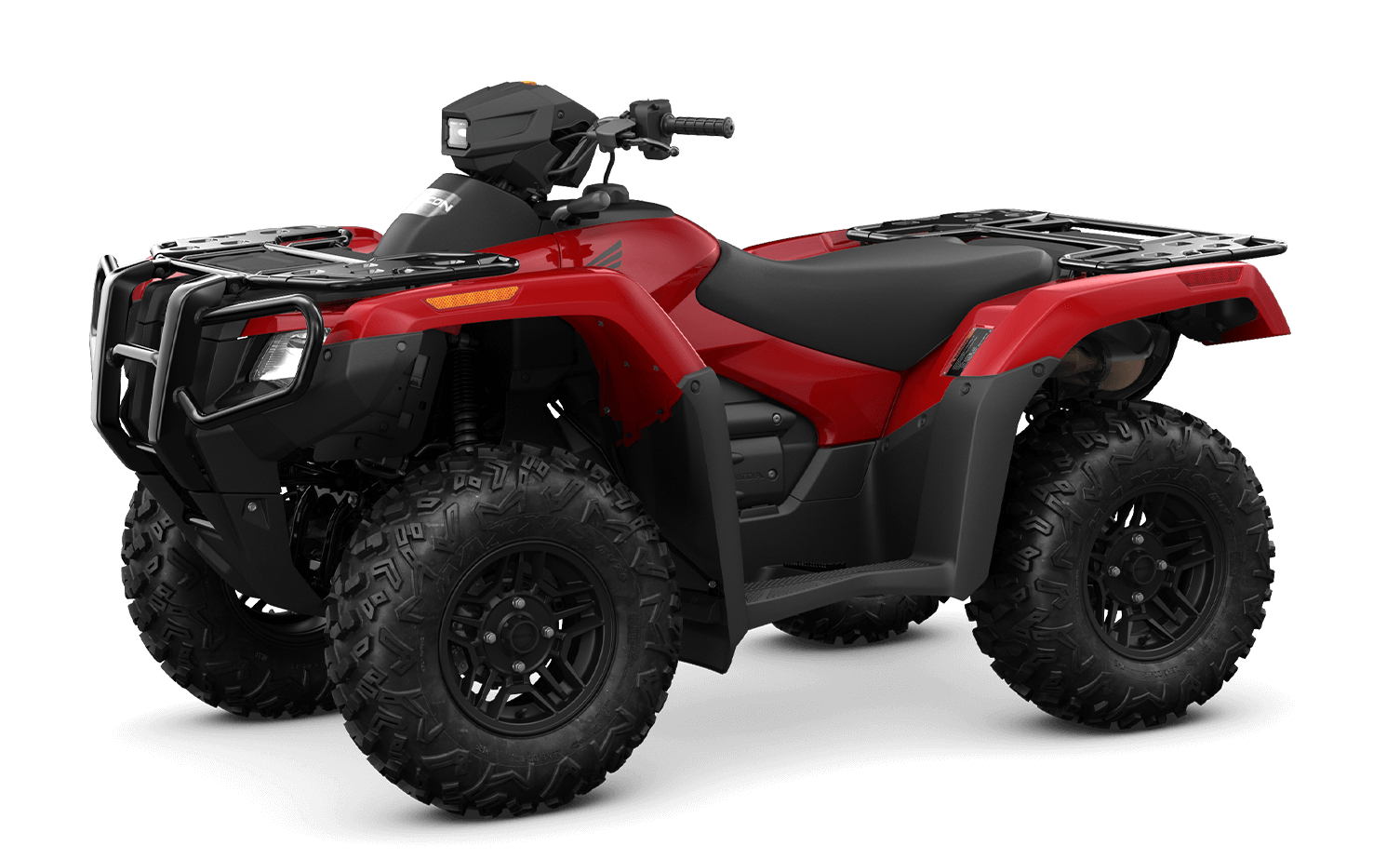
The 2020 and 2021 Rubicon 520s carry most of the trouble, but the older TRX500 electric-shift machines have their own quirks, and they share some of the same electrical gremlins you see on other Honda ATVs like [the TRX700](https://www.offroadrange.com/honda-trx-700-problems/). This guide walks through what real owners report, what is likely behind it, and what actually fixed it.
The 2020 and 2021 Rubicon 520 DCT: the stuck-in-gear failure
The report that shows up over and over is a Rubicon 520 that simply stops shifting. One owner of a 2020 Deluxe said his would not shift at all while riding, stuck in third or fourth gear, with a blank bar where the gear position normally shows. Cycle the key and you hear clicking as the transmission tries to get back to neutral, and sometimes rocking the machine clears it.
That same owner says the dash flashes a code but the machine stores nothing, so the dealership had no fault to work from and initially sent him home. He posted, “It all of a sudden won’t let me shift and the gear position on the screen will be blank.” Another rider said his did it at least fifteen times in the first hundred and fifty miles.
The dealer-documented codes reported by owners are 22-1 and 57-2, which Honda labels as a gear position malfunction where the shift jumps out of gear. One Honda dealer told an owner the factory had seen the failure only on the 2020 and 2021 units, with no official fix ready, and it set up a six hour data collection session on the machine.
Gear slip and jerk at cruising speed on the 520
The same transmission family has a second, quieter symptom. A 2021 owner described it as the machine briefly slipping out of gear at 30, 40, and 50 km/h, then jerking as it reengages. He wrote, “it sounds horrible, like the transmission is going to fall out from under it.” A dealer software flash changed the feel but did not stop the jerks, and a second owner posted the identical problem.
Because some dealerships cannot reproduce these failures and the parts list keeps changing, this one tends to be a long warranty battle rather than a quick repair. Document every occurrence with video and codes if you can.
Error code 5-2: the 520 that refuses to pick a gear
Another 520 owner dealt with an intermittent code 5-2, where the machine would refuse neutral or refuse to shift into a gear at all, and the problem got worse over a season. The fix attempts read like a mechanic’s shopping list: a new neutral switch, then a new shift motor from the dealer, then a new battery, because the electric shift needs steady voltage to move the forks.
He wrote, “Im $1000 into repairs and troubleshooting and no further ahead.
“
The one thing that helped even briefly, at least according to him and a couple of repliers, was unplugging and greasing a grey connector tucked behind the transmission near the driveshaft. Corroded connectors keep showing up in these threads, so before you throw parts at the machine, pull and inspect every transmission connector.
Older TRX500 Rubicons: the reverse-shift failure
It is not just the newer machines. A 2017 Rubicon DCT with about 5,000 km shifted up and down fine but would not go into reverse at all, even after the reverse lever and switch checked out clean. The fix, confirmed by two more owners, was a bullet connector in the wiring harness above the pull starter that had pulled apart and corroded. Cleaning it and packing it with dielectric grease brought reverse back.
That is the pattern with the older electric-shift units: the shift assemblies are reliable, but the wiring between the sensors and the brain is not sealed well enough for wet riding. It is the same sort of connector corrosion that shows up on other machines in this class, like the [Can-Am Outlander 570](https://www.offroadrange.com/can-am-outlander-570-problems/), so it is not a Honda-only problem.
Gear-shift sensor corrosion stops upshifts
A 2016 Rubicon 500 would shift into R, N, and first, then stop there. The dash showed a dash and threw a gear-shift sensor code, 23-1. The cause was a corroded gear-shift angle-sensor connector, and the high and low transmission sensors were corroded too, so the machine did not even know whether it sat in high or low range.
Cleaning brought it back for a while, but owners recommend replacing the affected sensor because corrosion tends to come back. If you ride in mud, water, or snow, this is one connector group worth adding to a yearly inspection.
Shift-fork failure in the older DCTs
There are reports that go beyond sensors. A 2015 Rubicon DCT, around 5,000 miles in, started randomly refusing to shift after the owner had already replaced the angle sensor, the shift motor, and the wiring harness. The suspicion in the thread was a broken shift fork, part number 18, which is shared with the DCT Ranchers and which Honda changed for the 2020 and later units.
And on a much older 2001 TRX500 that came out of a barn and would not go into gear even after a fresh shift motor and angle sensor, the consensus was simple and a little brutal: worn-out clutches. If the machine has lived a hard life, the internal mechanicals, not the electronics, may be the real problem.
Radiator clogging after mud and water
Not everything points at the gearbox. A 2021 Rubicon rode about 36 miles through foot deep mud and a two-foot river, and the engine overheated, while the machines he rode with stayed cool. The radiator sits low and open, so mud and debris pack into the fins fast once you leave the trail and hit standing water.
The fix is boring but important: clean the radiator after any muddy or watery ride. Hit the fins from the back side with a gentle hose stream and let it dry before the next outing. Check the fins for bent or smashed sections while you are there.
A rear clicking noise on turns
One 2022 Rubicon 520 DCT, with around 4,000 km, developed a clicking from the rear that only showed up on left-hand turns in forward motion. The CV boots looked fine and there was no play in the axles, but he had also heard a pop on a loaded climb earlier.
Forum members pointed at a worn CV joint or a loose rear differential pinion nut, which one mechanic said he had seen come loose before. If you hear this, check the CV joints first, then have the pinion nut torque checked before it chews the diff.
A check-engine light that only appears above ten mph
A 2020 Rubicon 520 threw a check-engine light every time it got past about ten miles an hour and the light went out below that. The flash pattern, two long blinks and three short ones, mapped to an O2 sensor code, and the forum worked through the service manual checks for the oxygen sensor.
On a fuel injected machine, an O2 sensor code that appears only under load or speed usually means the sensor, its connector, or the wiring, not a deeper engine problem. Start with the connector before you buy a sensor.
Foot-shift machines can hiccup too
The manual foot-shift Rubicon is generally the one owners recommend when the DCT worries them, but it is not immune. One 2021 foot-shift unit, four days old, repeatedly refused to shift out of reverse, then worked fine with no reason. Dealers could not reproduce it, and it did not come back, which makes it hard to trust and harder to fix. Log the event, shoot video if you can, and push for a recorded diagnostic even when no code is stored.
Cold-weather starter click on the old 500
Final gripe from the older crowd: a 2005 Rubicon 500 that starts fine all summer will click once and refuse to spin the flywheel when it sits in an unheated garage in the cold. A new solenoid and a new starter did not cure it. The likely culprit is a weak battery under cold load, and a discussion about the decompressor and compression, in the 90 to 130 psi range, was part of the thread.
On a machine that only fails when it is cold, test the battery under load first, and keep it on a maintainer through winter.
atv battery maintainer
Owners of this machine rave about it. See today’s price on Amazon.
What to Check Before Buying a Used Rubicon
If you are looking at a used Rubicon, pay close attention to the transmission, because that is where the expensive stories live. Ask the seller whether the unit has ever thrown a shift or transmission code and whether any shift angle sensor, shift motor, or neutral switch has been replaced, then verify those repairs on paper or in the service history.
Test every gear from cold, including reverse, and run it at road speed long enough to feel for a slip or a jerk in the mid range. Pull the seat and look at the transmission and battery connectors for corrosion, since that is the root cause of a surprising number of these failures. And check the radiator fins for packed mud and bent fins.
If the price is right and the machine has a transferable warranty, a 520 with a clean history is a solid buy, but a 520 that has already thrown shift codes should be walked away from unless the dealer documents the fix.
If you are also weighing Honda utility quads, the [Honda Pioneer 700](https://www.offroadrange.com/honda-pioneer-700-problems/) and the heavier [Pioneer 1000](https://www.offroadrange.com/honda-pioneer-1000-problems/) have their own known issues worth reading before you commit.
A good multimeter for connector checks and a [battery maintainer](https://www.amazon.com/s?k=atv+battery+maintainer&tag=ht002-20) belong in your garage before winter anyway.
Keeping the DCT alive
Owners who avoid the worst of the DCT problems tend to share the same habits. Keep the battery healthy, because the electric shift needs steady voltage, and keep every transmission and sensor connector clean and greased. Stay on top of radiator cleaning if you ride through mud and water, and warm the machine up before asking the transmission to work hard.
When you are ordering maintenance parts like [synthetic ATV oil](https://www.amazon.com/s?k=synthetic+atv+oil&tag=ht002-20) or a replacement shift angle sensor, match the part to your exact model year, because Honda changed internal parts for the 2020 and later units. Get the machine on a [battery tender](https://www.amazon.com/s?k=atv+battery+tender&tag=ht002-20) if it sits at all between rides.
If you end up back at the dealer with a shift complaint you cannot get fixed under warranty, the situation is not that different from what owners of the [Yamaha Raptor 700](https://www.offroadrange.com/yamaha-raptor-700-problems/) or the [Kawasaki Brute Force 750](https://www.offroadrange.com/kawasaki-brute-force-750-problems/) hit with their own drivetrains: get the fault recorded on paper even when no code stores, and keep every work order.
That paper trail is what finally forces a real repair.
Bottom line
The Honda Rubicon is a genuine workhorse, and most owners ride thousands of trouble-free miles. But the 2020 and 2021 Rubicon 520 DCT and electric-shift models have a documented transmission problem that some dealers struggle to diagnose and fix, and the older electric-shift units are prone to corroded connectors. If you already own one, keep the battery charged, protect the connectors, and document any shift failure with the dealer.
If you are buying used, test every gear cold, pull the connector group apart, and do not buy a 520 with a shift-code history unless the fix is proven.

