
As an Amazon Associate I earn from qualifying purchases. This article contains affiliate links that may earn a commission at no extra cost to you.
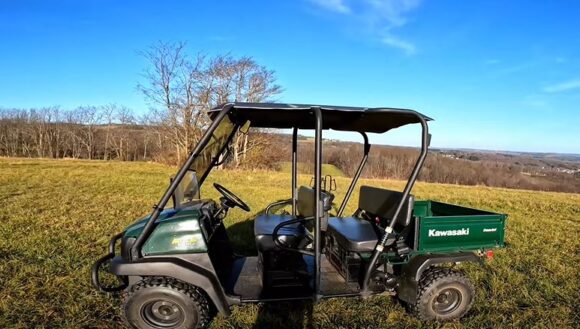
The Kawasaki Mule 3010 Trans4x4 is one of the most common work UTVs you’ll find on farms, ranches, and hunting properties, and there’s a reason so many are still running. It’s a 617cc liquid-cooled V-twin bolted to a belt-driven CVT with selectable four-wheel drive, and Kawasaki governed it to about 25 mph so nobody gets hurt hauling fence posts. What owners actually complain about is less the design and more the parts that age: rear cylinder no-fire, shift-linkage no-start issues, plus front axle clunks and clutch wear.
This guide pulls from Kawasaki’s own 2008 Mule 3010 Trans4X4 spec sheet plus owner threads on kawieriders.com, where people post the exact failures and the fixes that worked. Every number below checks out against the official page or the threads, and anything I could not verify is left out. If you’re comparing the brand’s other machines, the Kawasaki KFX 700 has its own set of problems worth knowing before you shop.
Rear Cylinder No-Fire: The Ignition Gremlin
The most frustrating 3010 problem shows up as a rough idle and a sudden loss of half the engine. The rear cylinder stops firing while the front keeps running, so the machine still moves, but it sounds like a twin missing a cylinder, because it is. One owner with a 2007 Trans4x4 went through the whole ignition system: new plugs, a new igniter (the CDI box), a new pulse coil, and coils swapped front to back. The rear cylinder still would not fire. His full write-up is in this thread on kawieriders.com.
The interesting part is that he verified everything he could. Pickup coil readings were within spec in the service manual and the wiring showed no shorts. The front cylinder kept firing on the same parts. A second owner with a 2510 that had the identical symptom measured his pickup coils at 122 ohms, which is inside the accepted range, yet the cylinder stayed dead. That pattern, where every test passes but one cylinder ignores the spark, points at the igniter box or a bad ground rather than the coils themselves.
Fix path: pull both plugs and check for spark while cranking. If the front fires and the rear does not, swap the coils as a test before buying anything. If the dead side follows the coil, replace the coil. If it stays dead on the rear, clean the ground points at the frame and the coil mounts, then suspect the igniter or the pulse coil under the flywheel. Owners who chased this on the forums report the problem returning when grounds corrode, so treat the ground check as part of the repair, not an afterthought.
No-Start: Shift Linkage and the Neutral Safety Switch
A 3010 that cranks only sometimes, or not at all, is often not a battery problem. The machine has a neutral safety switch that keeps the starter from spinning unless the transmission is in neutral, and the shift linkage stretches and wears after two decades of use. One owner of a 2006 3010 Trans4x4 found he had to lift the linkage arm by hand before the key would crank the engine at all. The diagnosis from the thread: the neutral switch thought the machine was in gear.
The fix was simpler than the symptom. The adjuster sits at the end of the rubber boot on the shift cable, and the owner was told to nudge the linkage a small amount in one direction and retest, then try the other direction if the starter stayed silent. That is a ten minute job with the machine in neutral and the parking brake set. If the arm does not move with the shifter, the cable or its bracket is worn. No amount of switch adjustment will fix that.
This is also the first thing to check on a used 3010 that “just needs a battery.” A freshly charged battery that refuses to crank is frequently a linkage problem in disguise, and it costs nothing to check before you start replacing starters. The same linkage wears into sloppy shifting between high and low range, so if the lever feels vague, plan on replacing the cable ends.
Loss of Power at a Certain Speed
One of the weirder 3010 complaints is a power loss that hits at a specific speed, usually barely 10 mph, no matter what gear you’re in. The pedal goes dead and the machine slows until it drops below the threshold, then everything works again. One owner described it exactly that way, and he ruled out the obvious stuff first: the carburetor came off and went through a full cleaning seven times, and the fuel lines and filter were replaced with Kawasaki parts, along with the pump. The governor checked out, and both clutches compressed and released as engine speed changed. The problem did not care.
His conclusion, after eliminating fuel and the governor, was that the digital ignition was cutting spark at that speed. That matches a few other threads where owners hit a wall under load with everything mechanical checking out. If you run into this, work through the checks in the same order: fuel delivery, governor linkage, clutch operation, then the pick-up coil and igniter. Confirm the governor cable is not binding at the throttle lever, since a stuck cable mimics a fuel cut almost perfectly.
Also verify the primary clutch actually compresses as RPM climbs. A clutch that sticks open acts exactly like a limiter, letting the engine rev but never putting power to the belt. Watch the clutch faces through the inspection cover with the machine on jack stands, or just pull the cover and look for glazing and uneven wear.
Front Differential Clunking in 4WD
Clunking or clicking from the front end in four-wheel drive is one of the more common 3010 complaints, and the noise usually means an axle shaft, not the differential housing. One owner of a 2004 3010 reported a clucking sound in 4WD and found the passenger side axle wanted to turn but would not, while the driver side did nothing at all when he ran it on jack stands. The replies pointed to a broken cage inside the axle shaft, which is a common failure after years of full-lock turns in 4WD. His front differential thread lays out the diagnosis.
The axle shaft is a bolt-in part, and owners describe the swap as a driveway job: remove the wheel, pull the cotter pin and hub nut, disconnect the upper ball joint or strut, and slide the shaft out. While the shaft is out, drain the front gear case and check the fluid for metal. Glitter in the oil means the problem is inside the case and a new axle will not fix it. Clean fluid means the axle was the culprit, and you’re done after a refill.
The 3010’s driveline is all shaft drive, with a selectable four-wheel drive and a dual-mode rear differential, so there are no CVT belts up front to blame. That makes diagnosis straightforward: if the clunk only happens in 4WD, it’s the front axle or gear case; if it happens all the time, look at the driveshaft u-joints and the rear end instead.
CVT Clutch Wear and the Stubborn Center Bolt
The 3010’s belt-driven CVT has high and low range. The clutch sits right on the crank end, and that clutch takes real abuse. Owners who pull the engine for clutch work quickly learn that the center bolt does not want to come off, and the factory puller tool is the right answer instead of a pry bar. One 2008 Trans4x4 diesel owner found himself pulling the whole engine after a poorly sealed air cleaner box let water in and put a hole in the block below the starter.
His story is a reminder that the snorkel-style air cleaner keeps dust out only when the box seals properly. A cracked or loose box can pull water in when you cross a deep puddle, and water and a 617cc V-twin do not mix. When the clutch finally comes off, inspect the belt for glazing and the weights for wear. A glazed belt slips under load, which makes the machine feel gutless on hills. A belt is far cheaper to replace than the clutch parts it drags down with it.
If the machine has sat for years, expect the belt to be hard and shiny and the clutch to grab or chatter from a dead stop. Replacing the belt is a routine job, and owners recommend checking the clutch faces at the same time. The diesel machines add glow plugs and their own starting quirks on cold mornings, so factor that in if you’re looking at a 3010 diesel rather than the gas twin.
Carburetor and Fuel Delivery After Years of Ethanol
Every gas 3010 left the factory with a Mikuni BW26-18 carburetor, and that carb is the most rebuilt part on these machines. Ethanol fuel gums the idle circuits when the machine sits for weeks, and owners report hard starts and a low idle, plus a stumble right off idle until the pilot circuit is cleaned out. The no-start thread on the 2006 machine traced the whole problem to a carburetor that needed cleaning plus a linkage that needed adjustment, which is the usual combination.
The fix is a real carburetor service, not a spray can. Drop the float bowl, pull every jet, and run wire through the passages, then set the float height and check the accelerator pump squirt. Replace the fuel filter while you’re in there and refill with fresh fuel. Owners who run ethanol-free gas or add a stabilizer report far fewer repeat visits to the carb.
Kawasaki’s other carbureted machines from the same era go through the exact same drill, including the Prairie 360, which shares the brand’s simple, reliable carburetor design. If you’ve already fought that fight on an ATV, the 3010 will feel familiar: same jets, same passages, same patience required.
Cooling System: Water Pump and Overheating
The 3010’s V-twin is liquid-cooled, so overheating is usually a maintenance failure rather than a design flaw. Owners who run them hard in summer mention cleaning the radiator fins and keeping coolant topped up before blaming anything else. A weeping water pump is a known failure on higher-hour machines, and it’s a straightforward replacement once the shrouds are out of the way.
Keep the cooling system honest with a quick routine. Check the coolant level when the engine is cold and look for oil in the coolant or coolant in the oil. Clean the radiator face of mud and seed heads after dusty work. If the machine starts running hot on a long climb, stop and let it cool rather than pushing through, because a 617cc twin does not forgive an overheated head gasket.
A cooling system that gets ignored shows up as coolant loss, white steam, or a rough idle as the head gasket starts to go. Catching the water pump weep early turns a two hour job into a fifteen minute diagnosis, so check the weep hole for drips whenever you change the oil.
What to Check Before Buying a Used Mule 3010
A used 3010 can be a steal, but the asking price hides the difference between a machine with a few hundred hours and one with thousands. Start with the cheap tells: frame rust and oil streaks under the engine, plus how the CVT feels from a dead stop. Then run through the problem list above, because a no-fire cylinder or a clunking front axle are negotiation points, not deal breakers.
The official numbers matter when you’re planning the purchase. Cargo bed capacity is 800 pounds in two-passenger mode and 400 pounds with the rear seats up, towing capacity is 1,200 pounds, and dry weight is 1,472 pounds, so size your trailer accordingly. The fuel tank holds 6.4 gallons, and the machine is governed to 25 mph, which is fine for work and frustrating if you expected trail speed.
Test the four-wheel drive before you commit. Engage 4WD and confirm both front axles turn, then switch back and forth a few times, because the selectable engagement is a common failure point. Check high and low range, and listen for the front clunk from the axle section above. If you’re cross-shopping other work rigs, the Polaris Ranger has model years worth avoiding and the Yamaha Rhino 450 is the compact competitor with its own quirks. The Honda Pioneer 700 covers the same ground with a newer chassis.
Maintenance That Keeps a 3010 Working
Most 3010 problems are age problems, and a short maintenance routine catches most of them before they strand you. The electrical system runs on a 12-volt battery rated at 18 amp-hours, and a battery left discharged for months will sulfate and pass a voltage check while dying under starter load. Keep a trickle charger on it between uses and the no-start mystery list gets a lot shorter.
The brakes are sealed four-wheel hydraulic drums, which means they stay dry inside but still need an adjustment check when the pedal goes low. The headlights are 30-watt sealed beams, dim by modern standards, so plenty of owners swap in LED bulbs that fit the stock sockets for night work.
Put the CVT belt and clutches on a schedule, and change the oil with the spin-on filter at regular intervals. Clean the snorkel air filter element when it looks dusty. Machines that get this treatment run for thousands of hours, and the ones that do not are the ones you see listed cheap with a “minor issue” in the description. If you’re shopping a bigger modern platform instead, the Honda Pioneer 1000 is the heavy end of the segment.
Bottom line: the Mule 3010 Trans4x4 is a tough, slow, simple work machine that rewards owners who stay ahead of its known failure points. Rear cylinder no-fires and shift-linkage no-starts are the electrical gremlins, while front axle clunks and clutch wear are the mechanical ones. All of them are fixable in a weekend with hand tools and a service manual. Check the ignition and the shift linkage before you buy, and keep the carburetor and cooling system honest. A 3010 will keep working long after newer machines have been traded in.
If you’re ordering supplies, CVT belt and synthetic ATV oil are the items owners reach for first when they start working on these machines.