
As an Amazon Associate I earn from qualifying purchases. This article contains affiliate links that may earn a commission at no extra cost to you.
The Honda Rancher is one of the best selling utility ATVs ever built, and most of them run for years without drama. But owners on the forums do report a repeatable list of failures, and the top one is the electric shift on the ES models. A Rancher that suddenly sticks in gear or refuses to shift can strand you out on the trail, and it is almost always the shift angle sensor or its wiring rather than the gearbox itself.
After that come charging problems, rear-end popping, and the older carb models. This guide walks through what real owners report, what is likely behind each fault, and what actually fixed it on their machines.
The ES shift system: stuck in gear and dead push-buttons
The Electric Shift Program, or ESP, replaces a foot shifter with push buttons on the left handlebar and a small motor that moves the shift arm. It is convenient until it stops working, and it is by far the most reported Rancher trouble across owner forums. The failures split into a few patterns.
The angle sensor sits exposed at the rear of the engine near the driveshaft. On a 2007 Rancher 420 ES, one owner said a stick struck the sensor, and the quad stuck in reverse with a brand new machine under 50 miles. The dealer called it a broken angle sensor at around a hundred dollars.
Another owner on the same thread said his new 420 ES kept losing the sensor from getting wet during deep creek crossings and pressure washing, until a dealer resealed it and it held for months. A few owners fabricate a small guard over the sensor to keep debris and water off it. If your ES Rancher is new, protecting that sensor early is cheap insurance.
Older 350 and 400 ES models show a second pattern where the push buttons go dead while the manual shift lever still works. One 2001 Rancher ES 350 owner replaced the speed sensor and got nowhere, then found a broken blue and white wire to the shift motor plus a dead shift ECU. Replacing the computer and repairing the wire made it shift again.
In the same thread, another rider fixed his 2002 ES by blowing crud out of the shift controller with compressed air, and a third had to replace a worn shift arm and shift plate. On the older units, the first place to look is wiring and the shift ECU, not the transmission.
A related quirk shows up when reverse will not engage even though up and down shifts work fine. The reverse sensor is a single wire on the back of the motor that is known to vibrate loose. On a 2002 Rancher ES the fix was simply reseating that connector, no parts needed. Before you tear anything apart, check every electrical plug on the shift system first.
Some 420 ES owners also report the machine refusing to downshift once it gets hot, after fifteen to thirty minutes of riding, while it still shifts up. The thread points suspicion at the angle sensor again, and it is a good reminder that heat and moisture are the enemies of this shift system. You will find the same sort of electric shift chatter if you read what owners say about the TRX700, another Honda with shift electronics.
Why the angle sensor keeps failing
The sensor reads a notched wheel on the shift drum so the ECU knows what gear you are in. Because Honda mounts it at the back of the engine with no shield, it takes hits from trail debris and swallows moisture from creek crossings and pressure washing. Water inside the housing throws off the reading, and the ES controller goes to a safe mode that can leave you stuck in a gear.
The fix on a dry sensor is often resealing with fresh o-rings and gasket sealant. If the sensor itself is scored or cracked, replacement is the answer, and many owners add a homemade aluminum shield or CV boot guard over it afterward. If your Rancher is still under warranty and the shift acts up, push for a documented reseal so you have a paper trail if it recurs.
Charging problems: battery dies and lights dim
Electrical faults are the second biggest Rancher complaint. On older machines the classic symptom is headlights dimming mid-ride and a battery that will not hold a charge, until you are pull-starting it. One 2000 Rancher 350 owner chased that exact sequence.
A certified Honda tech pointed him to the regulator and rectifier plug under the right rear fender, a five-wire connector with three yellow wires, one red, and one green, that corrodes where moisture collects and pins burn.
To test it, put a multimeter across the battery. At idle it should sit around battery voltage, then climb as you rev toward two thousand rpm. If it jumps above fifteen volts you are overcharging, and if it never rises above battery voltage you are not charging at all. Clean the plug pins, reseat them, and pack the connector with dielectric grease. Most of the time that clears the fault, though a burned regulator or rectifier may need replacing.
Electric start being dead while the pull start works fine is usually the same story elsewhere in the wiring. On a 2002 Rancher ES, the starter would not engage even though the solenoid tested fine, and the culprit turned out to be the handlebar start-switch plug not seated tightly. Once it was pushed home the button worked. Seasoned owners put dielectric grease in every electrical plug on these machines to keep corrosion and moisture out.
Rear-end popping and clunking
A loud pop or clunk from the rear of a 420 Rancher shows up in a few owner threads, and it can be worse in some gears or only under load. On one 2007 Rancher 420 FM the noise happened in every gear and even when the machine was being pushed in neutral, which ruled out the transmission. The fix there was the driveshaft sliding spline between the motor and rear axle drying out and sticking.
Disassembling the shaft, greasing the sliding joint and U-joint, and putting it back together stopped the popping. In other cases a worn U-joint or a failing bearing was the real cause.
If you hear popping from the rear, grease the driveshaft sliding joint first because it is the cheap and common fix. If that does not quiet it, inspect the U-joints for play and check the pivot bushings in the swingarm. Do not assume the rear differential is about to grenade; most of the time this noise is the driveshaft, not the gears.
Carburetor fuel leaks on the older 350 and 400 models
Newer 420 Ranchers are PGM-FI fuel injected and rarely have carburetor trouble. The older 350 and 400 machines ran a carburetor, and the classic complaint is fuel dripping out of the bowl drain. One Rancher 350 ES owner cleaned his carb only to find a puddle under it afterward.
The usual cause is the float needle not seating from a grain of dirt, or the float height being off after a rebuild, which lets fuel keep flowing past the needle once the bowl fills.
The fix is to pull the bowl, clear the needle seat, and make sure the float closes the needle fully at its proper height. Reinstall the jet holder the right way round. Once the float seats, the leak stops. If you own a carbureted Rancher and store it, run the carb dry before winter so varnish does not glue the float.
Overheating with the cooling fan silent
Less common, but worth knowing: a Rancher that runs hot and shuts itself down while the fan never comes on. Owners report the fan failing to engage and the quad killing itself rather than boil over. Test the fan motor first by powering it directly. If it spins, the problem is the fan temperature switch, a dirty connector, or a weak ground. If it does not spin, the motor is dead.
Either way it is a straightforward part to swap, and it beats cooking a head gasket mid-trail.
Full-time four-wheel drive on pre-2007 models
Every 350 Rancher built before 2007 is full-time 4WD, with no selector to drop back to two-wheel drive. In mud and on steep climbs that traction is the whole point. On hardpack and in tight turns it scrubs the front tires and makes steering heavier. Some owners add a Warn 424 differential actuator to get selectable 2WD, and it is a common aftermarket upgrade.
When you shop a used pre-2007 Rancher, know that you are getting a permanent 4×4, which is either a feature or a dealbreaker depending on your trails.
dielectric grease
The exact part owners reach for to fix this. Check the current price.
What to check before buying a used Honda Rancher
If you are looking at a used Rancher, budget for the basics up front. Plan on fresh engine oil and filter, front and rear differential fluid, a clean air filter, and a valve clearance check, all easy on a Rancher and all worthwhile before you rely on it. On an ES model, test every gear and reverse, and ask whether the angle sensor has ever been resealed or replaced.
Ask about the ES recall on early machines, because some shift components were covered under factory recall and should have been done.
A battery maintainer is a sensible buy if the quad sits between rides, since a low battery is what lets the charging and electrical gremlins show up in the first place.
Maintenance that keeps a Rancher trouble-free
Most Ranchers are not hard to keep healthy. Change the engine oil and filter on schedule, because the Rancher shares its engine oil with the clutch, and on ES models with the shift components. Keep the front and rear differentials and the drive gear case topped up. Service the air filter regularly, since a utility quad eats dust.
Check valve clearances at the intervals in your manual, and keep every electrical connector clean and greased, especially the ES switches, the regulator plug, and the start button. A cheap can of dielectric grease and a soft connector brush prevent the two biggest electrical complaints on this platform.
When you do the basic service, a quality oil filter keeps the oil passages and the shared clutch happy.
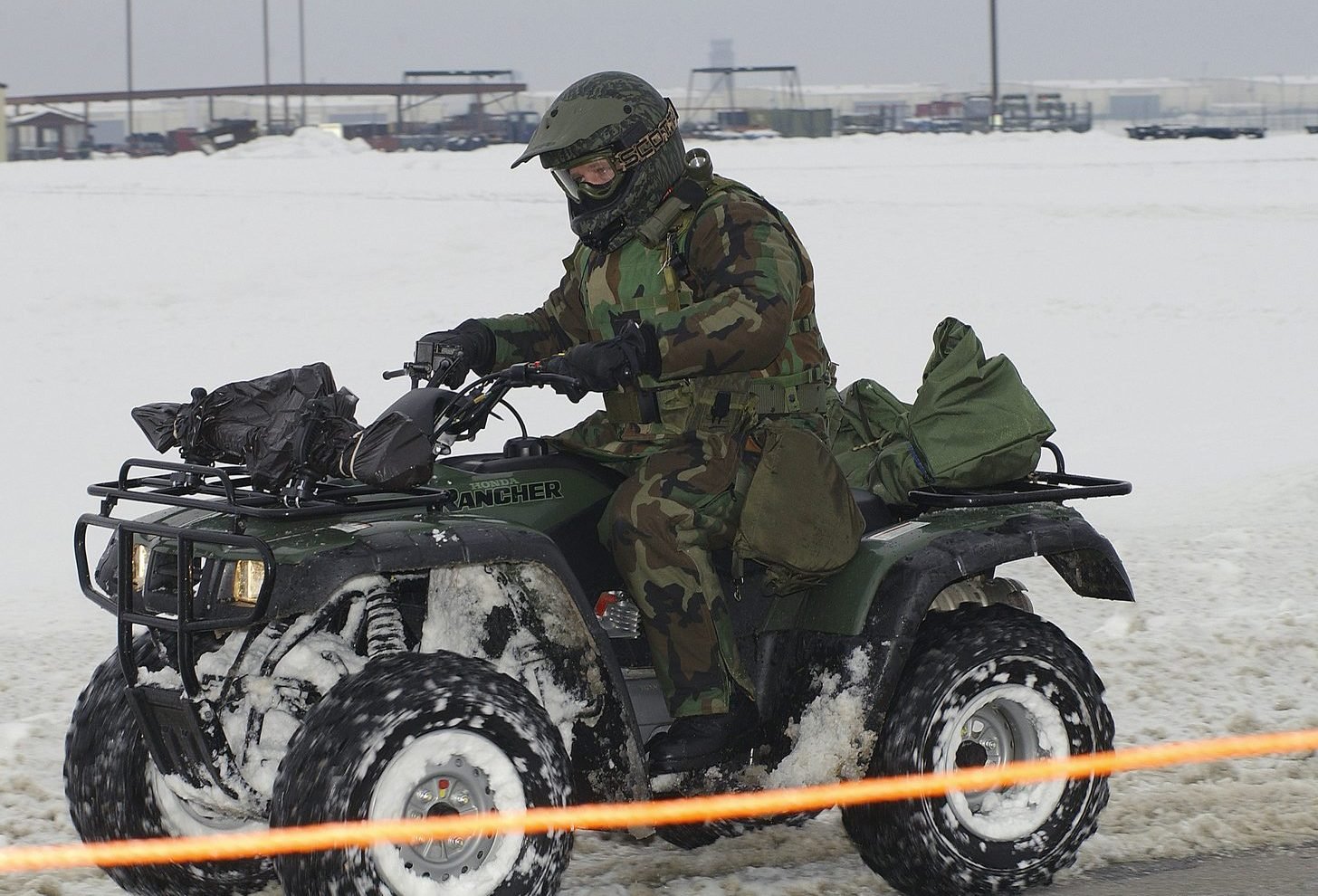
Image: Honda FourTrax Rancher, public domain (U.S. military photo).
Bottom line
The Honda Rancher is a rugged, long-lived machine that mostly just works, and the problems owners actually report are concentrated in the ES electric shift and in aging electrical connectors rather than in the engine or drivetrain. A little preventive attention to the angle sensor, the charging plug, and the connectors goes a long way. If you are buying used, take an ES model through every gear and reverse before you commit.
Own it, and it will carry you for a long time.
If you are cross-shopping other workhorse quads, the Honda Foreman 450, the Yamaha Grizzly 700, and the Can-Am Outlander 570 all have their own recurring issues worth reading about before you pick.

