
As an Amazon Associate I earn from qualifying purchases. This article contains affiliate links that may earn a commission at no extra cost to you.
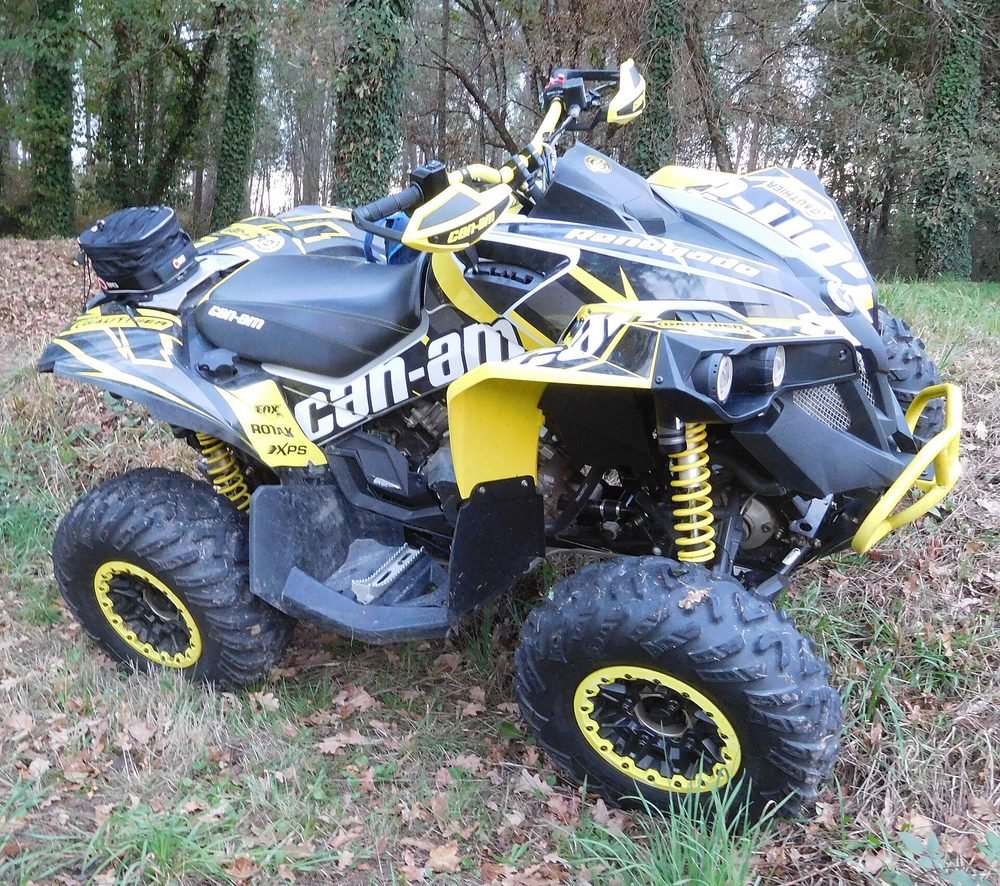
The Can-Am Renegade 1000 is the brand’s sportiest big-bore quad, built around the same 976cc Rotax V-twin that powers the Outlander 1000. Owners love the pull, but they also report the same short list of failures again and again: front differentials that stop locking in 4WD, a loud engine tick, PPS electrical faults that kill the dash, CVT belt wear, and steering that gets sloppy.
Here are the most common Renegade 1000 problems and the fixes owners confirm work.
Which Renegade 1000 model has the most problems?
The Renegade line tops out at the 1000R, which makes 91 horsepower from its Rotax 976cc V-twin. There is no bigger Renegade, so when people search for Renegade 1000 problems, they are usually talking about the 1000R and the older 1000 XXC and X XC trims from around 2010 to 2016. The same engine family also powers the Can-Am Outlander 1000, so many of the issues carry across both machines.
The current lineup pairs the 1000R with a smaller 650 version that makes 62 horsepower. The earlier 500, 570, 800, and 850 trims share a lot of the same platform too. What matters for this article is the 1000cc V-twin, the sport version that owners push hardest on trails and in mud.
Front differential that stops locking in 4WD
The most common complaint on the Renegade 1000 is the front end that stops sending power to both wheels. Owners describe it as 3WD instead of 4WD: one front tire spins, the other does nothing, and the machine pushes like a two-wheel-drive quad in the exact spot you need traction.
The Renegade uses a Visco-4Lok front differential, which is a sealed unit with a special viscous fluid inside. It works mechanically, not electrically, so there is no sensor to read. When it fails, the usual causes are a broken CV axle, stripped splines, or a pierced Visco-Lok pocket that lets the gel leak into the gear oil.
On early 2012 1000 bikes there were also upgraded axles available under service bulletins because the originals were too short and wore their splines.
To diagnose, lift the front end, put it in 4WD, and spin one tire. If the other tire does not engage under throttle, check the CV axles for cracks and the splines for wear before you blame the whole differential. Replacing the Visco-Lok with an aftermarket torque locker is a common fix because it is cheaper and more predictable. If you are not sure what failed, a real front differential inspection is where to start.
Engine tick and overheating on the 1000R
A ticking noise from the top of the engine is one of the most posted 1000R issues. One 2023 owner wrote in after his machine started ticking once the coolant passed 210 degrees, and it kept climbing to 240. The dealer said the tick was normal for these engines, which is a common response owners get, and the 850 trims are famous for ticking straight off the showroom floor.
A light tick is often just normal lifter or rocker noise, and it can be tuned out with the right oil. But a tick that shows up with an overheating problem usually has a real cause. On that 2023 bike the owner found bent fins on the radiator that were blocking airflow, plus a mouse nest from the machine sitting for three years with 25 hours on it. Straightening the fins and flushing the cooling system fixed the heat, and the tick quieted down.
The Renegade runs hot by design, so the first thing to check on any temperature complaint is the radiator. Bent fins, packed mud, and a low or air-pocketed coolant loop all make a hot quad worse. These Rotax V-twins get punishing in heavy use, so keep the cooling system clean and the thermal management in mind on long rides.
PPS fault and sudden electrical shutdowns
Renegade 1000 owners report a PPS fault that kills the dash and stops the engine with no warning. One XMR 1000 owner lost all power mid-ride, saw the PPS system fault warning, and could not restart until he found a blown fuse and a connector that needed replacing. A drained battery from an accessory left on can also trigger the code, since it will not start on a weak pack.
The pattern is usually electrical, not mechanical. A dead or low battery is the number one trigger, so any PPS fault starts with checking resting voltage and load testing the battery. After that, check the main fuses and the grounding under the seat. A blown fuse or a loose connector reproduces this exact symptom on machines that are otherwise fine.
On an older 2007-style Renegade, owners chased the same no-power problem through fuse F11 and a failed voltage regulator. Pull-starting worked while the electric start stayed dead, which points to the charging and starting circuits rather than the engine. A fresh battery and a load test clear up a surprising number of these cases. Keep a battery maintainer on the machine when it sits.
CVT belt wear, smell, and slipping
The Renegade 1000 uses a belt-driven CVT, and a 91 horsepower V-twin is hard on belts. Owners notice a hot belt smell after a hard ride, slipping under load, and delayed engagement after repeated pulls in deep mud. The belt is a wear item, and heavy throttle at low speed in deep resistance is what kills it fastest.
Forum regulars generally stick with the OEM belt, because aftermarket belts like the old Gates C-12 blow more often for hard riders. One mud-season owner swapped in a Maverick belt for the 850 and ran it over a year in deep muskeg without a failure. A good break-in and clean clutch housing matter as much as the brand you choose.
If you smell the belt after every ride, the machine is telling you it is unhappy. Check for mud packed around the clutch housing, confirm the belt is within its wear limit, and keep a spare CVT drive belt in the trailer for long trips.
No-start: battery, relay, and safety switches
No-start is more of a diagnostic puzzle than a single failure on the Renegade 1000. The cause lands in one of a short list: a weak battery, the starter relay, the fuel pump prime, plugs, air, or a safety switch. A no-crank that is silent or single-click points electrical, while a crank with no fire points fuel, spark, or air.
The 1000cc engine needs real cranking amps, so a battery resting at 12.4 volts can still fail to start it. Load test before you replace parts. On EFI models, listen for the one to two second fuel pump prime when the key turns on; no prime means a pump or relay fault. A clogged filter and a rich air filter also cause hard starts.
Start at the cheapest check: clean battery terminals, a fresh battery, and the main fuses. Many no-start threads on the XMR turn out to be a dead pack or a popped fuse, not a real engine fault. The Can-Am Outlander troubleshooting guide walks through the same electrical checks on the smaller V-twin, and most of it carries straight over to the 1000.
Steering that pulls or feels loose
A Renegade 1000 that pulls to one side or wanders at speed usually has worn front-end parts, not an alignment problem. Mismatched tires with different tread depths roll different distances and drag the machine off course. Worn A-arm bushings and ball joints let the suspension shift under load, and that shows up as a pull that comes and goes.
Owners on heavily ridden 1000s describe it as rattling, darting, and a loose feel that did not exist before the last tire change. Check tire sizes across the front axle, pry on the A-arms and ball joints for play, and look at the steering stem bushings. Lubricating the front-end grease points on schedule extends everything.
On a used machine, expect some front-end wear and budget for it. The Can-Am Defender HD8 and Defender HD5 posts cover the same A-arm and bushing maintenance on the utility side of the brand if you want the full rundown.
Voltage regulator and charging failures
Pre-2015 Renegade 1000s had a reputation for voltage regulators that overheat and die. Owners have found them melted, and a failed regulator either overcharges the battery past 15 volts or stops charging it entirely. The symptoms show up as a drained battery, flickering dash, and hard starts that get worse each ride.
Test the charging system with the engine running: at idle the battery should read around 12.7 to 13.5 volts and climb toward 14 volts as you rev. If it stays under 13 at higher RPM, the regulator is not keeping up. If it passes 15, shut it down because the ECU and battery are at risk.
Replacing a known-bad regulator with a quality unit and keeping the battery terminals clean fixes most of this. The Can-Am Outlander 570 uses the same charging architecture, so the test and fix are identical if you want a second walkthrough.
What to check before buying a used Renegade 1000
If you are shopping for a used 1000, the checks above are your buying checklist. Test the drive system in 4WD by lifting the front and confirming both wheels engage. On a test drive, listen for a tick that changes with heat and watch the temperature gauge on a hill. Ask whether the battery and regulator have been serviced, since those are the cheap recurring failures.
Inspect the CVT by opening the clutch cover if you can, and check the belt for the wear limit and mud or glazing. Feel the front-end for play at the A-arms and steering stem. Units that sat for years, like the one with 25 hours over three years, tend to have radiator and wiring gremlins that a new owner inherits.
Can-Am CVT Drive Belt
Most Renegade 1000 owners reach for a quality CVT belt first when the machine starts slipping. See today’s price on Amazon.
Bottom line
The Renegade 1000 is a fast, capable sport quad with real character, but it is not maintenance free. The front differential lockup, engine heat, electrical gremlins, and belt wear are the issues owners actually hit. The good news is that almost all of them are diagnosable at home with a battery load test, a cooling check, and a look at the clutch and front end.
Keep the battery and regulator healthy, keep the radiator clear, respect the CVT belt, and the big Rotax V-twin will reward you. If you run into a specific fault, the Outlander 1000 problems post and the Outlander 450 problems guide share a lot of the same fixes because they share the platform.

