
As an Amazon Associate I earn from qualifying purchases. This article contains affiliate links that may earn a commission at no extra cost to you.
If you own a Yamaha Raptor 660R, the most likely problems you will run into are the starter one-way bearing that fails after hard use, false RPM limiters that make the engine spit and sputter, and dual-carb jetting that is hard to keep crisp. This guide walks through the issues owners report most on forums, what causes them, and how to fix each one without burning your whole weekend.
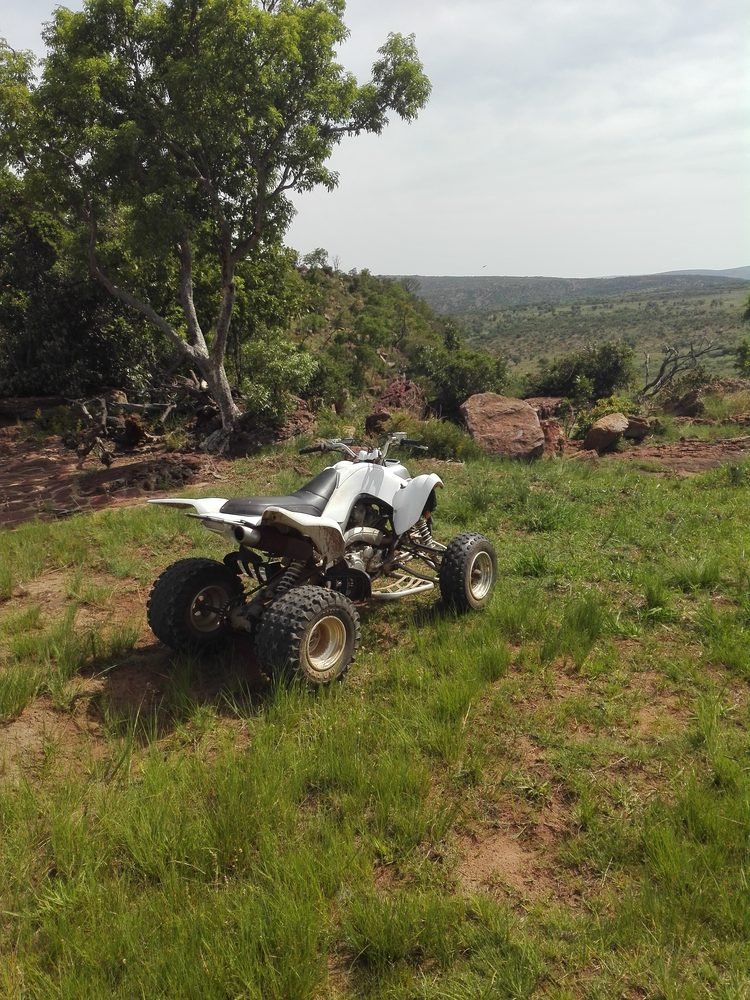
The Raptor 660 at a glance
Yamaha built the Raptor 660R as a 2001 model and sold it through 2005 in the United States. It was the first big-bore four-stroke sport quad of its kind, replacing the two-stroke Banshee, and owners quickly nicknamed it a torque monster. The engine is a 660cc single that makes its power low in the rev range, which made it a blast on trails and in open fields.
The motor is the same family that later powered the 2002 Grizzly 660 utility quad. The sport quad shares that platform, which is why many Grizzly 660 owner reports about heat, valves and charging read almost identically. If you want the utility cousin of this machine, the Yamaha Grizzly 660 has its own list of recurring problems.
Yamaha redesigned the bike for the 2006 model year as the Raptor 700, which jumped to 686cc and switched to electronic fuel injection. That means the 660 sits in a sweet spot of its own: carbureted, analog, and full of character, but also simple enough that a capable home mechanic can keep one alive for decades.
Starter one-way bearing failure (the top complaint)
Ask any long-time Raptor 660 owner what fails first and you will hear the same answer. The starter one-way bearing is a known weak point in this engine. Yamaha used a design that lets the starter turn the motor on startup, but over time the bearing’s sprags wear out and stop gripping.
The classic symptom is a grinding noise when you hit the button, or a starter that spins freely while the engine does nothing. On a worn unit you may need several tries to get it to fire, and eventually it stops catching altogether. Because the bearing is up where the starter drive lives, it can shed small metal pieces into the oil sump as it fails, and you do not want those shavings circulating through the gearbox.
Owners on the Raptor Forum strongly recommend replacing a failing one-way with an aftermarket unit from a shop like L&A or Extreme, rather than an OEM part. The aftermarket sprags are built tougher and tend to outlive the quad.
While you are in there, check the 52-tooth gear that the bearing rides on. check the 52-tooth gear that the bearing rides on. A failed bearing often chews a scar into its smooth face, and a rough face will quickly destroy the new sprags too. If the surface is not glass smooth, replace that gear at the same time.
The parts themselves are cheap relative to the labor, which is why this job usually ends up being a day in the garage rather than a trip to the dealership. A full replacement with fresh oil is well within reach for a home mechanic who has a factory repair manual.
False reverse and parking brake RPM limiters
A Raptor 660 that idles fine but spits, sputters and backfires the moment you crack the throttle has a classic electrical culprit. The CDI looks at two small switches to decide whether to apply a rev limiter, and when either circuit fails it mistakes the situation and clamps the revs.
There is a reverse switch mounted in the engine case under the output sprocket. It is a one-pin switch that tells the ECU when the bike is in reverse so it can limit RPMs. The wire running from it is green with a white stripe. If that switch fails, the connector corrodes, or the wire breaks somewhere between the case and the CDI, the ECU thinks the bike is stuck in reverse and turns on the limiter plus the reverse indicator light.
The parking brake switch lives on the clutch perch and can cause the same symptom. When it is engaged it shorts two wires together, and if the connector gets water or dirt inside it, the CDI reads the parking brake as on and limits power. Owners have had success simply unplugging the switch to confirm the diagnosis, then sealing the connector with silicone to keep moisture out.
Both fixes are cheap and fast. Cleaning the reverse switch contacts, or hard-grounding the green wire to the frame, gets most bikes running clean again. If your reverse indicator light blinks or stays on unpredictably, that is your confirmation that the switch circuit, not the carb, is the problem.
Overheating when the fan will not cycle
The Raptor 660 runs a small liquid cooling system, and on warm days an overheated engine is a real concern. Owners report the temperature light coming on during rides, often while the electric fan stays silent. There are usually two things going on at once: the fan circuit has failed, and the cooling system may not be shedding heat properly.
Start with the fan. On these bikes the fan should only run during long idle periods or under heavy loads. If the temperature light comes on without the fan turning at all, check the circuit breaker, the thermal switch on the radiator, and the fan motor itself. A blown fuse or a dead thermal switch is a common, cheap fix.
Then confirm the cooling system is actually working. Low coolant, a failing water pump, or a thermostat that sticks closed will all keep the engine hot even with a good fan. Flush the system, top up with fresh coolant, and verify the fan kicks in when you jump the thermal switch. If it spins, the problem was the switch or wiring; if it does not, you have a bad fan motor.
For anyone fixing a used bike that runs warm, replacing the thermostat and the coolant in one pass is cheap insurance. It is one of the easiest ways to keep a machine this age from cooking itself on a long summer ride.
No start or no crank when the weather turns
Because these quads are now twenty years old, no-start situations are common, and most trace back to simple age rather than a mystery fault. A Raptor 660 that will not crank with the spark plug in, but spins freely with it out, usually points to a weak battery, corroded cables, or tired starter brushes.
Owners on the Raptor Forum repeat the same advice: test the battery under load before tearing the engine apart. A battery that reads fine at rest can still fall flat the moment the starter demands real current. Try jumping it from a known-good automotive battery and see if cranking improves. You should also check the main ground and the cable connections at both ends, since corrosion there will strangle the starter.
If the electrical side is healthy and the bike still will not crank with the plug in, the next suspects are the auto-decompression mechanism, a loose timing chain, or a valve that has shifted. Pulling the valve cover and confirming the timing marks line up tells you quickly whether the top end is to blame before you spend anything on parts.
A machine that sits for months at a time should run on a battery maintainer. Keeping the battery topped up is the single cheapest way to avoid most no-crank mornings, and it protects the starter from the strain of cranking on a half-dead battery.
Why the dual carbs make jetting a fight
The Raptor 660 uses twin 33mm Mikuni carburetors, one feeding each cylinder bank of the single cylinder, and they are the source of endless tuning headaches. Stock jetting works when the bike is stock, but the moment you add an exhaust, an air filter, or other mods, the mixture goes off and the machine starts surging or fouling plugs.
New owners who buy a heavily modified bike often find the jets are nowhere near what the motor needs. A common starting point for a modded Raptor 660 is a 160 main in the left carb and a 165 in the right, with a set of pilots around 25 in both, and the fuel screws roughly two and a quarter turns out from lightly seated. Those are just a baseline, and altitude and temperature shift it.
The real difficulty is that the factory needles are not adjustable, so a lot of owners switch to adjustable Dynojet needles to get the mixture right across the throttle range. Others rebuild the stock needles per a popular write-up. Whichever route you take, buy name-brand Mikuni or Dynojet parts; cheap knockoff jets rarely meter correctly and you will end up chasing the same problem twice.
The good news is that once the carbs are set, the 660 is remarkably reliable. Owners describe a properly jetted Raptor as one that starts on the first kick and just gets on with it for years.
What to check before buying a used Raptor 660
A clean used Raptor 660 is one of the better value sport quads you can buy, but only if you know what to look for. The one-way bearing issue above is the first thing to test, because a grinding starter can mean expensive internal damage. Listen closely when the bike is cold and confirm the starter engages the motor cleanly every time.
Check the oil for metal flakes, because a failing one-way bearing sheds shavings into the sump. Milky or overfilled oil points to a water pump seal leak, which is a known repair. Look over the radiator and hoses for leaks, and confirm the electric fan actually spins when you warm the bike up.
Ask whether the carbs have been rebuilt or re-jetted, and whether the bike is stock or modded. A stock bike with a clean service history is usually a safer bet than a heavily modified one you cannot verify. Also confirm the valve clearances were checked, since these shim-style heads get noisy and lose power when the clearances close up.
If you are weighing the 660 against the newer models, the successor Raptor 700 fixed some of these quirks with fuel injection. Our Raptor 700 problems guide covers how that generation behaves. For many riders the bigger question is parts cost, which the 660 shares with the equally popular Yamaha Rhino 660 platform.
Routine maintenance that prevents the big failures
Most Raptor 660 breakdowns trace back to neglected basics. Change the oil and filter regularly, and watch the level, since the motor leans on good oil pressure. Keep the cooling system flushed and the fan circuit healthy. Check valve clearances once a season, and inspect the primary wires around the battery box for chafing, which causes the limiter and charging faults.
If you park the bike for weeks, keep it on a battery maintainer so the starter never has to crank a dead battery. When the one-way bearing or the starter itself finally gives out, buying a quality Raptor 660 starter ahead of time saves you a second trip. For the carbs, a jet kit built for this exact carburetor takes the guesswork out of a modded bike.
Yamaha Raptor 660 starter and clutch parts
Most owners of this machine rebuild the starter drive first. Compare prices on Amazon.
Bottom line
The Raptor 660 is a rugged, simple sport quad that rewards a careful owner. The starter one-way bearing, the false RPM limiters, and the temperamental carbs are the problems you will hear about most, and all three are fixable in a home garage for little money. Treat a used one like a twenty-year-old machine, sort out those known weak points, and it will keep putting a smile on your face on the trail.

