
As an Amazon Associate I earn from qualifying purchases. This article contains affiliate links that may earn a commission at no extra cost to you.
The Yamaha Grizzly 660 is one of the most trusted utility quads of its era, and it earned that reputation the hard way. Yamaha built the 660 from 2002 to about 2008 and filled it with a 660cc engine and independent rear suspension, so it pulled hard and rode comfortably. But these machines are old now, and the recurring faults are remarkably predictable.
Most owner frustration lands in six areas: the engine and its lubrication, the carburetor, the starter drive, the diff lock, the axles and rear suspension, and the aging electrical system. This article walks through each common Grizzly 660 problem, what really causes it, and the fixes owners actually use. If you are shopping for a used one, the checklist near the end will save you money.
Engine failures after a rebuild are more common than owners expect
The 660 engine is strong, but a botched rebuild can ruin it fast. One owner on a Yamaha grizzly forum laid out a textbook example on a 2005 Grizzly: it started backfiring, then died on the trailer, and when he tore into it he found a bent intake valve, a broken rocker arm, a timing chain so loose he could spin the cam gear by hand, and a connecting rod journal that had turned blue from heat.
The engine had been rebuilt by a dealer roughly 150 miles earlier, so the failure pointed straight at poor assembly rather than wear.
That story matters because it shows what to inspect after any rebuild. Check valve lash before you trust the job, confirm the timing chain has real tension, and listen for a knock that only comes on briefly at cold start. Forum members in the same thread suspected an oil supply problem when a crank journal turned blue, so do not ignore discolored metal on an engine you just paid to rebuild.
A five valve head is more sensitive to a skipped chain than a plain two valve motor, which is one more reason to confirm the timing job was done right.
Oil starvation can show up as a blue rod journal
When an owner found a discolored connecting rod journal after a failed rebuild, the first thing experienced members asked about was the oil pump. A low oil pump output beats up the crank and rod bearings long before it damages the cam or the cylinder, which is why the cylinder and cam can still look clean while the bottom end is already scarred.
The fix here is preventive. Change the oil and filter on schedule with a good 4 stroke ATV oil, verify the filter has the right part number, and do not rely on an old pump with poor pressure. If you buy a used 660 with no service record, changing the oil immediately is the cheapest insurance against finding blued metal later.
Owners who keep clean oil in these engines report far fewer bottom end surprises, and it is the single most important habit for long service life.
Carburetor bogs and dead spots after a rebuild
Fuel delivery is where a lot of 660 owners lose patience. These quads run a Mikuni CV carburetor, and it is finicky about assembly. One owner on the grizzly owners forum rebuilt his carb, soaked it for a day in cleaner, blew out every passage, and still the machine idled fine but bogged and died anywhere past quarter throttle. He tried the whole list: valve adjustment, float level, jet needle position, air fuel screw, even the carb diaphragm.
The culprit turned out to be two jets swapped into the wrong locations during the rebuild, because he had followed incorrect info he found online.
The lesson is to be careful during any carb service. Keep each jet in a labeled spot, compare the rebuild against a model specific guide, and never assume the online diagram is right for your year. If a fresh rebuild runs with a bog right off idle, double check the jets and the float level before you replace parts.
The Grizzly’s quirks here are similar to what other big quads serve up, so if you ride a Polaris too, the Sportsman 500 has its own fuel system gremlins worth reading up on.
The starter spins freely but will not turn the engine
A really common Grizzly 660 complaint is a starter that spins but does not crank the engine. Because the starter on this machine stays in constant mesh with a gear inside the engine, a free spinning starter is not a normal worn solenoid situation. One owner on a 2004 model replaced the starter completely, charged the battery, and checked the fuses, and the brand new starter still spun without engaging the motor.
A knowledgeable forum member explained the reason: there is no solenoid to push the starter gear into the flywheel teeth on this Yamaha. The two parts are always meshed, and engagement happens through a one way clutch behind the starter gear. When the starter spins freely, that clutch is failing, and reaching it means pulling the side cover and often the recoil assembly.
That is why so many owners end up hauling the machine to the dealer for this one. Before you go that far, confirm the battery is not just weak, because a low battery can make the starter groan without a full crank.
Diff lock that will not engage even though 4WD works
Push button diff lock is a Grizzly 660 selling point, and it fails often enough to show up regularly on the forums. One owner reported a machine that shifted in and out of 4WD fine but refused to engage diff lock. He had already swapped the handlebar switch, the servo motor, and even the whole wiring harness between the switch and the motor, and still the indicator light just flashed.
The servo turns the diff lock mechanism, and when it will not respond to the lock button alone it usually points to the actuator or the relay circuit rather than the mechanical teeth. Owners troubleshoot this by checking relay power with a meter, confirming the servo gets the right signal, and testing the servo motor separately. Because these pieces are expensive to replace one at a time, diagnose before you buy parts.
A flashing indicator rather than a clean light is a useful clue that the system sees a fault in the circuit, not that the teeth are stuck.
Electrical gremlins from an aging battery and charging system
Utility quads from the mid 2000s all share one slow enemy: corroded connectors and tired charging components. Grizzly 660 owners report the telltale signs, a battery that goes flat overnight, lights that dim at idle, or a hard crank that a fresh battery does not fix. The regulator and the charging connectors sit where they catch mud and moisture, and the small plugs corrode long before the stator gives up.
Start with the cheap fix. Clean every connector, add dielectric grease, and check the charging output at the battery with the engine running. If it sits well below about 14 volts, suspect the regulator before the stator. Owners also keep the machine on a maintainer when it is parked, which stretches the life of everything electrical.
Because these quads can sit all winter, a dead battery is the most common reason one does not start in the spring, and a maintainer prevents it.
Axles, CV boots, and the rear suspension
The independent rear suspension on the 660 is one of its best features, but it introduces parts an older rigid axle quad never had. Owners on the grizzly forums deal with torn outer CV boots on the rear half shafts and worn joints after years of trail use, and there are whole threads about replacing drive shaft boots that have cracked and slung grease.
When a boot tears, the joint starts clicking and eventually fails, so it is a case of catching it early.
The good news is that these are serviceable parts. New CV boots and axles are easy weekend work, and catching a torn boot before it ruins a joint saves real money. While you have the wheels off, check the rear shocks for leaks, because the dual shock setup gives the machine its comfort and a blown shock ruins the ride long before it strands you.
Keeping a Grizzly 660 alive with basic maintenance
The Grizzly 660 rewards simple, honest care. Change the oil and filter on time, keep the air filter clean, and store the machine with the carb and fuel protected. For the starter one way clutch and the charging system, regular starting and riding beats letting a machine sit for months, because seals and connectors both suffer from neglect.
Two parts worth owning before you need them are a good ATV battery maintainer and a correct 4 stroke ATV oil filter. Both fix the two most common failure paths, a dead battery from sitting and a neglected oil change, before they leave you stranded. A can of dielectric grease belongs in the toolbox too, because it heads off the corroded connector issues that age these machines.
4 stroke atv oil filter
The exact part owners reach for to fix this. Check the current price.
What to check before buying a used Yamaha Grizzly 660
If you are shopping for a used 660, this list is your checklist. First, cold start it and ride it hard enough to feel the takeoff and climb, so you can spot a carb bog or a lazy starter. Second, engage and release the diff lock while sitting still on level ground, because that is the quickest test of the servo and actuator.
Third, look at the service record for the oil change interval, since bottom end failures in the forums almost always trace back to neglect or a bad rebuild.
Ask about any engine work and whether it was done by a dealer, and plan to change the oil right away if there is no proof of service. Check the CV boots for tears and leaks while the machine is parked, and look for seepage around the shocks. A dry, clean machine that shifts into diff lock and starts from a dead stop is one of the best used utility quads you can buy.
Against the fuel injected Grizzly 700 that replaced it, the 660 is simpler and cheaper to fix, though the 700 does skip the carb entirely.
How the 660 compares to the quads around it
The Grizzly 660 sits in a well traveled class, so its strengths and faults are easy to benchmark. It has more comfort and rear travel than older rigid axle utility quads, yet it stays mechanically simpler than the fuel injected machines that followed it.
Big bore owners who want a Honda should look at the Rubicon and its own common issues, while anyone chasing a sportier twin will find the Brute Force 750 a different animal. For a trail machine that does not need a dealership to stay alive, the 660 is hard to beat.
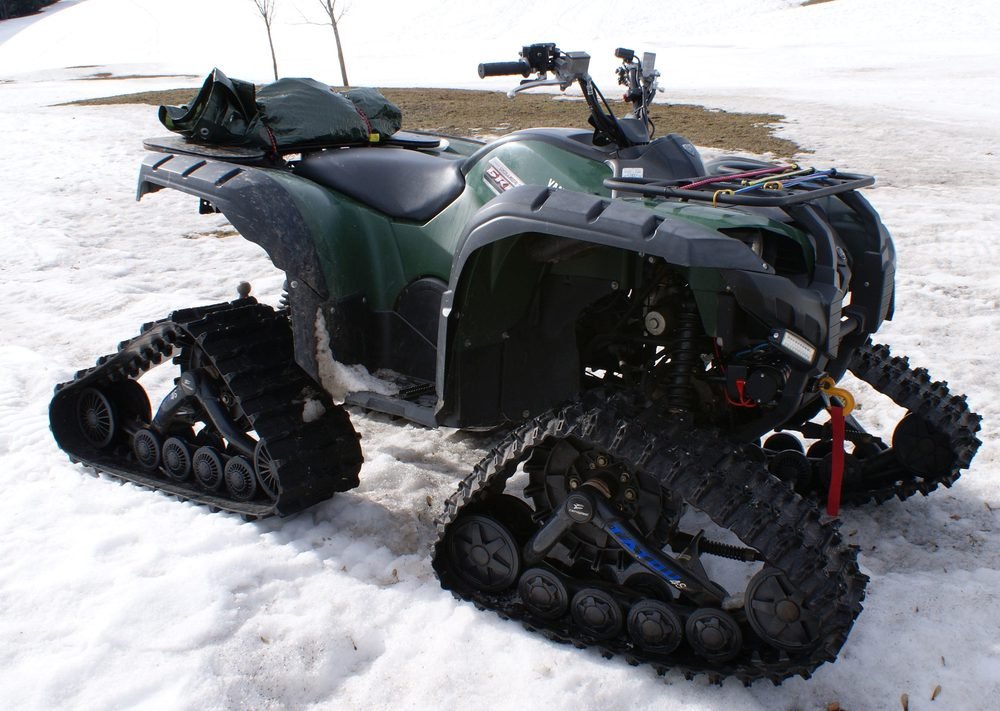
Featured image: Yamaha Grizzly ATV by Asurnipal, CC BY-SA 4.0, via Wikimedia Commons.
Bottom line
The Yamaha Grizzly 660 is a tough, comfortable machine whose faults are all predictable and all avoidable with care. The engine only fails the way owners describe when it is neglected or rebuilt wrong, the carb is solvable with disciplined assembly, and the starter, diff lock, and CV boots are known weak points you can inspect before you buy.
Keep clean oil in it, keep the battery alive, and be honest about the one way clutch, and a 660 will serve you for years of hard use. That is why so many still run strong two decades after they left the showroom.

