As an Amazon Associate I earn from qualifying purchases. This article contains affiliate links that may earn a commission at no extra cost to you.
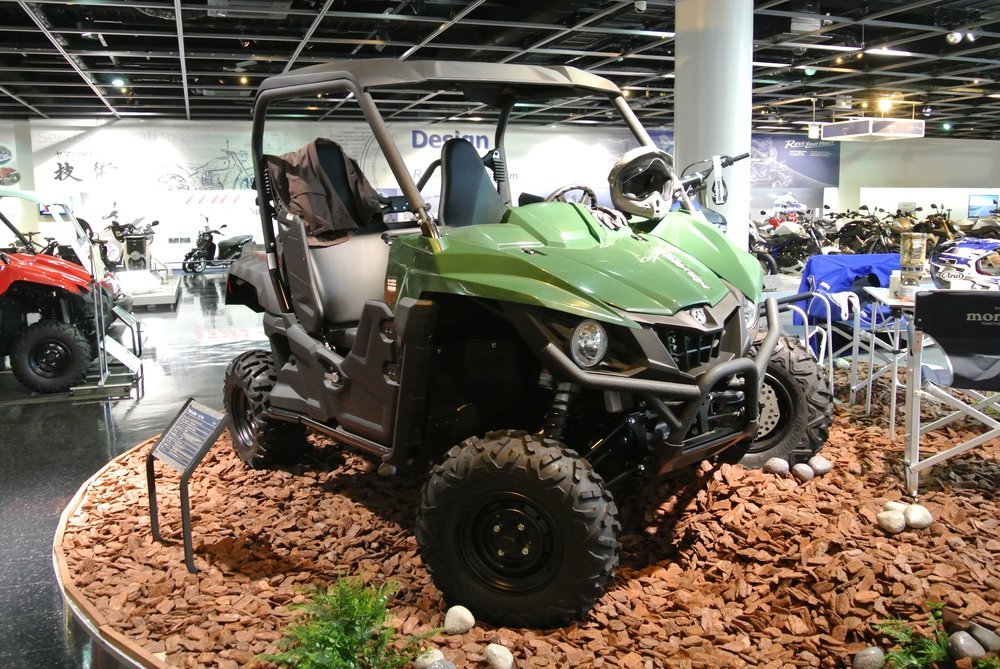
The Yamaha Wolverine RMAX 1000 is a big, fast side by side that launched in 2020 as Yamaha’s answer to the Polaris RZR and Can-Am Maverick in the sport segment. It packs a liquid cooled 999cc parallel twin and long travel Fox suspension, and it is quick for a stock machine. But after a few years in owner hands, a clear set of common problems has surfaced. Two formal recalls, an early run of transmission failures, snapping CV axles, and hot exhausts top the list. Here is what real owners report, what to check before you buy used, and how to keep one running. If you are comparing Yamaha sport UTVs, the smaller Wolverine 850 is a lighter, cheaper option worth a look.
An Overview of the RMAX 1000 Family
The RMAX 1000 comes in two basic bodies. The RMAX2 is the two seater, and the RMAX4 is the four door version with a stretched wheelbase and more weight. Within those, Yamaha offered trims like the base, XT-R, LE, R-Spec, and Sport, plus a narrow RMAX4 Compact for tighter trails.
The engine is shared across the range. It is a 999cc, liquid cooled, DOHC parallel twin with eight valves, fed by Yamaha Fuel Injection through dual 48mm throttle bodies. Yamaha drives it through its own Ultramatic CVT with a V belt and a centrifugal clutch, and pairs that with On Command selectable 2WD, 4WD, and a front and rear diff lock.
Yamaha quotes 13.8 inches of ground clearance on the two seater and backs the belt with a rare 10 year warranty. The RMAX2 tips the scales around 1,845 to 1,885 pounds depending on trim, while the RMAX4 LE sits close to 2,059 pounds. That is a lot of machine, and it moves.
Recall One: Rear Shock Mounts That Could Break
The biggest reliability story on the early RMAX4 is a formal recall tied to the rear suspension. In late 2020, Yamaha put out a factory campaign telling 2021 four seat owners that the inside welds on the rear shock mounts could be missing. Owners with VINs in the affected range were asked to bring the machine in so a dealer could inspect the mounts and add the weld if it was absent.
Forum members ran the numbers and noticed the published VIN bands covered roughly a thousand of the first 1,300 delivered four seaters (wolverineforums, factory modification campaign thread). That worry turned into CPSC Recall 21 720 in February 2021, which covered about 820 units after one report of a rear shock mount breaking loose. No injuries were reported, and the fix was a free dealer repair.
If you own or are buying a 2021 RMAX4, run the VIN against this recall before you ride. A cracked or missing weld on a loaded shock mount is a real safety matter, not just a noise.
Recall Two: A Fuel Tank Fire Risk
A separate and larger recall came in May 2022. CPSC Recall 22 747 involved roughly 4,130 RMAX and RMAX4 vehicles where the fuel tank could have been assembled wrong at the factory and leak. Yamaha treated it as a fire and explosion hazard and told owners to stop driving immediately until a dealer inspected the tank.
The recall covered both the two seater and the four seater, including RMAX2 and RMAX4 base, LE, and SE models sold between early and mid 2021. Yamaha reported two cases of incorrectly assembled tanks but no leaks or injuries. The remedy was a free dealer inspection and repair.
For a used RMAX in that model year, this is the easiest issue to avoid because the fix is free. Just confirm the tank work has been done before you take delivery.
Early Transmission Failures
Right after launch, a small but loud group of owners reported catastrophic transmission failures on nearly new machines. Cases showed up at low mileage, some at 14 to 18 miles and others in the first few hours of riding, across both the RMAX2 and RMAX4 bodies.
The community tracked these cases closely in a single thread on wolverineforums, and the working picture was a bearing on the input side of the secondary sheave that either shipped dry or was improperly shimmed and bound up. One owner followed his case all the way to a full transmission replacement under warranty. The running census put the affected count in the low single digits out of a couple thousand built, so it was not widespread, but it was dramatic when it hit.
Yamaha covered every one of these under warranty, and no fresh outbreak showed up in later production. The lesson for buyers is to pay attention to how a used RMAX shifts and to check the transmission fluid for clarity before committing. Drivetrain care is one area where owning an older Yamaha UTV like the Rhino 700 teaches lessons that carry over.
Snapping and Clacking CV Axles
Another common owner report is a rotational clacking from the rear that shows up when you first roll away and gets louder with speed, then fades. One 2021 RMAX4 owner chased exactly that sound and ended up replacing failed rear CV joints and axles (wolverineforums, rear snapping noise thread).
He got both rear axles swapped under the Yamaha YES extended warranty. The bigger frustration was the wait: OEM factory axles were on back order for about four months, so he was stuck with a big machine he could not drive. Another owner who tried aftermarket Rhino 2.0 axles said the replacements arrived defective.
If a rear axle goes on your RMAX, expect a fight with parts availability more than with the repair itself. Budget for downtime, especially if you are out of warranty.
The Infamous Front End Click
New machines have a habit of clicking up front in a way that sounds exactly like a binding CV joint, even with nothing felt in the steering wheel. Multiple owners reported it on essentially brand new units, and it is one of the harder sounds to pin down.
Some owners traced it to play or backlash in the front drive shaft, which dealers often call normal. Others found the real source in the parking brake. One owner eliminated a 40 km/h rattle by removing the parking brake assembly, and another tuned the brake slack until it held in three or four clicks instead of seven.
Before you tear into the front end, check the parking brake and the drive shaft play first. A lot of these clicks turn out to be harmless, but knowing what you are listening to saves a trip to the shop.
Engine Oil Leaks Off the Crankcase
Oil leaks are not common, but they happen, and they tend to show up after the factory warranty expires. One 2021 RMAX2 owner reported oil pouring from the rear lower engine area after every run, with it dripping long after shutdown (wolverineforums, oil leak thread).
A dealer diagnosed the crankcase cover and its seal as the culprit and replaced it. The catch was timing: the original six month factory warranty had already lapsed because the machine was bought the prior fall, so the owner paid for the fix out of pocket.
That short warranty is worth remembering. On a used RMAX outside the first year, budget the cost of a possible seal or cover repair, and keep an eye on the lower engine for fresh oil after rides.
Glowing Exhaust and Sudden Power Loss
A handful of owners have caught something unsettling: the exhaust header glowing red, sometimes paired with a metallic popping under the hood once the engine is hot. One owner on a 26 hour machine described a sudden power cut in Sport mode that capped speed near 40 mph while the exhaust burned and smelled hot.
Two different dealers reportedly found nothing at first, which left owners frustrated. Forum wisdom pointed at Yamaha’s lean emission tuning and the air injection system burning leftover fuel in the exhaust, which can make a header glow hot under load. But a pipe that stays hot can also mean an unburnt fuel problem, a bad plug, or an obstructed exhaust like a cracked spark arrestor.
If yours glows or smells hot, photograph it and escalate to Yamaha USA. In the meantime, have the plugs and the exhaust flow checked. A red hot pipe near plastic and fuel lines is not something to ignore.
4WD Vibration and Driveshaft Grinding
Some owners report a driveshaft vibration in 4WD at higher speeds on pavement. In most cases that is normal driveline behavior on a solid four wheel drive setup, and Yamaha has said as much. There was, though, a small VIN specific notice about an abnormal 4WD vibration issue that exceeded the normal level, so it is worth asking about if a machine feels wrong.
Separately, one 2022 RMAX4 owner on oversized 32 inch tires heard a grinding noise and got little help from his local dealer. Owners advised finding a certified Yamaha Gold Star dealer, and pointed out that big tires can void the warranty if they are the cause. The YES extended warranty, roughly 800 to 900 dollars, came up more than once as worthwhile insurance. For a comparison of how different brands handle drivetrain costs, the CFMoto UForce 1000 problems guide covers another modern UTV.
How the RMAX Compares to Older Yamaha UTVs
If you are trading up from an older Yamaha machine, it helps to know what changed. Earlier Yamaha UTVs like the XL7-style Wolverine and the larger Viking used different drivetrains that were slower but simpler in some ways. The RMAX 1000 trades some of that simplicity for a bigger engine and more suspension travel.
The flip side is that the RMAX is a newer platform with fewer years of owner data behind it. While the older machines have their own known issues, the RMAX’s growing problem list is still being written. That is one reason to check the recalls and the specific failure threads before you commit. For guidance on which UTV years to avoid in general, the Polaris Ranger years to avoid piece is a useful companion read even if you are looking at Yamaha.
What to Check Before Buying a Used RMAX 1000
Buying a used sport UTV is a gamble on how the last owner treated it, and the RMAX is no different. Work through these checks before you hand over cash.
First, confirm both recalls were done. Get the VIN and run it against CPSC recall 21 720 for the rear shock mounts and 22 747 for the fuel tank. A machine that has not had the tank work done is a negotiation point, and one with an open shock mount recall is a hard no.
Second, listen to the drivetrain cold. Start it, roll it away slowly in low gear, and listen for a rotational clack from the rear that points at CV axles. Also shift through the gears and verify the transmission engages cleanly with no grinding, since early units could eat a bearing.
Third, inspect the rear shock mounts with a good light and a mirror if you can. Look for clean welds on both sides of each mount, and check the lower engine area for signs of fresh oil that point at the crankcase cover seal.
Finally, ask how the prior owner used it. A machine that spent its life on pavement with big tires has different wear than one used on private trails. A documented maintenance history and a warranty transfer beat a clean paint job every time. The X4-specific owner reports in the Wolverine X4 problems guide give you a sense of what to probe.
Setting a budget for a certified dealer inspection and a possible extended warranty is the smart move. The RMAX is a strong machine, but the right pre purchase check is what separates a solid find from a money pit.
Keeping an RMAX 1000 on the Trail
Day to day upkeep for the RMAX 1000 is mostly regular, but a few things matter more than others. Keep an eye on the CVT belt, keep the dual throttle bodies clean, and check the driveshaft and axles for play when you do service.
Many owners replace the CVT belt before it fails rather than after, and keeping a spare is cheap insurance. A good replacement belt is an easy way to avoid a trailside walk (shop RMAX CVT belts).
For the fuel system, a throttle body and MAF cleaner works well on the 48mm units, and it is a low cost tool any owner should have (grab a throttle body cleaner).
Finally, a quality synthetic oil makes the short service intervals easier to stay on top of, especially with a dry sump engine that is easy to overfill if you rush (pick up synthetic UTV oil).
Yamaha Wolverine RMAX CVT Drive Belt
The part owners replace first before a trailside failure. See today’s price on Amazon.
Bottom line: The Yamaha Wolverine RMAX 1000 is a capable and fast sport UTV that is, for the most part, built to last. But it launched with two real recalls, an early small batch of transmission failures, and a steady list of owner gripes from CV axles to hot exhausts. Buy one with the recalls done, check the drivetrain cold, and treat the short factory warranty as a reason to budget for an extended plan. Handled that way, the RMAX rewards you with a machine that is hard to beat for the money.