
As an Amazon Associate I earn from qualifying purchases. This article contains affiliate links that may earn a commission at no extra cost to you.
The Polaris Scrambler is the sport quad in the company’s lineup, built as a faster, nimbler cousin to the Sportsman utility machines. It is a fun bike, but it is not without known trouble spots. Owners on polarisatvforums and quadcrazy report the same handful of failures again and again, and most of them are fixable at home.
This guide breaks down the most reported Polaris Scrambler problems by model generation, explains what actually causes each one, and links to the real owner threads behind every claim. After the problems, there is a used-buying section and a bottom line that tells you which years to favor.
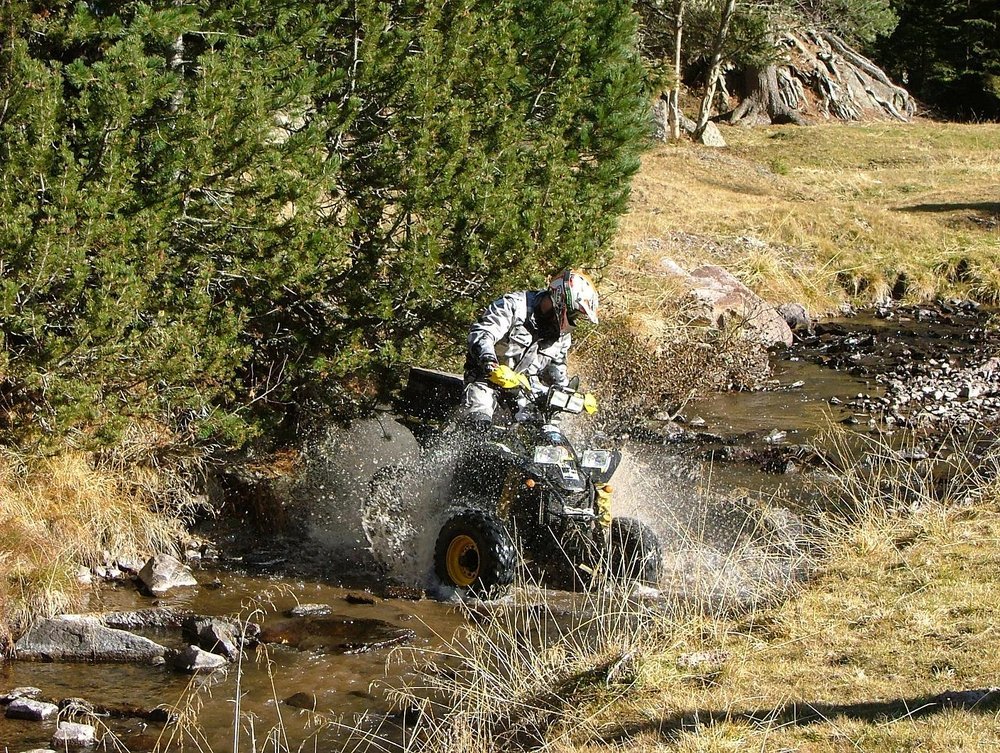
Which Polaris Scrambler models are there?
Before diagnosing anything, it helps to know the machine you own. The Scrambler line splits into two very different families.
The older machines are a 378cc two-stroke single (the 400, built about 1997 to 2004) and a 498cc to 499cc four-stroke single (the 500, built about 1997 to 2012, sold in both 2×4 and 4×4 form). The 400 used oil injection and a Mikuni carb; the 500 is a four-valve four-stroke with a dry sump and its own carb.
The newer machines are completely different. The Scrambler 850 and 850 H.O. (2013 to 2017) run an 850cc SOHC twin with electronic fuel injection. The Scrambler 1000 and XP 1000 (2014 to 2017) step up to a 952cc SOHC twin with EFI and independent rear suspension.
A common mix-up is worth clearing up now: the two-stroke was always the 400. The Scrambler 500 was never a two-stroke, no matter what a classified ad tells you. That matters because a two-stroke and a four-stroke fail in very different ways, and the wrong assumption sends you down the wrong repair path.
What is the most common Polaris Scrambler problem?
On the older four-stroke 500, the single most reported issue is overheating that shows up only once the machine is warm. One owner on polarisatvforums described it exactly: the quad starts right up, idles well, and runs strong for the first 20 to 40 minutes, then loses power and bogs under throttle while coolant sprays out of the overflow bottle. It idles fine when stopped, but any throttle makes it backfire and bog.
That pattern almost always points to a head gasket or a cooling-system fault, not to the engine itself. The owner thread walked through the basics first (is the fan coming on, is the coolant full, is the thermostat opening) before anybody reached for the gasket. If the fan never kicks in or the thermostat stays shut, the machine overheats and the coolant has nowhere to go but the overflow.
So the first fix is cheap: test the thermostat in a pot of boiling water and confirm the radiator fan actually cycles on. If both check out and the overheating plus coolant spray continues once hot, suspect the head gasket and pull the head for a look. The owner thread on polarisatvforums has the full diagnostic path.
Burning coolant and fouled plugs on the two-stroke 400
The 400 two-stroke has its own cooling complaint. A quadcrazy thread titled 2000 Polaris Scrambler 400 Anti-Freeze Problem covers a rider whose coolant disappeared after one ride, with an antifreeze smell in the exhaust and plugs ruined after three starts.
When a two-stroke drinks coolant and smells sweet out of the pipe, owners on that thread blamed three things: the base gasket at the bottom of the jug, the water-pump shaft seal, or stretched head bolts. Every one of those lets coolant into the combustion chamber instead of the radiator.
It is a head-off job to get at the base gasket and the head bolts on these engines, which is why some owners simply pull the top end once and replace every gasket and O-ring while it is apart. The water-pump seal sits low and is easy to reach once the side cover is off, so tackle that one first before splitting the top end.
No spark on a Scrambler 500: the CDI and kill-circuit path
A 2004 Scrambler 500 4×4 owner on polarisatvforums posted the classic no-spark story: the engine turns over fine but there is zero spark. The board’s standard advice was to unplug the black wire from the CDI box to test, but the owner could not identify the connector under the loom.
No spark on a Polaris 500 almost always lives in the CDI unit or the safety-circuit wiring around it, not in the coil itself. The reverse-speed limiter and the throttle safety switch both sit in that same path, and corroded or chafed connectors there will kill spark entirely while the starter still cranks.
Before you buy a new CDI, trace the wiring from the CDI plug to the kill switch, the reverse limiter, and the throttle switch. Disconnect and clean every connector in that chain. One owner in the thread found a corroded connector to the reverse-speed-limiter circuit, and simply separating it restored spark. Clean the contacts with dielectric grease before you spend money on parts.
PVT transmission trouble and no-forward failures
Every generation of Scrambler drives through Polaris Automatic PVT belt-and-clutch transmission. It shifts itself, which owners love, but it has known failure modes as the belt wears.
A 1999 Polaris Scrambler 500 No Forward thread on quadcrazy documents a machine that would not move forward at all. On these machines that is usually a worn drive belt, a stuck clutch weight, or a shifted clutch gear, not a broken transmission.
Start with the belt. A cheap test is to remove the PVT cover and inspect the drive belt for glazing, cracks, or missing teeth. If the machine revs but does not move, the belt is slipping or the driven clutch is not closing. Keeping the clutch faces clean and the belt within spec prevents most no-forward and slow-takeoff complaints.
The Polaris Sportsman 600 shares the same PVT drivetrain, and owners report many of the same belt and clutch complaints there. That post is a useful cross-reference if your Scrambler sits on the same running gear.
4WD that will not engage on the 4×4 models
The Scrambler 500 4×4 uses an on-demand front drive. More than one owner posted about it failing to engage: a 2003 Polaris Scrambler 500 4×4 Wont Engage thread and a 2001 Polaris Scrambler 4×4 Not Working thread both describe front wheels that refuse to pull.
On-demand 4WD failure on a Polaris usually comes down to a weak front-drive actuator, a fried harness connector, or a fault in the control circuit. It rarely means the front differential is broken.
Test the actuator by applying 12 volts directly and listening for it to click and lock the front drive. If it clicks but the front wheels still free-spin, inspect the front drive shaft and the connector at the front gearcase for corrosion. Most owners fix this with a clean connector and a new actuator, not a new front end.
Electrical trouble: the recurring Scrambler weak spot
Across all generations, electrical gremlins are a top Scrambler complaint. A 2004 Polaris Scrambler 500 Electrical Trouble thread on quadcrazy is typical. The machines are simple by modern standards, but their harness connectors corrode with age and use.
Common electrical failures include no spark (covered above), a dead gauge cluster, a battery that drains overnight, and intermittent stalling. Almost all of them trace to corroded grounds or melted connectors, especially near the CDI box and where the harness rubs the frame.
When an electrical gremlin appears, start with the battery and every ground lug. Pull the seat and tail sections, unplug each connector in the main harness, and look for green corrosion or brown heat marks. Cleaning and re-dielectricing every connector in the ignition path fixes a surprising share of these issues for the cost of a tube of grease.
If the Scrambler sits between rides, keep a small battery tender on it, because a weak battery makes every one of these gremlins worse. A drained battery is also a very common cause of a no-start that is not a real fault.
Belt and clutch maintenance on the 850 and XP 1000
The fuel-injected 850 and 1000 machines are newer and more reliable, but they still share the PVT belt system, and the bigger twins put more stress on it. Owners of the 850 and XP 1000 report premature belt wear, especially if they run oversized tires or ride hard in mud and sand.
The fix is routine: keep belt deflection in spec, keep the clutch faces dry, and replace the belt on schedule instead of waiting for it to shred on the trail. A spare drive belt is the single best thing a Scrambler owner can carry, because a broken belt is a ride-ending failure that is a 30-minute swap.
Mud and water are hard on the PVT cover. If you ride wet regularly, check the cover gasket and the venting so water cannot get into the clutch housing. A belt that slips after a deep water crossing is usually wet or contaminated, and cleaning the clutch faces restores it.
2024-era recall and safety notes
Polaris has issued recalls across its ATV and RZR lines over the years, so it is worth checking the current recall list before you buy a used Scrambler. Off-road quads are regulated by the CPSC, not NHTSA, and recall notices change, so the safe habit is to check the CPSC recall search and Polaris own safety page for your model and year.
Most owner threads reviewed for this guide mention no widespread safety recall for the Scrambler specifically, but that situation can change. Treat any used purchase the same way you treat a car: check the VIN against the live recall database before you hand over money.
What to check before buying a used Polaris Scrambler
A used Scrambler can be a great deal or a money pit, and the difference usually shows up in five checks you can do in the seller driveway.
First, ride it cold and then ride it hot. A machine that bogs and sprays coolant once warm has a cooling fault, and you do not want to inherit it. Second, confirm the 4WD engages and disengages cleanly on the 4×4 models. Third, ask to remove the PVT cover and inspect the belt and clutch faces for glazing. Fourth, look at the CDI wiring for corrosion. Fifth, smell the exhaust and check the plugs for signs of a machine that has burned coolant.
The 850 and XP 1000 twins are the most modern and carry the fewest old-engine faults, but they cost more. If you buy an older 500, the four-valve four-stroke single is the more dependable choice than the two-stroke 400, and parts are still available. For maintenance parts, most owners reach for a Polaris-specific kit or the OEM parts list rather than a generic listing.
Owners of the Sportsman 550 and Predator 500 report similar PVT and electrical quirks, so those posts are good background reading while you compare machines.
Polaris Scrambler Drive Belt
Most owners of these machines carry a spare belt and clean connectors first. See today price on Amazon.
Bottom line
The Polaris Scrambler is a capable sport quad, and the newer 850 and XP 1000 twins are solid machines. The trouble clusters around the older 500 cooling system, the CDI and safety-circuit wiring, the PVT belt, and the on-demand 4WD actuator, plus corrosion in the aging harness.
Every one of those failures is common enough to have a documented owner thread and cheap enough to fix at home. If you buy used, ride it hot, check the 4WD, inspect the belt, and confirm the electrical connectors are clean before you commit. Do that and a Scrambler can be a fast, dependable toy that rewards careful owners.

