
As an Amazon Associate I earn from qualifying purchases. This article contains affiliate links that may earn a commission at no extra cost to you.
The Suzuki KingQuad 400 is a tough little utility quad that many owners treat like a farm hand, and it usually earns the respect. The 400ASi and 400FSi use a fuel-injected 376cc single and a fully automatic Quadmatic transmission, so they start easy and are simpler to live with than a lot of the competition. But no machine is perfect.
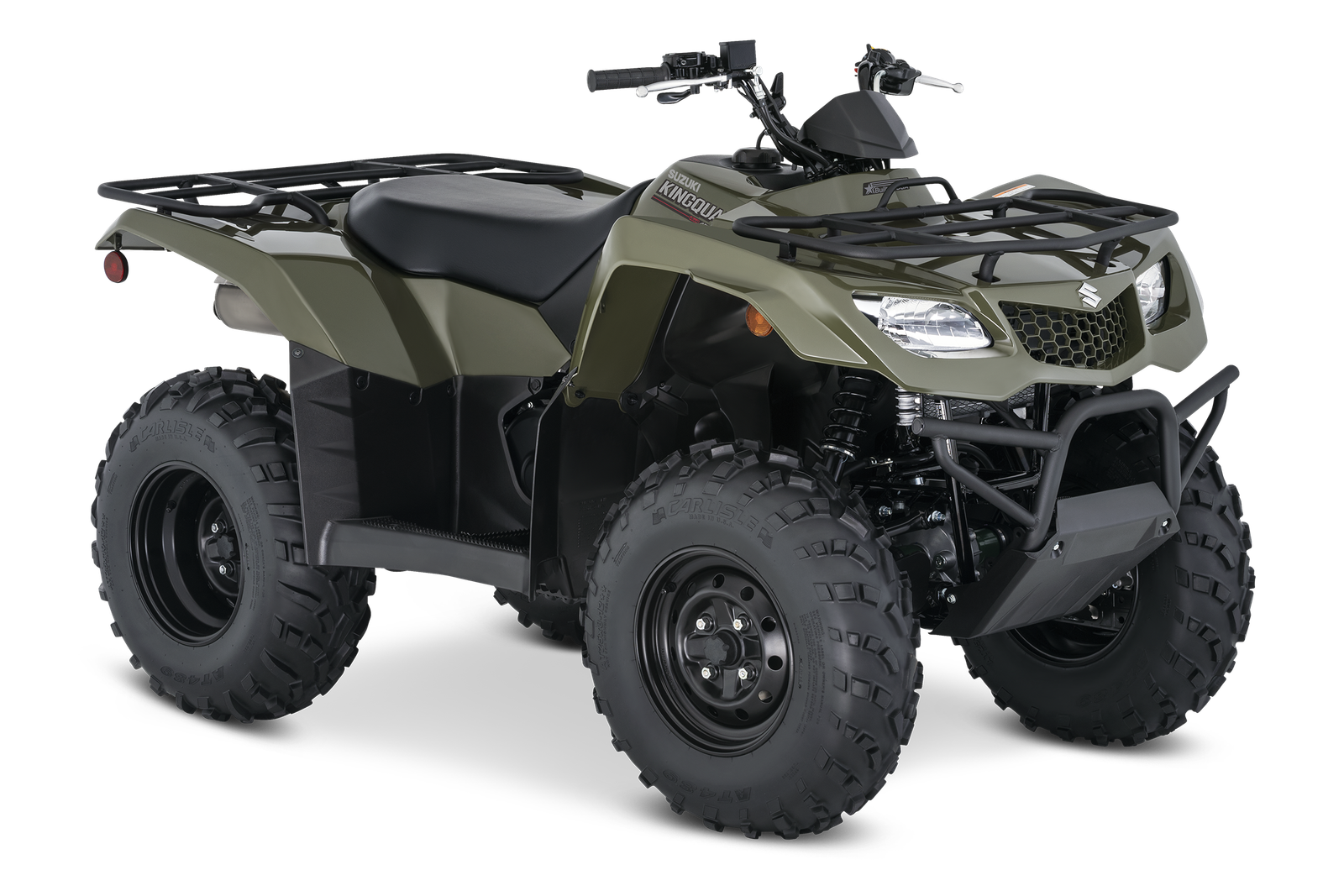
The problems owners report most are the rear drum brake wearing fast, the CVT shifting hard or catching when you select reverse, random stalling especially after water crossings, and the electric starter acting up on older units. This article walks through each of those, what causes them, and the fixes people actually use. If you are shopping for a used one, the checklist near the end is worth copying into your phone.
The rear drum brake wears faster than you expect
The KingQuad 400 keeps a single drum brake on the rear, and it is the part owners complain about most. On a 2012 400ASi thread at Suzuki ATV Forums, an owner came back from a six hour ride to find the rear brake lever pulling all the way to the grip. He had locked the parking brake while eating lunch, and somewhere along the trail the adjuster let the pads drag until they wore down fast.
Another member told him he had likely stretched the cable, worn the pads, or bent a bracket.
The fix is straightforward. Spin the wing nut adjuster under the rear fender to restore lever tension, then check the drum pads. Rear pads on these quads wear quickly if the lever is left locked or the adjuster is too tight, so get in the habit of backing the parking brake off before you ride. When the shoes are thin, replace them before the drum itself scores.
A set of aftermarket drum brake shoes for the KingQuad is cheap, and the job is doable in the garage with basic hand tools.
The Quadmatic transmission shifts hard and catches
The fully automatic CVT in the KingQuad 400 is generally reliable, but owners hit two nagging issues. The first is a hard clunk when the machine drops out of neutral into gear, especially right after a cold start. The second is a frustrating one where the quad seems stuck: you select a gear, the light stays on neutral, and it refuses to engage first while reverse still works.
That last one bit an owner on a 2008 FS400. He had just replaced the neutral switch in the crankcase and suddenly the foot shifter would not grab first gear, yet reverse was fine. The forum reply nailed the likely causes: either the switch wiring was not hooked up correctly, or a shim or the forward gear cluster had shifted while the case was open.
If you have the same symptom after any engine work, recheck the shift mechanism and any shims before you tear anything else down.
For the everyday hard engagement, let the engine idle down to settle, then shift firmly with the machine fully stopped. Keeping the idle speed within spec and the CVT belt fresh reduces a lot of that clunk. A worn belt makes the engagement sloppier, so a new belt is often the cure when shifting feels wrong.
Make it a habit to rock the machine forward a few inches in neutral before you select a gear; it lets the dogs line up and drops the clunk dramatically. The same trick works on the bigger Kawasaki Brute Force 750, which shares a similar feel, and it saves a lot of worry the first time you hear the noise.
Random stalling, worse after water or in 4WD
Stalling is the other big owner complaint, and it is almost always tied to water or a weak connection. On the Suzuki ATV Forums, a 2014 400ASi rider said his quad cut off randomly and got noticeably worse when he dropped it into 4×4. He had been riding creek crossings without a snorkel and had not serviced it for a while.
The thread pointed him toward three things in order: an oil change, cleaning the air filter, and a new spark plug, plus checking for corroded electrical connections.
Deep water is the enemy here because the quad pulls air from low on the frame. If you cross creeks without a snorkel, water can get into the airbox and the machine will stall under load. The classic combination is a wet air filter that starves the engine and a fouled plug. Dry the filter, change the oil if any water got in, and chase down any green or loose connectors.
A squirt of dielectric grease on the main harness plugs stops most of the random cutouts caused by vibration. On the fuel injected models, the system also hates a starving supply, so if the stall happens right after a long climb, check the in tank fuel pump strainer for that fine grit the tank can collect over the years.
Electric starter and the charging system
These quads start with a button, and the starter circuit is where the electrical gremlins live on older KingQuads. Owners report the click of a relay with no crank, a starter that spins but does not catch, and batteries that drain if the quad sits. On a 376cc single the battery is small, so a slow drain kills it fast.
Start trouble at the battery. Clean the terminals and load-test the battery before you blame the starter. These Suzuki machines are also known for a marginal charging output as the regulator ages, so if a brand new battery keeps dying, check the stator and regulator output with a multimeter rather than buying another battery. A battery maintainer on any KingQuad that only gets ridden on weekends is the single best habit for a reliable start.
When you do need to pull the starter, it sits behind the left side cover and is easy to bench test by jumping the terminals to a 12V source, so you can confirm it spins before you order a part.
Overheating on slow, hard work
The 400ASi is air cooled, so it relies on moving air to stay happy. On a hot summer day, doing slow plow or winch work, or crawling through tight brush, owners see the heat build. It rarely damages the engine, but it tells you the fins need attention.
Keep the cooling fins and the front of the engine clear of mud and grass when you wash the quad. Mud packed into the fins acts like a blanket. If you regularly work the machine hard in heat, synthetic oil holds up better and resists the viscosity breakdown that air-cooled engines cause. It costs a little more, but it is cheap insurance for a quad that earns its keep.
Suspension and the 4WD selector
The independent double wishbone front and swingarm rear are tough, but the bushings and ball joints wear, and a lazy 2WD/4WD lever is common. The front CV boots are the part to watch. A torn boot lets grit into the joint, and that joint is not cheap. Check the boots every oil change and replace a split boot the day you see it before the joint costs you real money.
The handlebar mounted 2WD/4WD lever can get stiff or feel like it is not fully engaging, usually because the cable stretches. If 4WD seems to slip, the quad still drives in 2WD while the front driveshaft is disengaged. Do not assume the diff is broken. Check the shift cable adjustment first, then the front diff actuator.
On older machines, resistance in the thumb shifter often just needs a shot of cable lube and a re-checked clamp, not a new drivetrain part.
suzuki kingquad rear drum brake shoes
A practical fix that most owners swear by. See today’s Amazon price.
What to check before buying a used KingQuad 400
Used KingQuad 400s are cheap, and most are tough, but a few minutes of checking saves a headache. Pull the air filter and look for signs of water in the airbox, which tells you it has been ridden through deep creeks. Ask whether it was ever snorkeled. Ride it cold and see if it starts first crank, then let it idle and listen for stalling. Test the rear brake lever for a mushy pull, which points to worn drum shoes.
Check the front CV boots for splits. Shift through both high and low range plus reverse, and make sure the 4WD engages when you flip the lever. A quad that has lived its whole life in 2WD on flat ground is usually the safest buy.
Keeping your KingQuad 400 trouble free
For such a simple machine, prevention goes a long way. Keep the oil and filter fresh on schedule, and change the oil sooner if the quad spends time in water. Clean and re-oil the air filter regularly, especially after dusty or wet rides. Check the CVT belt and rear drum shoes at service time before they fail on the trail. Grease the zerks and keep the front CV boots intact.
Add dielectric grease to the main connectors and keep the battery on a maintainer when it sits. Address the wing nut brake adjuster as soon as the lever feels loose. Storage matters more than most owners think. If the KingQuad sits for weeks between rides, add a fuel stabilizer to a full tank before it goes away, and run it long enough to work the additive through the injectors.
A hungry battery is the single most common reason a parked KingQuad will not wake up, so putting it on a maintainer for the off season saves a lot of jumper cable time in spring.
If you are keeping the machine for work, three parts cover most of what owners end up replacing. A rear drum brake shoe set sorts out the worn pads, a fresh CVT belt fixes the sloppy shifting and engagement, and a battery maintainer stops the dead starter battery between rides. Keep a spare spark plug and a small can of dielectric grease in the toolbox and you will fix most of what actually goes wrong.
Old Yamahas and Polaris machines have their own quirks. If you are cross-shopping, the Yamaha Kodiak 450 has a different set of known issues, and the Polaris Sportsman 500 is worth a read before you decide. For a lighter machine in the same Suzuki family, the Suzuki King Quad 300 problems guide covers the smaller quad owners love for trails.
Bottom line. The Suzuki KingQuad 400 is a dependable, simple utility ATV, and none of its common problems are deal breakers. The rear drum brake and the shifting quirks are the two things owners actually deal with, and both are cheap to fix. Buy one that has not been drowned, keep the electrical connections clean, and it will outwork most of what you park next to it in the garage.
Featured image of a Suzuki KingQuad 750 AXI (same AXI utility family as the 400ASi) by Fabian Schmidt, CC BY 3.0 via Wikimedia Commons.

