As an Amazon Associate I earn from qualifying purchases. This article contains affiliate links that may earn a commission at no extra cost to you.
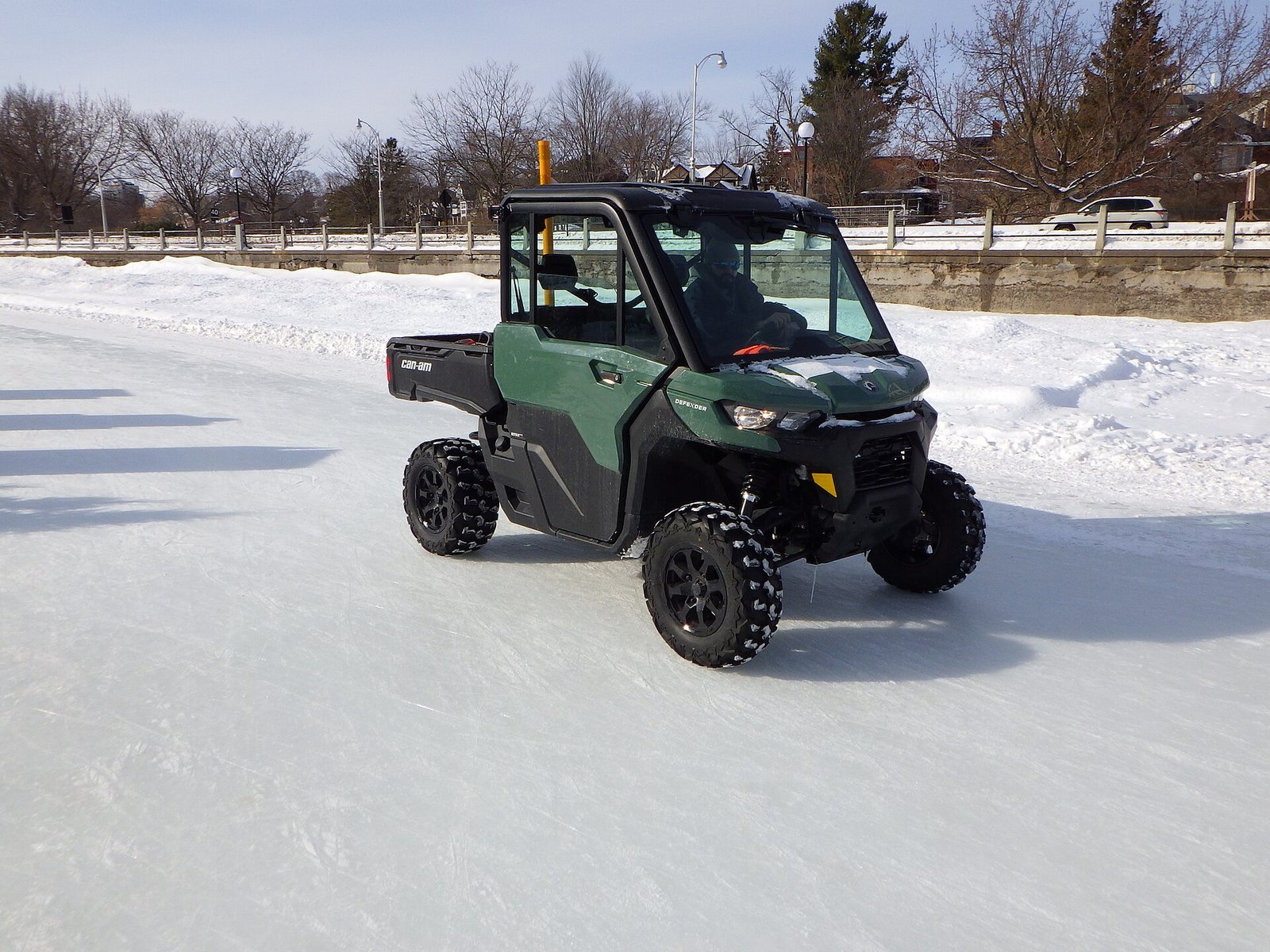
The Can-Am Defender HD5 is the entry point of the Defender side-by-side line, a work-first machine that shared its chassis with the bigger HD8 and HD10 siblings. Most of what you’ll read online lumps the HD5 in with the larger models, which causes a lot of confusion. This guide covers the problems owners actually run into on the HD5, how to fix or prevent each one, and what to inspect before buying a used example.
First, a Correction: The HD5 Is Not a V-Twin
Almost every article about the Defender HD5 gets the engine wrong. The marketing materials that launched the 2017 model year described an all-new, 38-horsepower Rotax single-cylinder four-stroke engine with a liquid-cooled design. That engine is 427cc, mounted in the rear of the Defender chassis to cut noise and cockpit heat.
So the HD5 does not share the Rotax V-twin family with the HD8 and HD10. Those models use the 50-hp and 72-hp Rotax V-twins that BRP highlighted when the Defender first bowed for 2016. The HD5 was a lower-cost, mid-size answer aimed at farms, hunting camps, and construction sites, and it slotted in below the twins in both price and displacement. If a spec sheet you find says the HD5 is a 649cc or 650cc V-twin, the source is wrong.
On the HD5 you get a thumper, and knowing that shapes what you should expect from it.
That single-cylinder layout means less peak power than the twins, but it’s paired with a CVT and a helical-gear transmission, so the machine shifts its modest output smoothly. You won’t mistake it for a sport rig, but for dragging trailers and hauling firewood it does the job.
The CVT Belt Is the Number One Thing to Watch
Like every Defender, the HD5 runs an automatic CVT, and the drive belt is the wear item owners talk about most. Belt slip under heavy load, belt debris after an overheat, and premature glazing show up again and again in owner posts about the Defender platform, not just the HD5.
BRP designed around this reality. The HD5’s info shows a feature called Electronic Drive Belt Protection, which monitors the CVT belt and alerts the driver to drop into low range when the belt is working too hard. That warning is not there for decoration. If you ignore it and keep hammering in high range while loaded, the belt cooks and shreds, and you’re left on the trail with a dead machine until you can tear the CVT cover open.
The practical fix list is straightforward. Keep the clutch and belt surfaces dry and free of debris, clean out the CVT housing after wet or dusty rides, and replace the belt as part of your scheduled maintenance even if it looks fine on the surface. A glazed belt is easy to miss until it lets go under load. The right replacement CVT belt pays for itself the first time it keeps you from being towed out.
Engine Braking and the Helical Transmission
One of the HD5’s advertised strengths is standard engine braking on the CVT, which is a real asset on long downhill grades with a heavy load behind you. It gives you predictable deceleration without riding the brake pedal, and the helical-gear transmission keeps cabin noise down.
That said, owners do report the belt-driven system can feel grabby or surge at low speeds, especially on a cold machine or after the belt has worn and polished. A fresh belt and a clean clutch face usually smooth this out. If you get a shudder right at engagement, it’s most often a glazed belt or a sticky clutch weight rather than a deeper transmission fault, and both are service items rather than failures of the gearbox itself.
There’s a rhythm to driving a CVT that takes a little getting used to. Modulate the throttle instead of stabbing it, let the revs climb into the band before you load the machine, and the HD5 responds without straining. Owners who treat it like a geared manual and floor it from a standstill are the ones who end up posting about shredded belts.
On the flip side, the engine braking means you can ease down a mountain pass without cooking the brakes, which is a real comfort feature once you trust it.
On the transmission side, the HD5 gives you Park, Reverse, Neutral, High, and Low ranges. Snapping the machine into gear at idle, before the clutch fully settles, is the classic way owners stress the driveline. Give the belt a second to engage and you’ll keep the clutch quiet for years.
The Park Gear Roll-Away Recall Is Real
There is one documented safety recall on the early Defender that applies squarely to the platform, and it’s worth knowing before you buy used.
The recall notice dated January 24, 2017 covered roughly 780 model-year 2016 Defender, Defender DPS, and Defender XT units because affected vehicles could unexpectedly roll away while shifted into Park, posing an injury hazard.
BRP’s notice told owners to stop using the vehicles and contact a dealer for a free repair.
This is exactly the kind of issue that quietly gets fixed under warranty and disappears from the conversation, but a used 2016 machine that never went through the fix is a real risk. If you’re shopping early-model Defenders, confirm the recall work was done before you hand over money.
Park is supposed to be a hard, reliable lock on a utility machine you might park on a slope, and a machine that creeps is a machine that can crush something or someone.
Steering: Base HD5 vs. the DPS Package
The old content on this model used to claim the HD5 “does not come equipped with power steering,” and that’s only half true. The base HD5 came without it, but BRP offered a DPS package that added Dynamic Power Steering. So you need to check the specific unit, not assume.
The difference matters a lot on a heavy Defender. The base rack is a manual system, and parking, crawling through mud, and wheeling through ruts will be armwork. On a big tire package it gets flat-out tiring on a long day. The DPS-equipped machines are noticeably easier to fling around in tight quarters, which is why the base trim disappears from resale listings fastest.
If a used HD5 you’re considering has big tires and no DPS, budget for the steering effort or plan on diff steering upgrades.
Owners who run the DPS package sometimes report a light clicking or a brief assist hiccup when the system is hot, but these are nuisance-level noise, not failures, and they rarely leave anyone stranded.
Loads, Hitch, and the High-Strength Chassis
The Defender is built on a High-Strength, Low-Alloy steel chassis with a full-length central skid plate, and the HD5 inherited that tough platform. Owners tow with it and load the stiff cargo box hard without trouble. The main handling complaint on the HD5 specifically comes from running it unloaded: the single-cylinder, mid-size machine rides firm and a bit bouncy at the rear before you put payload on it.
Suspension is TTA-HD at the rear, and it’s set up for work, not comfort. If you plan to use an HD5 mostly as a trail cruiser with no load, the firm ride wears on you. That’s not a defect, it’s the nature of a work UTV, but it’s worth knowing before you buy one expecting a plush cabin. Keep the hitch hardware checked, since trailers are what these machines eat up their service life with.
Load the cargo box with the weight spread out rather than piled on one corner, because the rear leaf-and-linked setup holds a well-balanced load far better than a lopsided one. Owners also note the payload figure is generous on paper, but a fully loaded box plus a maxed-out tongue weight makes the front end feel light, so stay a little inside the limit if you run big tires, which change how the whole chassis sits and steers.
For ranch chores the box and the 500-watt magneto are the two upgrades people rarely regret.
Maintenance That Keeps the HD5 Problem-Free
BRP’s schedule for the Defender line is refreshingly light. The launch material for the HD5 called for zero break-in maintenance and a yearly service at 1,865 miles (3,000 km) or 200 hours, whichever came first. That works out to roughly one service visit a year for a typical owner, and the layout puts the oil filter, air cleaner, battery, and CVT up top where a do-it-yourselfer can reach them.
Stick to the intervals and the HD5 is a low-drama machine. Engine oil, a new air filter on the sticky season, coolant level checks before summer work, and a belt inspection at each service cover most of what actually goes wrong. A battery maintainer kept on the unit over the winter prevents the dead-battery no-start that produces more forum threads than any real mechanical fault.
Two more details save owners from self-inflicted trips to the shop. First, torque the rear axle and wheel lug nuts to spec after the first few rides, because new units commonly come from the dealer a touch loose and a wobbly wheel beats up a seal fast. Second, keep the drain and cleaning holes under the floor clear, since mud packed there holds moisture against the chassis and helps rust find its way in.
A half hour with a hose a few times a season is cheap insurance.
Keep the Visco-Lok front differential in mind too. It auto-locks in 4WD without any buttons, which is great in the field, but the system likes clean oil. Changing the diff fluid on schedule keeps the self-locking behavior crisp and avoids the occasional sluggish-engagement complaint.
What to Check Before Buying a Used Defender HD5
If a used HD5 lands in your driveway, run a short checklist before you commit. Confirm the parking brake recall work is documented for a 2016 unit. Listen for belt chirp at idle and test the engagement shudder under load. Check the CVT housing for debris and moisture, because a wet or sandy belt is the fastest way to arrive at a costly repair. Inspect the frame, skid plate, and hitch for the kind of damage a hard-working machine accumulates.
Verify whether the unit has DPS or not, because that single option changes the daily driving feel more than any other box on the sheet. Pull the maintenance records if they exist, since a machine that saw its yearly 200-hour service is a far safer buy than one that was run on fresh-out-the-shop oil for years.
For the broader platform picture, the Defender HD8 has its own set of issues to weigh, and it’s worth comparing both before you settle on a displacement.
Bottom line
The Defender HD5 is a capable, honest workhorse that runs on a CVT belt and a parking arrangement that earned a factory recall on early models, so it pays to know what you’re buying. Its single-cylinder 427cc engine is simpler and cheaper to maintain than the V-twins up the lineup, and belt discipline plus regular service will keep most headaches away. If you want power steering, look for the DPS package rather than assuming no HD5 has it.
For less demanding budgets, the Can-Am Outlander 450 and 570 cover similar ground on two wheels, while bigger utility buyers often cross-shop the Polaris General and the Kawasaki Mule 3010.