
As an Amazon Associate I earn from qualifying purchases. This article contains affiliate links that may earn a commission at no extra cost to you.
The Suzuki LTZ 400 has earned a great reputation as a mid-size sport quad, and that reputation is mostly earned. It is not a troublesome machine compared to some of its rivals, but owners who put real hours on one do hit a handful of repeat problems.
The flywheel key that shears and leaves you cranking with no fire, the stator that stops charging mid-ride, and valve noise that signals a shim right at the edge of spec are all issues that show up in owner forums again and again. This article walks through the common LTZ 400 problems you are most likely to meet and the fixes that actually work, drawn from real bikes and real owners rather than marketing copy.
Flywheel Key Failure (Starter Spins, Engine Won’t Fire)
If your LTZ 400 cranks strong but never catches, the problem is often not the starter at all. A common culprit is a sheared flywheel key, where the key that locks the flywheel to the crankshaft snaps and the ignition timing goes off far enough that the engine will not start.
Owners on Quadcrazy describe the exact symptom: the starter turns and the gear spins, but the engine does not turn over, and the fix turns out to be a bent or snapped flywheel key instead of a dead starter motor. It is an easy thing to misdiagnose, and plenty of riders have replaced a battery and a starter before finding the real culprit.
On heavily modified LTZ 400s, especially ones with aftermarket cams, this key can break repeatedly. The fix is straightforward. Pull the flywheel, push out the damaged key with a screwdriver, remove the other half from the groove, and install a fresh one from the dealer. It is a cheap part, but the job needs the flywheel nut off, so a rattle gun and a flywheel holder make it safe.
On modified engines, some owners add a little threadlocker to the shaft taper and torque the nut a touch tighter than stock to stop it happening again. If you ride a warmed-over example with cams, log this job in your book before the key snaps on the trail.
Stator and Charging Faults
The LTZ 400 uses a stator to charge the battery while it runs, and this is one of the more common electrical headaches on the quad. When the stator starts to fail, the battery slowly drains so the bike dies a few minutes into a ride, or it struggles to restart after a stop. A weak spark under load is another tell.
This is a shared trait across the 400-class platform that also powered the Arctic Cat DVX 400, so it is worth knowing before you blame the battery. The same electrical gremlins that show up on that machine, which we cover in our DVX 400 problem guide, tend to surface here too.
Diagnose it by checking charging voltage with the machine running at a few thousand RPM. If you are seeing well under about 13.5 volts and the battery is good, suspect the stator or the connector. A melted connector behind the headlight is a known weak spot, so check that first. Replacing a faulty stator is a manageable weekend job if you follow a service manual, and the part is widely available.
Clean and die-electric-grease the connector while you are in there, because a hot, loose terminal is how many of these failures start.
Valve Noise and Shim Adjustment
The LTZ 400’s engine is a DOHC four-valve single, and the shim-style valve buckets need checking as the hours stack up. When the valves tighten, you get a distinctive tapping from the top end, especially on a cold start. One owner thread on Quadcrazy about low compression traced right back to valves that were not seating properly after a rebuild, so clearance matters more than people think on this engine.
Machines with shim-under-bucket setups are easy to let slide because checking them is more involved than turning a screw.
Checking clearance means pulling the valve cover, using a feeler gauge between the cam lobe and the bucket, and swapping shims where needed. It is not a hard job, but it is methodical, and you need the engine at top dead center on the compression stroke to do it right. Keep a notebook of the clearances you measure, because the recent history tells you whether the clearances are closing up or staying put.
If you hear a steady tick that gets louder, treat it as your cue to check the shims before the valves pound themselves out of spec. If you are not comfortable with shims, a shop can do the job in under an hour.
Hard Starting and Carburetor Gunk (Carb Models)
Early LTZ 400s run a carburetor, and like any quad that sits more than it rides, the carb gets clogged with dried fuel. Owners report bikes that crank forever or refuse to idle after a winter in the shed. The cure is the usual one: pull the carb, clean the pilot jet and passage really well, and use fresh fuel with a stabilizer if the machine will sit. The pilot circuit is the first thing to block, so do not stop at spraying the outside.
Take the jets out and run a thin wire through each passage, then blow it out with compressed air.
If a quick carb clean does not fix a no-start, check the spark and the pickup coil before you tear the carb apart again. A strong spark with a clean carb usually means the auto-decompression or the valve clearance is the real story instead. Bikes that get ridden every weekend tend to start far better than ones that sit between trips, so ride it regularly or treat the fuel.
Clutch Drag and Slipping
The LTZ 400 runs a wet multi-plate clutch with a manual five-speed and reverse. After enough hard miles, the clutch can start dragging at a stop, making it hard to find neutral, or slipping under acceleration so the rpm climbs without the speed. Worn plates and weak springs are the usual suspects, and a heavy clutch hand from a new rider can cook the plates faster than you would expect.
This is a fatigue item more than a fault. Replacing the friction plates and springs is a well-documented job, and worn plates are cheap insurance compared to riding on a clutch that slips at every launch. If neutral is becoming hard to find and the lever feels mushy, pull the cover and take a look at the plates before the clutch gives up in the middle of a ride.
Kawasaki’s KFX 700 runs a similar manual-clutch layout, and riders who already own one of those, or are considering it, will find parallels in our KFX 700 problems guide.
Starter and Bendix Gremlins
Beyond the flywheel key, the starter system itself causes its share of starting issues. Owners describe starters that spin but do not crank the engine, or grind on engagement. A sticking pinion gear, dust inside the starter, and a weak battery all show up as “it clicks but won’t start.” One Quadcrazy thread walked through the cover coming off to inspect the starter gear and the starter clutch before the real cause, a sheared key, surfaced.
That thread is the perfect example of why you diagnose before you buy parts.
Before you replace anything, load-test the battery and check the cables at both ends. Corroded grounds are a quiet killer on these bikes, and the frame ground is easy to overlook. If the starter still spins freely without engaging, pull it and clean the pinion, then retest. A fresh battery and clean connections fix a surprising number of LTZ 400 starting complaints, and a good multimeter settles the load-test question in about five minutes.
Chain, Sprocket, and Rear Drive Wear
Because the LTZ 400 is chain-driven rather than belt-driven, the chain and sprockets take real punishment. A stretched chain that slaps, jumps, or eats into the swingarm is a common find on higher-mileage bikes, especially ones that get muddy trails. Keep an eye on slack and lube the chain regularly after wet rides, because mud and dust act like grinding paste on the rollers.
If the chain slaps on every bump or the sprocket teeth look hooked, replace them as a set. Riding a worn chain is how you end up with a snapped chain on the trail and a damaged case, and that is a much bigger bill than the parts. A set of chain and sprockets is cheap, and fitting it is one of the easiest maintenance jobs on the whole quad. Check the front sprocket for a loose bolt while you are in there.
Overheating on Slow Trails
The LTZ 400 runs a liquid-cooled engine with a fan-assisted radiator, and on slow, technical trails the fan has to work to keep things cool. When the coolant gets low, the system gets air pockets, or the fan switch fails, the temp gauge climbs and the engine starts pinging. Owners on slow rides report temps creeping up if the fan is not kicking in, and mud packed into the radiator fins makes the problem far worse.
Check the coolant level when the engine is cold, verify the fan turns on once the rad gets warm, and burp the system after any coolant change to clear air. Blast the mud out of the rad fins after muddy days with a gentle hose. Running proper 50/50 coolant keeps the water pump and seals happy, and it is a five-minute check that prevents a real headache on a hot trail day.
atv flywheel puller kit
A practical fix that most owners swear by. See today’s Amazon price.
What to Check Before Buying a Used LTZ 400
Ask about the same things the Reddit buyers ask about when they are eyeing an older LTZ 400. Pull the dipstick and look at the oil for metal or a burnt smell. Check how it starts cold, listen for valve tick, and take it for a ride through the gears to feel the clutch bite. Look at the chain and sprockets for hooked teeth and tight links, and peek at the radiator for dents and mud packed into the fins.
Ask whether the flywheel key has ever sheared, whether the stator has been replaced, and how the bike was stored in the winter. A bike kept on a battery maintainer and run on fresh fuel is a far safer buy than one parked outside for a year.
Age the quad against its Suzuki stablemates too, because the King Quad line carries its own set of quirks that we break down in our King Quad 300 guide. A compression test before you hand over cash is worth every minute it takes, and a cold-start check tells you a lot about the valves and the carb.
If you are going to ride the quads on trails and want to protect the engine from low-battery no-starts, a quality battery tender is a cheap add. Owners who keep their LTZ 400 on a battery maintainer between rides avoid most of the stator-and-battery confusion. And if you are replacing the flywheel key or doing valve work, a good flywheel puller kit makes the job far safer.
Maintenance That Keeps an LTZ 400 Alive
Treat the LTZ 400 like the machine it is and it will run for years. Change the oil and filter on a regular interval, check the valve shims periodically, and keep the air filter clean on dusty trails. Lube the chain after wet rides and keep the coolant topped up. Run a quality ATV motor oil matched to the owner’s manual grade rather than whatever is on sale.
Sport quads run through oil sooner than utility workhorses because they sit at higher rpm, so do not stretch the interval.
The platform that underpins the LTZ 400 is a strong one, and how well a given bike holds up comes down more to maintenance than to the design. A bike that gets regular oil changes, shim checks, and chain care will outlast one that only gets ridden hard and parked dirty. Sport quad owners who jump between Suzuki and other brands will notice the reliability mindset carries over, much like the pattern we laid out for the Raptor 700 on this site.
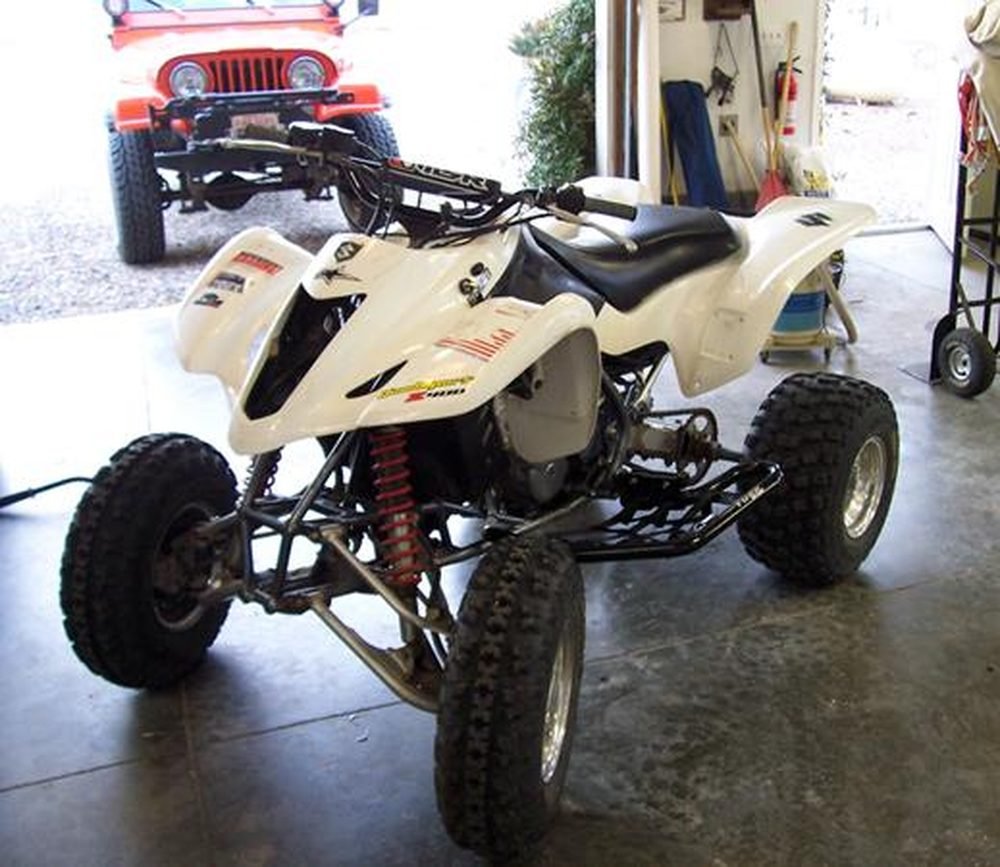
Rider photo via Wikimedia Commons (CC BY-SA 3.0), showing a Suzuki QuadSport Z400, the platform this guide covers.
Bottom line
The Suzuki LTZ 400 is a capable, dependable sport quad, and most of its issues are predictable rather than catastrophic. The flywheel key, the stator, and the valve shims cause the bulk of the owner complaints, and all three are fixable with hand tools and a service manual. Buy a clean one, keep it charged and maintained, and the LTZ 400 will give you a lot of hard trail miles with very little drama.

