As an Amazon Associate I earn from qualifying purchases. This article contains affiliate links that may earn a commission at no extra cost to you.
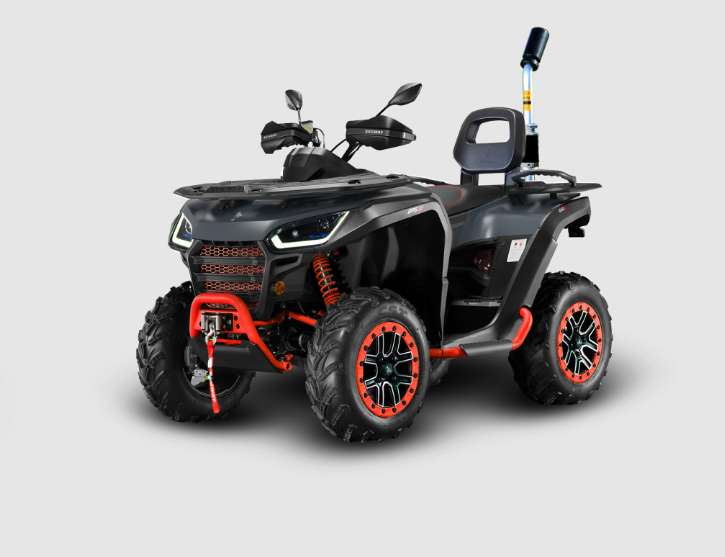
Segway is best known for electric scooters, but the company also builds a full line of gasoline ATVs and UTVs, sold as the Snarler and the Fugleman. The machine most people mean when they say Segway ATV is the Snarler, a full-size 570cc quad that competes directly with the Yamaha Grizzly and the Polaris Sportsman on paper. Owners generally like the capability and the price. The frustrations live elsewhere: dealer and warranty support, early heat problems, winch and battery wiring, plus a thin parts channel. This article walks through each issue, what actually causes it, and how owners handle it, then finishes with a used-buying checklist.
Dealer Support Is the Real First Concern
The most common complaint about a Segway ATV is not about the machine itself, it is about what happens after you buy one. Buyers in the Segway Snarler 570 thread on Reddit keep coming back to the same worry: if you do not live near a dealer who sells and services the brand, you are on your own for warranty work and maintenance. One buyer put it plainly: he would be completely on his own without a local dealer, and when he is spending that much money, warranty matters.
That concern is not hypothetical. The brand is still young in the United States and the dealer network is far thinner than Yamaha, Polaris, Honda or Kawasaki. Before you buy, call the nearest dealer and ask whether they actually handle warranty claims and stock parts, not just whether they sell the machine. If the closest one is hours away, fold that drive into the price. A quad you cannot get serviced is hard to live with, and this is the single biggest reason some buyers walk away from Segway even when the price is right.
Heat Problems on Early Models
Early build issues clustered around heat. In the Fugleman reliability thread on Reddit, an owner noted that the first models had heat-shielding problems while the thread opener hoped they had been fixed by the time he bought. On any used machine, check the heat shields and the underside for signs of heat damage, melted wire looms or discolored plastic near the exhaust.
On the current Snarler the cooling system is a liquid and oil heat exchanger design, which Segway says keeps power output reliable in hard conditions. If a machine runs hot, check the coolant level, the fan and the radiator fins before anything else. Mud packed into the front end blocks airflow exactly as it does on any quad. Keep the fins clean after dirty rides and watch the temperature gauge on slow work.
Winch and Battery Wiring
The Snarler ships with an optional electric winch rated to about 3,000 pounds of pull, and owners report stock setups around 2,500 pounds. That is plenty for a machine this size, but a big winch wired straight to the battery will pull it down fast if you stall it hard or run it with the engine off. Electrical complaints on the brand often trace back to exactly that.
The fix is standard for any modern ATV. Keep the terminals clean and fuse the winch circuit properly, then put the battery on a maintainer when the machine sits. If it cranks slow or the lights dim, check the charging output with a multimeter before you replace anything. A battery killed by deep discharge is often the real cause behind a no-crank Snarler that the owner blames on the starter.
Engine Specs That Clear Up the Confusion
The original post about Segway ATVs repeated a nonsense figure: a 1.3 horsepower engine. That is wrong. The Snarler runs a real 570cc gasoline single, dual overhead cam, liquid-cooled, with electronic fuel injection, rated at 44 horsepower and 48 newton-meters of torque at a 10.6 to 1 compression ratio. It uses a CVT with engine braking, on-demand 2WD and 4WD, plus an optional rear differential lock, all on a chromium-molybdenum steel frame.
Carrying numbers are reasonable too: roughly 88 pounds on the front rack, 132 pounds on the rear, with towing around 1,350 pounds on the smaller model. Suspension is dual A-arm front and rear with about 7 inches of front travel and 8.3 inches at the rear, and ground clearance sits near 10.6 inches. The line splits into a longer two-seat wheelbase and a shorter single-seat version, with dry weight roughly 790 to 850 pounds depending on the configuration. A 1.3 horsepower Segway at 19 or 22 mph belongs to a much smaller product, not the full-size Snarler.
Parts Availability and the Aftermarket Gap
After the purchase, the second most discussed issue is parts. Genuine Segway parts are not on the shelf at every corner shop, and the aftermarket is much thinner than the established brands. In the UTV discussions, owners compare Segway to CFMoto on build quality and worry about whether support will still be there in a few years. That is a fair concern when the powersports market tightens and smaller brands pull out of regions.
Plan for consumables before you need them. Buy a spare drive belt plus oil and filters, then line up a parts source. If the nearest dealer only orders on demand, do not buy a machine that already needs a part. The engine is not exotic, but the supply chain is slower than a Grizzly or a Predator, which is another argument for a well-tested used machine over a bargain-priced one that is already broken.
Segway also sells a smaller gas model in the AT5, which drops to a 499cc single making about 38 horsepower. Most of what shows up in used listings under the snack-sized price tag is an AT5 or an even smaller unit, so read the displacement before you compare prices against the full-size Snarler. Parts for the smaller machines are thinner still, and the winch, belt and brake bits are not always the same between the two lines.
Bottom Line: Capable Quad, Support Caveat
The Snarler is capable for the money. Owners in the r/ATV thread call it a pretty good all-around quad with lockable diffs and a stock winch, at a price that undercuts the established brands by a wide margin. The complaints that matter are the ones you can deal with up front: heat shields and cooling on early builds, battery and winch wiring, along with the dealer shortfall. If a dealer is nearby, it is a solid budget quad. If you buy with no service network at all, budget for the risk and keep a maintainer on the battery.
Fugleman vs Snarler: Know Which One You Are Looking At
Segway sells both ATVs and UTVs, and the two families have different reputations. The Snarler is the ATV line and the Fugleman is the side-by-side. The Fugleman is where the brand’s worst owner story lives. In the Fugleman reliability thread, an owner described buying a 2021 Fugleman 1000 UTX. As the delivery crew was backing it off the trailer, the power steering failed, so the dealer took it back and gave him a different machine. Not six months later, that replacement started leaking engine coolant. The dealer compensated him with a windshield and a stereo and fixed a gasket, but the owner still said he should have spent the extra money on a Polaris.
That story matters when you shop Segway, because it shows both sides of the brand. The dealer stood behind the machine, which is exactly what the warranty-support question is about, but the machine needed that support more than once in the first year. If you are looking at the UTV side, budget for the same possibility. If you are looking at the Snarler ATV specifically, the same dealer-network math applies, even though the ATV line has fewer dramatic failure reports in the owner threads.
Ride Quality and the Two Wheelbase Options
The Snarler comes in two flavors, and the difference is not just length. The long version carries two people, has a 57.1-inch wheelbase, and weighs about 847 pounds dry. The short version is a single-seater with a 51.2-inch wheelbase at roughly 792 pounds. If you ride alone most of the time, the short machine is lighter and easier to toss around. If you carry a passenger or load the racks for work, the long one is the one to buy.
Both use the same suspension layout: dual A-arms front and rear, with about 7 inches of travel up front and 8.3 inches out back. That is a utility-tuned setup, not a sport one, so expect a firm ride over sharp bumps rather than plushness. The 10.6 inches of ground clearance is competitive for the class. Where the Snarler stands out is the driveline, a locking front differential for steering plus an optional rear diff lock, which is real hardware for mud and steep climbs. Owners in the Reddit threads specifically called out the lockable diffs as a reason the machine punches above its price.
CVT Care and the Belt Question
The Snarler uses a CVT with engine braking standard, the same basic architecture as most modern utility quads. Belt life depends heavily on how you ride. Deep mud, heavy plowing and long full-throttle climbs all generate heat. Heat is what kills CVT belts. Owners of CVT quads from every brand learn the same lesson, and Segway is no different: keep the belt housing clean and the vent clear, and replace the belt on a schedule instead of waiting for it to fail.
A glazed belt announces itself with sluggish takeoff and belt dust inside the cover. If you feel a slip right after a hard day, inspect the belt before you spend money on clutches. The aftermarket for Segway CVT parts is thinner than the big brands, so it is smart to buy a spare belt at the same time you buy the machine. A belt is cheap compared with a tow out of the woods, and on a brand with a slow parts channel, having one on the shelf beats waiting two weeks for an order.
What to Check Before Buying a Used Snarler
Before you hand over cash for a used Snarler, confirm which variant you are looking at, since the line includes single and two-seat, short and long wheelbase versions with different weights and payloads. Check the heat shields and cooling fins for damage, look over winch wiring for burnt insulation and charred terminals, then cold start it. Run the CVT through forward and reverse and listen for belt or clutch noise. Most importantly, verify the dealer question: find out whether a shop near you will actually service the machine and honor warranty work.
The most common mistake is test-riding with a half-dead battery and blaming the drivetrain. Charge it, check the charging output with a meter, then ride. If the asking price leaves room for a parts and service budget, a used Snarler can be an excellent low-cost utility machine. If you would rather have a brand with a deep owner community and predictable history, the Yamaha Grizzly 700, the Polaris Predator 500, the Can-Am Outlander 450 and the CFMOTO Uforce 1000 are all covered on this site.
Maintenance That Keeps a Snarler Running
The Snarler is no harder to maintain than any other quad if you stick to the basics. Oil and filter changes on schedule matter on the DOHC single, and the air filter sees more dust than average if you ride in the dirt. The CVT belt is the component worth replacing on a schedule, and a glazed belt shows up as sluggish takeoff. A spare belt is cheap insurance for a season of work.
Battery care is the other big one. Keep it on a maintainer over winter and verify the charging output with a multimeter. The Snarler has smart electronic power steering with three modes set through the app, which is a convenience that doubles as a potential headache if the app acts up, so update the firmware before troubleshooting electrical issues. Bleed the brakes and flush the coolant on the interval, and keep a winch and its wiring clean and fused. None of that is exotic, it is the same rhythm any modern quad needs, just with a thinner aftermarket behind it. Brake fluid should be bled yearly if you ride in mud or wet seasons, and the coolant should be flushed on the manufacturer’s schedule to stop corrosion in the aluminum cases. On the long two-seat model the rack load adds up fast, so watch the rear springs on a loaded work machine and keep an eye on the tires for uneven wear that points to a bent wheel or a loose axle nut.
Bottom line. Segway ATVs like the Snarler deliver a lot of utility for the money, and the brand weaknesses are dealer support, parts supply plus a few early build issues. Verify the support network before you buy and look after the battery and cooling. A Snarler is honest value. It is not the machine to buy on price alone when no dealer is nearby. Do the homework and maintain it, and it will reward you like a quad that cost thousands more.

