
As an Amazon Associate I earn from qualifying purchases. This article contains affiliate links that may earn a commission at no extra cost to you.
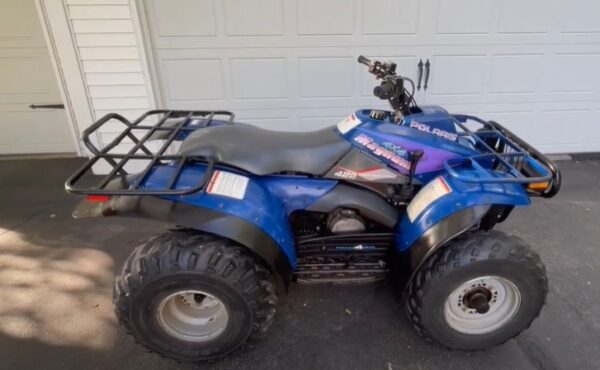
The Polaris Magnum 425 4×4 was Polaris’s mid-size utility quad of the mid-1990s, built around an air-cooled 425cc single-cylinder four-stroke running the company’s PVT belt drive to a chain-driven solid rear axle with demand-drive front hubs. It was the machine you saw on small farms and hunting leases from 1995 through 1998, and a surprising number of them are still earning their keep.
Three decades on, the owners who still run them report a short list of recurring problems: AWD that cuts out mid-ride, fuel starvation that looks like a dead pump, hard starts, a power wall around 30 mph, plus belt and clutch wear. This article walks through each issue the way owners describe it on the Polaris ATV Forum, explains what actually causes it, then lays out the fixes that hold up.
AWD that cuts out when you hit a bump
The most common complaint on the Magnum 425 4×4 is the front drive dropping out mid-ride. One owner of a 1998 unit described it exactly: AWD works in reverse only while the override button is held, and works in high and low only while you keep pressure on the shifter; it cuts off the moment the machine gets jarred. The same owner noticed the left front hub had stopped engaging while the right still pulled.
The root cause sits in how Polaris’s demand-drive system works. Each front hub locks in through an electromagnetic coil, and that circuit is gated by a switch on the transmission that only allows AWD in the right gear position. When that switch wears, or the shift linkage develops play, the hub coils lose power intermittently.
The shifter slop the owner mentioned is a clue: the transmission switch is positioned by the shifter, so a loose linkage means a switch that wavers between positions.
The fix starts with the wiring. Check power and ground at the wire running down to each front hub, then wiggle the shifter while you watch the meter. If power drops out as the linkage moves, the transmission switch is the culprit. One Magnum owner bypassed that switch entirely by wiring the gray hub-coil wires to an ignition hot up front, and the dash AWD button still engaged and released the front drive normally.
Another owner with the same symptom found the left hub dead while the right still pulled, and the diagnostic was identical: verify voltage at the hub wire before condemning the hub itself. The full thread walks through the same diagnosis if your front end is cutting out.
Fuel starvation that mimics a dead fuel pump
Fuel problems are the second most reported issue, and they usually get blamed on the vacuum fuel pump. In the most detailed account, a 1998 Magnum 425 owner described the classic pattern: the quad ran flawlessly for years, then started dying on a long climb at altitude with textbook fuel starvation. Let it sit for a few minutes and it fired back up, ran another 5-10 minutes, then died again. He was ready to buy a pump.
The real culprit turned out to be the fuel supply hoses. The insides had rotted from ethanol-blended gas, and on the supply side the line had collapsed in on itself and gone flat, with bits of hose found in the carb inlet. That is why the machine would restart after sitting: the collapsed section relaxed, let fuel through, then pinched shut again under load.
So before you throw money at a fuel pump, pull the fuel supply hoses and inspect the inside of every inch of them. Replace them with ethanol-rated hose, blow out the carb inlet, then fit a new fuel filter and plug while you are in there.
Owners report the same starvation pattern from a clogged petcock screen and debris sitting under the carb needle, so a full tank-to-carb inspection is the right first move.
This is an age problem more than a design problem: newer fuel-injected machines like the CFMoto Uforce 1000 sidestep this whole class of failure, but on a 1990s carbureted quad, the rubber is the weak link. The old Can-Am Outlander 450 shows the same ethanol-related fuel line failures.
Hard starts, dead batteries, and the sticky starter drive
A 1998 Magnum owner chasing a no-start checked the obvious first: the battery was dead. After charging it, the quad still would not fire unless he sprayed carb cleaner down the throat, which means fuel was not reaching the carb. He had two separate problems stacked on one machine: a carb that needed a proper cleaning and a starter drive that would not disengage until the engine was revved.
The sticky starter drive is a known failure on this era of Polaris singles. When the drive gear hangs engaged, the starter spins the engine over rough and you get a grinding noise on the next start. The owner in that thread confirmed the cheap fix: an aftermarket starter drive, ordered online for not much money, sorted it out.
Pair it with a real carb cleaning, a full teardown rather than a spray; fix or replace the broken air filter hold-down while the airbox is open. Keep the battery charged, because this era of Polaris regulator is basic and a weak battery makes every other symptom worse.
One more thing: if the engine only runs on starting fluid or carb cleaner sprayed down the throat, fuel delivery is the problem, not spark. The float bowl is dry for a reason. Work the fuel path from the tank down: petcock flow, line condition, filter, then the carb itself.
On a machine this old, expect to find the needle and seat varnished and the pilot jet plugged, which is exactly the combination that makes a Magnum refuse to start after sitting all winter.
The 30 mph power wall (and the airbox backfire)
This is the thread title that keeps coming up: will not go over 30 mph.
A 1996 Magnum 425 4×4 owner did nearly everything in one weekend: tightened all three drive chains, changed the oil and transmission fluid, replaced every fuel line, cleaned the fuel filter, fitted a new plug and wires, new tires plus a new drive belt, then sprayed out the carb.
The machine idled perfectly and pulled hard right up to 30 mph, then hesitated like it wanted to go but would not.
The clue was the airbox. With the air filter and intake housing installed, the quad backfired. With them off, it ran clean but still would not pass 30. That combination points at a carb that still needs a real overhaul, since spray cleaner is not a rebuild, plus a fuel supply that needs to flow harder under load.
Other owners in the thread added two more checks: confirm the petcock flows enough fuel and its screen is clean, then drain the tank and look for water sitting in the bottom. One owner solved the exact same symptom on another Polaris with a bottle of fuel drier and a tank of fresh gas. If yours hesitates at speed with a strong idle, treat it as fuel and intake first; save the cam and top-end theories for after those are ruled out.
Belt and clutch wear in the PVT
The Magnum 425 uses Polaris’s PVT, the belt-driven automatic the company has run for decades. On a machine this age, the belt is usually the first thing to go. Owners describe it as the engine revving with no change in speed, no pull no matter the throttle; the machine hangs in low range.
One Magnum owner replaced the drive belt as part of his full service and reported the quad ran like a top afterward, which is the typical outcome when the belt is the only real problem.
The drive and driven clutches wear too. Decades of engagement leave the sheaves grooved and glazed, and a worn belt that sits deep in the pulley makes the shift-out sluggish. If the engine raps out with no speed, start with the belt: pull the cover, check the belt for glazing and cracks, then inspect the sheaves for grooves while it is off.
Belt and clutch parts are easy to source because the drive clutch is shared with the 1998-era Sportsman 500, Magnum and Big Boss 500, so the common stuff crosses over. Any belt-driven utility quad rewards this attention, and the Yamaha Grizzly 700 is no different.
The 4×4 switch and dash lights acting up
A thread titled “98 Magnum 425 lights, 4×4 not working” captures a related pattern: the 4×4 dash switch and the lights failing together. Because the demand-drive circuit runs from the dash switch through the transmission switch to the hub coils, one bad switch or a corroded connector kills the whole chain.
Owners who chased it found the fix in the wiring: check the dash switch continuity first, then the transmission switch, then the connector at each hub.
The gray-wire bypass from the AWD section is the workaround when the transmission switch is the weak link and you want the front drive back without hunting down a NOS switch. If the lights and the 4×4 died at the same time, suspect the shared power feed rather than two separate failures, since that points at a corroded connector or a broken ground.
Know your Magnum: the 425 versus the 325 and 330
Owners mix up the Magnum displacement variants more often than you would think. The 425 4×4 shares its platform and most of its running gear with the smaller 325 and 330 Magnums, and a thread titled “mass confusion 330 Magnum” shows how easy it is to order the wrong parts or quote the wrong problem.
If you just bought one, confirm what you actually have before buying anything: check the engine number and the frame tag, and the year-identification threads on the Polaris ATV Forum walk through telling a 425 from its smaller siblings.
What to check before buying a used Magnum 425 4×4
Before you hand over cash for a 1990s Magnum 425 4×4, run these checks. Test AWD on a gravel slope and watch both front wheels: if one hub does not pull, or the drive cuts out when you hit a bump, budget for the wiring fix above. Pull the fuel supply line and look inside it, since a collapsed or rotted line is the most common reason these quads get sold cheap.
Cold-start it from dead cold and listen for the starter grind that means a sticking starter drive. Ride it past 30 mph on a long straight and make sure it pulls through, because the 30 mph wall is a real pattern. Then pop the belt cover and check the belt and sheaves for wear.
Also ask about the rear axle chains, since owners keep them adjusted and a sloppy chain makes the drivetrain clunk. Check the battery and charging with a multimeter before you negotiate, because a dead charging system on a 1990s Polaris is a common surprise. A Magnum that has been kept in a garage and serviced regularly is a different machine from one that sat outside for a decade, and the price should reflect it.
Before you shop any used Polaris, it helps to check which model years to avoid. If you are comparing against Polaris sport quads, the Predator 500 has its own set of era-specific quirks.
On price, treat the Magnum 425 as a work machine, not a collectible. Clean, running examples with solid AWD and no fuel system drama are still cheap. That is the appeal: you can get a genuine 4×4 utility quad for less than the cost of a new set of tires for a modern machine.
The flip side is that parts availability has gotten thinner, so confirm the big-ticket items are healthy (belt, clutch, fuel lines, hubs) rather than assuming you can source everything new. A basket case with a seized engine is a parts donor, not a deal.
Maintenance that actually matters on an old Magnum
The Magnum 425 does not need much, but the little it needs is specific. Replace the fuel lines every few years, because ethanol rots them from the inside and the collapse is invisible from outside. Clean the carb properly at the first sign of a stumble, not with a spray can. Check the belt and sheaves every season and replace the belt when it glazes.
Change the transmission and gearcase oil at least once a season, since owners who did a full fluid change reported noticeably smoother shifting. Keep the drive chains adjusted and oiled, because a dry chain wears the sprockets and a loose one slaps. Seat the airbox lid properly every time, because the backfire complaint in the 30 mph thread started with an intake that was not sealing.
Use the right fluids. The PVT wants its specified belt-case and gearcase lubricants, and the transmission takes the thin gear oil Polaris specified for it, not whatever is on the shelf. Owners who swapped in heavier oil reported harder shifting and more clutch drag, so stick to the book.
A cheap multimeter and a few minutes of testing the charging system once a year will also tell you if the stator and regulator are keeping up, which saves you from the dead-battery surprises that strand riders deep in the woods.
Bottom line. The Magnum 425 4×4 is not a problematic machine so much as an old one. The complaints that show up in owner threads are almost all age-related: demand-drive wiring and switches fail, ethanol-rotted fuel lines collapse, plus a tired belt takes the edge off the PVT. Every one of them has a known fix, and none of them requires exotic parts.
If you can turn a wrench and you check the fuel lines, the belt and the AWD circuit before you ride, a 1990s Magnum 425 will keep earning its keep.
If you’re ordering supplies, CVT belt and synthetic ATV oil are the items owners reach for first when they start working on these machines.

