
As an Amazon Associate I earn from qualifying purchases. This article contains affiliate links that may earn a commission at no extra cost to you.
The Suzuki KingQuad 750 is one of the most capable big-bore utility quads Suzuki has ever built, with a 722 cc single that makes light work of plowing, towing and long trail days. But it is not trouble-free. The problems owners report most are an intermittent stalling near idle, a 4WD actuator that stops shifting, and a cooling fan that goes quiet right when you need it.
This guide walks through the real owner-reported issues, the likely causes, and the fixes that get these machines back on the trail. The KingQuad 400 and the older KingQuad 300 have their own recurring quirks, covered in our separate posts.
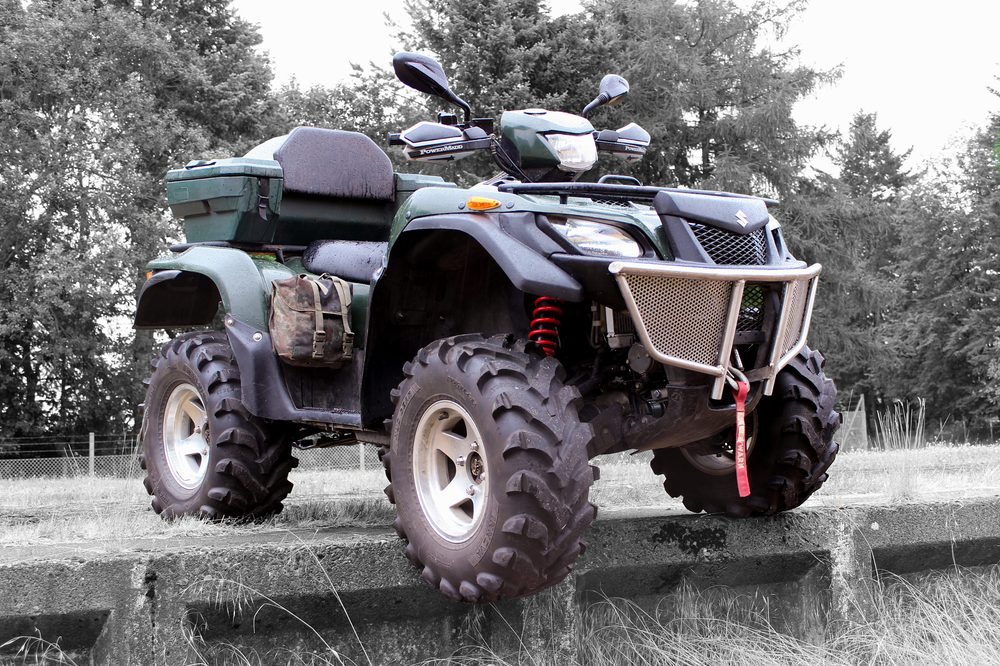
If you own a 750, you already know the generation question is the first thing to settle. The nameplate covers two very different machines. The early KingQuad 750 (roughly 2005 through 2015) is the 747 cc unit. The current KingQuad 750 AXi, sold from roughly 2016 on, is a 722 cc engine with fuel injection, a liquid-cooled single, double overhead cams and four valves.
Most of the problems below apply across both generations, but the electrical gremlins are far more common once power steering showed up on the later AXi models. Keep your model year straight when you search for parts or read a repair thread.
The 750 uses a continuously variable transmission with a belt, a dry-shoe automatic centrifugal clutch, and a two-speed high/low box with reverse up front. Drive modes run through a lever that shifts between 2WD, 4WD and a locked front differential. That system is reliable when it is used on dry ground, but it is the source of a few of the most complained-about failures.
Owners on the Suzuki forums swap stories about stuck actuators and blinking dash lights more than any other single item after the stalling issue.
The other thing to know up front: a fair number of 750 problems trace back to the electrical system, not the big engine. The fuel-injected models depend on steady voltage to the injection control box, and the machine adds running a power steering pump on top of that. When voltage sags, the quad can die at the worst moment. That is the single most reported pattern in the owner forums, and it is very often fixable for almost nothing.
Start there if your 750 stalls.
Stalling near idle or right off the throttle
The most common complaint in KingQuad 750 owner threads is a stall that happens at idle, or the instant you crack the throttle, sometimes when you nudge the handlebars. One owner described it as the quad firing and running perfectly until it suddenly died coming off idle, then restarting as if nothing happened. Threads on this go back years across the 700 and 750 machines, which share a lot of their drivetrain and EFI.
In many cases the trigger is a voltage drop. The newer 750 AXi models with electronic power steering draw a notable load through the EPS motor. When the system does not get enough voltage, the injection control box can shut the engine off. Owners report the stall clears up when they remove the power steering fuse, which points straight at the EPS draw as a contributor on those machines.
A second, very common root cause is a failing regulator and rectifier. The diodes go bad, charging voltage sags, and the fuel injection loses what it needs. One owner tested the regulator with a multimeter, found the diodes were shot, replaced the part, and the stall never came back. Another added a small 12 V computer fan aimed at the regulator to keep it cool, since the part sits in a poorly ventilated spot.
The same electrical weakness shows up on the Suzuki LTZ 400, which shares Suzuki’s approach to charging electronics.
The cheapest fix that a lot of owners swear by is a proper ground. One thread details how a loose or corroded battery-to-frame ground made the fan and EPS draw enough amperage to starve the injection box, dying at low speed over and over. Running a short 12-gauge wire from the battery negative terminal to a clean bolt on the frame fixed it for around a dollar.
Several other owners confirmed the same ground-wire fix on 2015 AXi models, and the factory has never improved the grounding from the showroom floor.
Before you replace expensive parts, work through the cheap checks in order. Test the battery under load, because a weak cell mimics every electrical symptom here. Reset the idle air control valve, which is free to do. Check the throttle position sensor setting with a paper clip per the service manual. Verify the injection pressure. Look at the fuel pump sock and injector spray pattern, because a plugged sock causes the exact same low-speed stall.
Only after those, tested in order, is it time to suspect a regulator or a brand new injector. One owner went through the whole list with a reman injector and a fresh sock before the stall finally cleared.
4WD actuator stops shifting or hangs in front diff lock
The next big cluster of KingQuad 750 problems is in the front drive. Owners report the dash showing 4WD even when the wheels are free, the diff-lock light blinking, or the machine staying mechanically stuck in diff lock so it will barely steer. There is a known thread where a 2008 750 could not shift into or out of 4WD and diff lock, and the actuator cover screws had been stripped by a previous owner.
The actuator that moves the shift collar in the front differential is the part that fails. It is an expensive component, and owners warn against replacing it without first proving it is dead. A good diagnostic trick from the forums: find the white round connector near the actuator, feed 12 V to the two pins, and you should hear it click in and out. If you get no click, the actuator is gone.
If it clicks and the dash still misreads, the problem may be the position sensor or the relay, not the actuator motor.
There is also a much cheaper relay trick that often sorts it. The 4WD relay sits under the seat near the battery. Unplug it, jump the two opposing pins with a paper clip, and the actuator should clunk home. Plug the relay back and the handlebar switch works again. Owners use this to free an actuator that got stuck mid-travel, which the control unit then refuses to energize because it cannot sense a position.
Do not skip this step before ordering a new actuator, because it fixes the majority of these cases for nothing.
On the mechanical side, a stuck diff lock is sometimes a shim problem inside the front differential. One owner tore his front diff down twice, found a badly bent bearing shim pushing the ring gear, and a damaged cam shifter, before the lock finally released. The lesson: if the machine binds hard in steering and the actuator is fine, the front differential itself may need a bench service.
This is not a common failure on a well-maintained quad, but water and mud inside the housing make it far more likely. If you suspect it, drop the front diff and inspect the shims and shifter before reassembling.
Cooling fan does not come on and the quad runs hot
Overheating is the third pillar of KingQuad 750 owner complaints, and it usually shows up as a fan that never kicks on. One member plowing a driveway watched his 750 boil coolant out the overflow tube because the fan stayed off and the high-temp light never lit. Another helped a neighbor whose 2015 AXi made it through a whole hot summer with the fan silent.
In both cases the machine was not being abused, which is exactly why the fan failure caught them off guard.
The usual culprits are a stuck thermostat, a faulty fan temperature sensor, or a wiring problem like a blown fuse. The thermostat is the first thing to test, because a unit that only opens partway will let the quad run hot without boiling visibly. Pull it and heat it in a pan of water to confirm it opens fully, and watch for built-up scale and corrosion, which one owner found dumping orange crud out of his old thermostat.
Install the new one the correct way, since these can go in backwards.
Measure the fan circuit directly. Unplug the fan and feed it 12 V to confirm the motor itself works, which is a quick test that rules the fan in or out. If the motor runs, the fault is upstream, so trace the fuse, the temp sensor and the relay. The fan temp sensor is awkward to reach and easy to overlook, and a couple of owners have bought a spare and kept one in hand because they are hard to find on the shelf locally.
Clean the radiator fins too, because packed mud and leaves do the same damage as a dead fan by starving the radiator of airflow.
The most reliable prevention is to clear the radiator before every big ride and to watch the temperature gauge on climbs and in deep mud. A blocked radiator looks innocent from the seat but it is exactly how a healthy 750 cooks itself. If you are buying a used 750, test that the fan cycles before you hand over cash, since it is a job that gets skipped constantly.
Drive belt wear and the CVT routine
Like every belt-driven utility quad, the KingQuad 750 goes through drive belts, and that is partly a maintenance issue and partly a riding habit issue. Belts wear fast when you lug the engine hard in deep mud, spin the tires in snow, or run oversized tires that force the clutch to slip continuously.
A glazed or shredded belt usually announces itself with a sudden loss of drive, sometimes a burning smell, before it finally breaks and leaves you walking.
Prevention is straightforward. Keep the CVT cover clean and check the belt at the model’s service interval. Buy a quality replacement belt and have it on hand, because the aftermarket cost is small next to the cost of a tow out of the bush. If you run aggressive tires or a plow, plan to check the belt more often than the service schedule says. Owners who stay on top of this rarely get stranded by the belt.
The Yamaha Grizzly 700, the 750’s main rival in this class, has a belt system with its own quirks worth knowing about.
You can find replacement belts and the small hand tools for a CVT service through the link below. Most KingQuad owners keep a box of spares in the garage and do this job themselves in under an hour. Suzuki KingQuad 750 drive belt on Amazon will show current options.
Battery and charging system quirks
Battery problems show up twice on the KingQuad 750. First as the low-voltage stalling covered above, and second as a machine that will not hold a charge or dies mid-ride. The recalled 2016 and 2017 750 AXi models are the clearest example. Suzuki recalled about 3,400 of them in December 2016 because the battery could fail and stop the engine while the quad was in motion, a crash hazard.
Six owners reported the issue and no injuries came in, but the free dealer repair is worth checking for if you own that vintage.
On older machines, a charging system that runs hot cooks the regulator described earlier, which then starves the battery. A simple voltage test at the battery with the engine running should show about 14 V. Below that, suspect the stator, the regulator, or a bad battery in that order. Keep the battery on a maintainer if the quad sits for weeks at a time.
A battery maintainer is cheap insurance against the dead-battery stalls that plague any EFI quad that is parked. You can look at ATV battery maintainer options on Amazon if yours sits between rides.
Shift hesitation and the two-speed box
A smaller, but still recurring, set of complaints centers on the high/low range box and the electric shift. Owners describe a clunky or hesitant shift, especially when the machine is cold, and a few report trouble getting the box to take the next range cleanly. Much of this ties back to the shift mechanism and the linkage more than to the engine.
Keeping the linkage clean and lubed, and easing the machine to a near stop before shifting ranges, clears most of it up.
A neglected range box that gets water or mud in it will start to bind. If the shift feels wrong, check the linkage travel before suspecting internal gears. The two-speed box in the 750 is well built, and most owners who complain about shifting find a linkage or adjustment issue rather than a broken box. Follow the service guide for the linkage spec and tighten it if there is slop.
If the machine sits a long time, the shift parts can stick from old grease, so working the ranges through a few times before a big ride is a good habit. There is a small but real owner community that swears the electric shift gets balky when the battery is weak, so treat a sluggish shift as another reason to check your voltage and your ground.
What to check before buying a used KingQuad 750
If you are shopping for a used 750, a few of these problems are red flags you can check before you buy. Start the machine cold and let it idle, then crack the throttle and watch for the low-speed stall. That single test catches the voltage and ground issues immediately. You can test it further by turning the handlebars while idling to see if the power steering draw trips a stall, which is the exact symptom owners describe on later AXi models.
Run the machine fully warm and watch the temperature gauge with the fan operation in mind. Confirm the cooling fan actually cycles. Shift through 2WD, 4WD and diff lock on level ground and make sure the dash agrees with what the wheels are doing. Buy the quad with a service history if you can, because the ones that come back to life are the ones someone maintained.
A 750 with a clean radiator, a corrected ground, and a recent belt is a different machine from one that has been run hot for years.
Ask the seller when the drive belt and the regulator were last done. Those two jobs are the difference between a reliable trail quad and a project. The KingQuad line is generally a solid, long-lived platform, and a well-sorted 750 will outwork most of what else is in its class, so the pre-purchase checks are worth the twenty minutes they take.
Suzuki KingQuad 750 Drive Belt
Most owners of this machine keep a spare CVT belt on hand and do the swap themselves in under an hour. See today’s price on Amazon.
Bottom line
The Suzuki KingQuad 750 is a strong, hard-working utility quad, but it has a few well-known weak points. The low-speed stalling is almost always electrical, and a good ground or a fresh regulator fixes more of them than a new injector does. The 4WD actuator, the cooling fan and the drive belt are the other things to watch.
Keep the voltage healthy, the radiator clean and the belt fresh, and the 750 is a tough, dependable machine that will pull its weight for years. Check the pre-purchase items if you buy used, and you will know exactly what you are getting into.

