
As an Amazon Associate I earn from qualifying purchases. This article contains affiliate links that may earn a commission at no extra cost to you.
If you own a Kawasaki Brute Force 750, you already know the appeal. The liquid-cooled 749cc V-twin pulls hard, the smooth automatic transmission makes trail riding easy, and it tows more than most ATVs its size. But no machine is bulletproof, and this one has a handful of problems owners run into again and again.
The most common are stator and charging failures that leave you on a dead battery, a rear brake that locks up, and differential oil seals that leak. I have spent time on these machines and talked to a lot of owners. In this article I break down the real issues, the root causes, and the practical fixes so you can keep your Brute Force on the trail instead of in the shop.
Charging system failures and a dead battery
The single most reported Brute Force 750 problem is a battery that will not stay charged. Owners on Kawasaki forums describe starting the quad fine, riding for a while, then having to bump start it or finding a flat battery the next morning. The culprit is usually the stator, the regulator rectifier, or both.
One owner on KawieRiders put his 2007 750i on a charger and it ran fine for a while, but the real fix was finding why it was not charging off the alternator at all.
Here is the simple test. Start the machine and check battery voltage across the terminals. A healthy charging system reads around 13.5 to 14.5 volts at a fast idle. If you see battery voltage all the time, the stator or regulator is not feeding the battery. If you see nothing when you disconnect the negative cable and the engine stalls, the charging circuit is dead.
When you chase this one, replace the stator and the regulator rectifier together. A burned stator can take out a fresh regulator, and the reverse is also true. Test the stator’s three yellow wires for resistance to ground, too, because a shorted winding is a common failure. This is a manageable job with a service manual, and parts are not expensive compared to a dealer diagnosis.
Rear brake sticks on and drags
The Brute Force rear brake is not a standard disc setup. It is a clutch type with multiple steel and friction plates inside the rear differential housing, plus a ball and ramp actuator. That design works well until something goes wrong. Owners report a rear brake that stays partially applied, drags, and makes the machine feel sluggish or hard to move.
A KawieRiders member described his 2008 750i braking even after he adjusted every cable and the fluid was full and clean.
Two things cause this. First, if the wrong fluid was used or the brake got overheated, the friction material can come apart and jam the plates together. Second, if water ever got into the diff, the ball and ramp actuator can rust up and seize. Another common cause is a stuck hand brake cable that keeps tension on the lever.
One owner could not use his hand brake at all because the cable stuck, and he had to free the lever with pliers before the foot brake would release it.
Start cheap. Check the cable first and lube or replace it. If the brake still drags, drain the rear diff and look for metal shavings and water. If the discs have come apart or the actuator is rusty, the diff cover has to come off, which is a bigger job. Catching it early, before the plates score the housing, saves you a full rebuild.
This is the same kind of sealed, watery brake design that causes headaches on the Can-Am Outlander 450, so owners switching brands already know the drill.
Front differential oil seal leaks
Front diff oil seals are a known weak point on the Brute Force. Owners find wet spots on the front diff or oil dripping down the shock area, and the level slowly drops. Replacing them is not too bad once you know the sequence. One KawieRiders member on a 2008 unit was told the machine had to be torn apart, but other owners walked him through a simpler fix.
You remove the driveshaft (it compresses), then the coupling nut, the washer, and the case coupling, which is the metal sleeve that slides out. There are two oil seals, one on the outside of the coupling and one on the inside. Do both while you are in there, because the second one is usually close to failing too. The job is doable right on the machine with the front end supported.
The bigger lesson is to check front diff oil regularly, especially after deep water crossings. A low front diff runs hot and can chew up the bevel gears, which is a far more expensive repair than a seal and a fresh jug of synthetic ATV differential oil. The front driveline seals are the weak point too on the Honda Foreman 450, which sees the same muddy riding.
Rear wheel bearings wear out early
Rear wheel bearings are another frequent complaint, and they tend to let go on used Brute Forces that have seen mud and water. You will hear a grinding or growling noise from the rear, feel play in the wheel when you rock it, or notice a greasy bearing out the back. Owners on the forums recommend replacing the bearings and the seals as a set, because a new bearing in a water-worn seat does not last.
Avoid the temptation to ride on a noisy bearing. Once it collapses, it can score the axle and turn a cheap job into an axle replacement. While you are swapping bearings you might as well repack the grease and replace the axle seals. This is one of the easier jobs on the machine and a good one for a weekend with a press.
Bottom end knocking and rod bearing wear
This one shows up more on high mileage or abused 650s and 750s, and it is the scariest noise an owner can hear. A deep knock from the bottom end, often worse when cold, points to a rod bearing getting hammered. A KawieRiders member with a 2005 Brute Force 650 found his connecting rod bearing was damaged and needed new parts and gaskets. The bearing had scored and the rod showed wear.
The owner-friendly news in that thread is that it is not always an engine-out disaster. The responding owner said the parts came to under 300 dollars including the head gasket, base gasket, and connecting rod bearing. You have to size the new bearing to the rod, because Kawasaki used marked sizes, and a service manual walks you through it.
The root cause is usually low oil, old oil, or running water that got into the crankcase, so keep the oil fresh and check the level every time you ride.
Steering tie rod boots and mud caked CV joints
The Brute Force sits low in the front and plows a lot of mud and water, which finds its way into the steering and driveline boots. Owners report inner CV boot tears and tie rod boots that split, letting grit in and ruining joints fast. The fix on a well used Brute Force is usually a full set of boot kits and new joints where the damage is done.
Inspect the boots every wash, not just at service intervals. A pinhole tear turns into a costly joint replacement if you leave it. Grease the steering pivot points and replace torn boots immediately. This is pure prevention, and it is the cheap kind that keeps a Brute Force alive for a very long time.
The CVT belt and clutch basics
The brute uses a continuously variable transmission with a belt and two clutches. Owners who ride hard or run oversized tires find the belt glazes or the primary clutch spring wears, and the machine starts to feel flat or slides in the rev range. A worn belt slips, a glazed belt grabs and surges, and a tired secondary spring lets the machine downshift oddly.
The belt itself is easy to inspect. Pull the CVT cover, check for cracking, glazing, or excessive wear, and measure it against specification. If it is close, replace it before it strands you in the woods. Keep a CVT belt in the kit for peace of mind. Clutch service is more involved but well documented on the forums, and upgrading the springs is a popular fix for owners who run big tires and want the brute to pull the way it was meant to.
synthetic atv differential oil
Owners of this machine rave about it. See today’s price on Amazon.
What to check before buying a used Brute Force 750
If you are shopping for a used one, the Brute Force is a solid buy, but look before you leap. Start the machine cold and listen for a bottom end knock on the first few seconds of idle. Check the battery and charging voltage at a fast idle, because charging repairs are common and you want to know if it is already weak. Test the rear brake: on flat ground, the machine should roll free with the brake off, and the hand brake should release cleanly.
Look underneath for oil on the front and rear diffs, and for torn inner CV boots. Check the rear wheels for bearing play and listen for a growl when you rock them. Ask when the CVT belt was last replaced, because that is an interval owners neglect. The 750i (fuel injected) models are generally a bit smoother and colder starting than the older carbureted 750s, so that is worth factoring into your budget.
Used big twins all have their weak points, and our guide to the Polaris Ranger years to avoid shows the same pattern of model year quirks you should know before you pay.
Keeping the charging and electrical system healthy
Aside from fixing the stator and regulator, there are habits that double the life of the Brute Force electrical system. Use a battery maintainer when the quad sits for more than a couple of weeks, because a deeply discharged battery kills the charging system over time. Keep the battery terminals clean and tight, and check the main fuse.
A cheap inline voltmeter is one of the best upgrades, because it tells you the charging output instantly while you ride before you are stuck in the mud with a dead battery.
Slow charging beats a fast jump start every time. If you habitually jump start a weak battery, you stress the rectifier and shorten its life. Charge it properly, and if the charging circuit keeps failing, do the stator and regulator together and clean every ground point. The same electrical habits keep the Yamaha Kodiak 400 from surprising you on the trail, so if you run both you will notice the patterns line up.
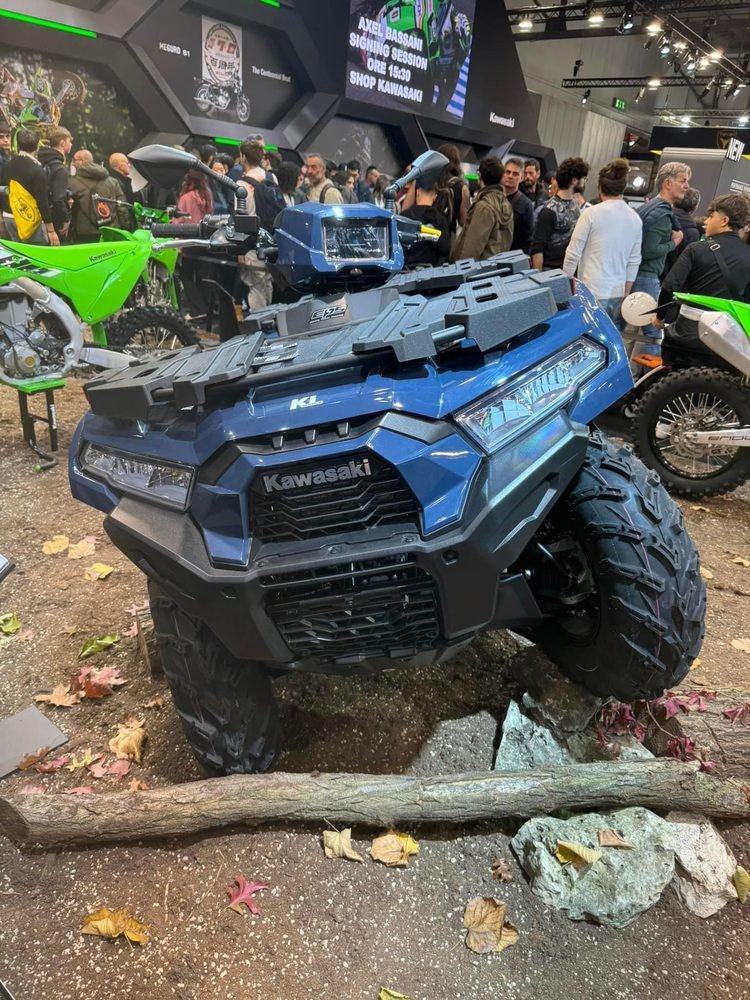
Attribution: Kawasaki Brute Force 750 2025 by AVMOTO, CC BY-SA 4.0, via Wikimedia Commons.
Bottom line
The Brute Force 750 is a strong, dependable V-twin that handles real work, but it rewards an owner who stays ahead of a few known issues. The charging system, the clutch style rear brake, and the diff oil seals are the things you will deal with, and all three are fixable at home for less than a dealership bill.
Buy one that starts clean, keeps its electricals healthy, checks the diffs and CVT regularly, and this machine will tow, plow, and haul for decades. Just keep it dry inside and never ignore a new noise.

