As an Amazon Associate I earn from qualifying purchases. This article contains affiliate links that may earn a commission at no extra cost to you.
The CForce 1000 Overland is CFMOTO’s long-travel, winch-equipped touring version of its 963cc twin, built for riders who spend weekends loaded down on trail and backcountry. It is a capable machine for the money, but it is not without quirks.
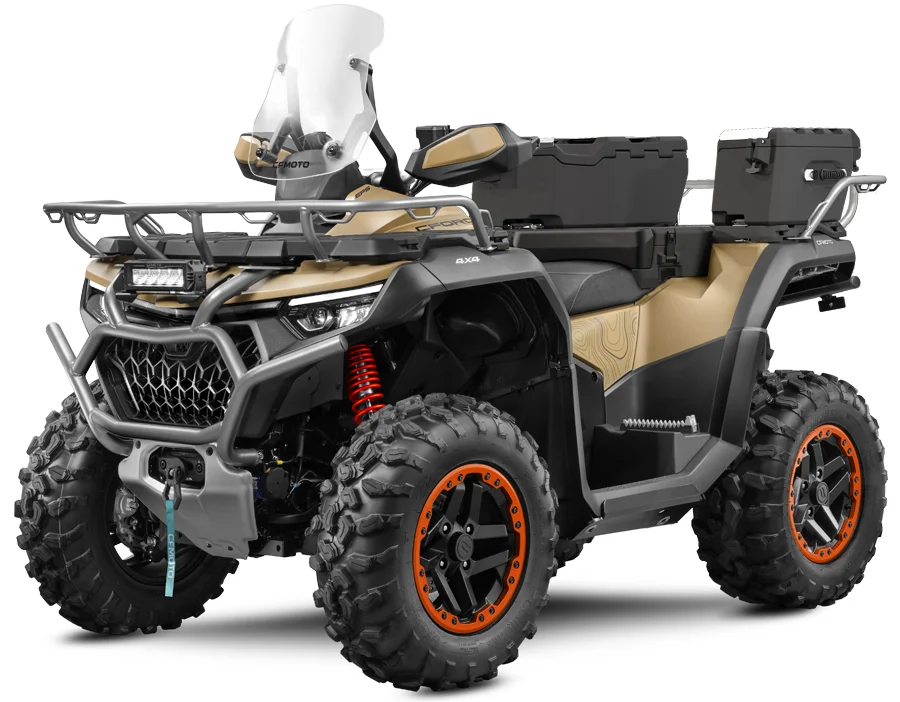
Owners on the CFMOTO owner forums most often complain about front differential noise and 4WD engagement, EPS controllers that blow fuses, a fragile thumb throttle, and a frame that bends instead of absorbing a hard hit.
This guide walks through each of those issues, and if you are comparing platforms, the UTV side covers similar ground in our UForce 1000 write up, what actually causes them, and how to fix them at home so you can keep riding instead of sitting in a dealer’s waiting room.
The 963cc Twin That Carries the Overland
The Overland runs the same liquid-cooled 963cc V-twin that powers the rest of the CForce 1000 line. It is a fuel injected 4-stroke rated around 90 horsepower, and it is a fast touring machine that keeps up with the big players at a lower price.
Power goes through a CVT to a selectable 2WD/4WD drivetrain with a locking front differential, the same layout you will find across CFMOTO’s larger machines. That front diff is where a lot of the overland-specific trouble starts, so it deserves its own section.
Front Differential Noise and 4WD Engagement Trouble
The most common owner complaint specific to this platform is noise and binding from the front differential, along with 4WD that will not engage cleanly. The electronic actuator that locks the front diff can fail from corrosion or electrical faults, which shows up as 4WD that drops out or grinds when you switch it on.
Several long-running threads on the CFMOTO CForce 1000 board cover actuation into 4×4, with owners describing that clunk or outright refusal to lock in when the actuator gets water or grit in it.
If the noise is a whine that tracks with wheel speed, it is usually worn differential bearings. A steady grind points at ring and pinion gears that have lost lubrication or taken a shock load. Clicking in turns can be a CV joint or the diff itself, and it is easy to misdiagnose as a wheel bearing, which leads riders to replace the wrong part.
Before you pull the diff apart, confirm the noise changes with road speed rather than engine RPM, check the front and rear diff oil levels, and drain a sample to look for metal flakes or milky water contamination. That handful of checks will tell you whether you are dealing with a lube problem or a parts problem.
Whining and Grinding From the Differential Bearings
Low diff oil is the leading cause of whining on the Overland. Insufficient lubricant lets metal ride on metal, and the noise gets steadily worse with speed. Water intrusion also rusts the bearings and gears from the inside, especially after deep creek crossings. The fix is straightforward if you catch it early: drain the old gear oil, inspect it for debris and water, refill to the correct level, and replace any leaking axle seals.
Catching a faint whine early can save you from a full ring and pinion replacement, which is the expensive path that most owners want to avoid.
Aggressive off road use makes this worse. Oversized tires, heavy towing, and repeated impacts all put more load on the differential bearings and gears, so a machine that lives in the mud will wear its diff faster than a weekend cruiser. If you have upgraded your tires on an Overland, keep a closer eye on the diff oil level and change it more often.
EPS Controller Failures and Blowing the 40A Fuse
Electric power steering on the CForce 1000 has a documented weakness. One owner on the CFMOTO forum described a 40 amp fuse that kept blowing, traced it back to a burned MOSFET inside the EPS controller, and sent the unit off to be rebuilt. After the repair, the assist returned for about a minute before a fault code flashed and the assist fell off in one direction.
Corrosion and damaged connector pins in the harness cause many of these failures even when the wiring looks clean, which makes them maddening to diagnose. A contributor on the same forum noted that the unit itself is often the culprit, not the switch or the wiring.
If your EPS blows a fuse or loses assist, start with battery voltage and the harness connectors under the front cowl before you condemn the controller. Clean every pin, pack the connectors with dielectric grease, and check for chafed wires. If the rack itself is dead, replacement is the realistic path, and a used or rebuilt unit is far cheaper than a new one from the dealer.
Thumb Throttle That Breaks and Costs Too Much
A surprising number of owners have snapped the thumb throttle off the Overland. The frustrating part is that the thumb throttle is only sold as an assembly together with the locking differential switch, and the whole thing runs around 250 dollars.
One owner on the forum broke his, took the cover off, and found the cable hookup screwed in separately under the plate, so the part looks replaceable on its own but CFMOTO does not sell it that way, forcing you to buy the expensive bundle.
Several riders have gone aftermarket instead, swapping in a combined twist and thumb throttle assembly and making a small bracket to hold the 4WD switch. It is more work than it should be for a simple lever, but the aftermarket unit is more reliable and easier to use than the stock thumb throttle, and it stays in one piece.
Bent Frame After a Hard Hit in the Gen 3
The Gen 3 Overland is a heavier, stiffer chassis, and that stiffness has a downside. One owner clipped a tree in a rut at around 10 mph, his right front tire got pushed back several inches, and the lower A-arm bent the frame. The dealer’s verdict was a full frame replacement rather than a straighten and weld job.
Modern ATV frames are designed to absorb energy in specific areas, and once an A-arm mount moves, replacing the frame is the safe and correct call even though it is not cheap.
After any hard front effect impact, check the wheel alignment and look closely at the frame near the A-arm mounts before you keep riding. Riding on a bent front end wears tires unevenly and can send the machine off line at speed, and it only gets worse the longer you ignore it. If you are covered, file the claim, because a new frame plus labor adds up fast.
Stop Ride Notices and Recall Work
CFMOTO has issued stop ride notices on some CForce 1000 units for specific safety issues, and owners on the forum have asked whether the fix is live. If you get a stop ride notice tied to your VIN, have it resolved before you ride again. It is never worth staying out ahead of a recall that involves a possible failure that could strand you or worse.
Check your VIN against CFMOTO’s recall list, book the dealer work as soon as you can, and keep the paperwork so a future buyer can see it.
Maintenance That Prevents Most of It
Most of the expensive failures above start with neglected fluids. Check the front and rear differential oil levels every few rides, and replace the gear oil at the interval called for in the owner’s manual. After deep water or muddy rides, inspect the axle seals and drain the diff oil to check for water contamination.
Keep the EPS and diff actuator connectors clean and packed with dielectric grease, and clean out the CVT so mud does not cook the belt. A handful of simple checks goes a long way on this platform.
If you are already fighting a carbureted older machine, the same discipline around cleaning an ATV carburetor is worth a read, and the smaller CForce 800 has its own set of reported issues worth knowing before you buy.
One more thing owners end up dealing with on a loaded touring unit is CVT heat. The Overland carries hard side cases, a winch, and extra gear on the racks, and that added weight drags the belt through steep climbs. A hot CVT makes the belt slip and burn, and on mud-covered machines the belt picks up grit that shortens its life.
Keep the CVT cover vented and clean, avoid long full-throttle pulls with a loaded rack, and swap the belt at the scheduled interval instead of waiting for it to fail on the trail. It is a cheap part compared with a tow and a ruined ride.
Similarly, this platform does not like being stuffed into a trailer with the winch cable hooked wrong or the diff lock engaged for a long pull. If you haul your Overland, keep the machine in 2WD with the parking brake on, and make sure the winch is spooled cleanly so a snagged line does not bend a fairlead or damage the front fascia. These are habits that keep you off the walk of shame.
For shop basics, a quality set of ATV ramps, a battery maintainer, and the right synthetic gear oil for the diffs are worth having on hand before you need them.
synthetic gear oil atv
Owners of this machine rave about it. See today’s price on Amazon.
What to Check Before Buying a Used CForce 1000 Overland
If you are looking at a used Overland, test the 4WD and the EPS on the test ride. Cycle 2WD to 4WD and back several times, and listen for grinding in the front diff. Stop and try the locked front diff on a tight turn to check for binding that you would not notice going straight. Confirm the EPS assists in both directions without blowing a fuse.
Check the frame around the A-arm mounts for signs of an impact and any repair welds, since a bent frame is a dealbreaker. Ask whether the stop ride fix on the VIN has been completed, and check the service records for the diff and engine oil changes.
If it passes those checks, a used Overland is a lot of capable touring machine for the money. A quality ATV winch is worth budgeting for if the factory unit was not already on the machine.
Bottom line
The CForce 1000 Overland is a comfortable, fast touring ATV with real owner-reported weaknesses in the front differential, the EPS, and that fragile thumb throttle. None of these are fatal, and most are preventable with routine fluid checks and clean connectors. Understand the known issues before you ride or buy, and they will cost you a Saturday in the shop instead of a big dealer bill.

