
As an Amazon Associate I earn from qualifying purchases. This article contains affiliate links that may earn a commission at no extra cost to you.
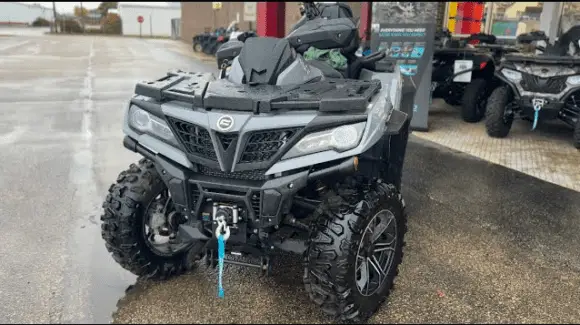
The CFMoto CForce 800 is an 800cc V-twin ATV with 65 horsepower and Bosch fuel injection. Power flows through a CVTech automatic transmission. The problems owners actually report are rear brake caliper failures tied to the parking brake, plus weak batteries and CVT belt wear, with break-in shortcuts making the list too. The old writeups claimed carburetor tuning and ECU failures, and neither matches what owners describe.
This guide is built from CFMoto’s official spec page and real owner threads, and it covers what fails and how to fix it.
Fuel Injected, Not Carbureted: The Real Specs
The first thing to clear up is a claim that keeps showing up in older articles about this machine: that you need to jet the carburetors. The CForce 800 has run Bosch electronic fuel injection since the model arrived, so carburetor tuning advice does not apply. CFMoto’s 2020 spec page lists a V-twin, 4-stroke, SOHC, 8-valve engine at 800 cc, making 65 horsepower at 7,000 rpm and 53 foot-pounds of torque at 6,000 rpm.
The CVTech transmission shifts through P, R, N, H, and L with an easy-shift gate, and the engine brake is part of the CVT package. Electronic power steering is standard equipment, not an option.
The rest of the package matters for maintenance planning. The fuel tank holds 7.3 gallons, curb weight is 970 pounds with 873 pounds of towing capacity. A 3,000-pound winch comes standard, and ground clearance sits at 11 inches. If you are shopping used machines, this spec sheet is your baseline for spotting swapped or worn parts.
It is also the reference point for every problem below, because most of the failure talk on forums does not match what the machine actually is. On the trail the 800 feels like a mid-size machine with big-machine torque: it lugs happily in high range, and the EPS keeps the bars light at low speed. That character is why the failure reports that follow stand out, because they are about ancillaries, not the drivetrain core.
Rear Brake Caliper Failure: The Top Owner Report
The most specific failure reports on the CForce 800 center on the rear brakes. One owner bought a new machine and took it on a 30-mile break-in run, then lost the rear brakes with less than five hours on the clock. The rear caliper had blown out. A dealer technician replied in the same thread and said his shop sees one or two machines a month with the identical failure. In nine out of ten cases, the parking brake had not been fully disengaged.
In the remaining cases, the dash light that should warn you the parking brake is engaged never illuminated, so the owner had no clue it was dragging.
The failure chain is consistent across those reports. With the parking brake dragging, the rear rotors overheat and turn blue, cooking the caliper boot and seals. Brake fluid leaks past the damaged seals. The pedal goes soft and you are left with no rear braking. One owner pushed back that a parking brake should not be able to kill a caliper, which is fair, but the dealer’s experience across dozens of machines is that it does exactly that.
The fix starts before the failure. Always confirm the parking brake lever releases fully, and verify the dash light comes on when you set it and goes out when you release it. After any hard ride, touch the rear rotors: a rotor you cannot hold means something was dragging. If a caliper has cooked seals or the rotor shows blue discoloration, replace both and flush the brake fluid instead of topping it off.
This is the one failure mode on this machine that reliably shows up early, so it belongs on every inspection list. The owner thread about the rear caliper failure is the account to read before you buy, because it includes the dealer’s breakdown of how often each cause shows up.
Replacing the rear caliper on the CForce 800 is a driveway job. Remove the wheel and unbolt the caliper, hanging it without letting the hose twist. Fit the new caliper with fresh hardware, bleed the system until the pedal firms up, and pump the parking brake lever a few times to seat the mechanism. If the rotor is scored or blued, replace it at the same time, because a warped rotor will chew through new pads quickly.
Plan an hour of work and a caliper rebuild kit or new unit, and you are back on the trail the same afternoon.
Break-In Discipline Decides Early Reliability
The first hours on a CForce 800 decide more about its future than any later maintenance. In a 2025 owner thread on r/ATV, a buyer admitted he was reluctant to pick a Chinese brand, then reported no issues through the early hours.
Another owner in the same thread reminded him to stay under half throttle during break-in and to run low gear under 25 mph. The break-in window is roughly the first 20 hours, and the pattern the dealer described in the brake thread lines up with it: machines that get ridden hard before break-in ends show up with early brake and driveline problems.
Heat matters as much as throttle position. A new engine seats its rings and bearings through heat cycles, and holding one rpm for long stretches during those first hours glazes the bore. The practical rules for the CForce 800: keep the throttle under half for the first 20 hours and vary engine speed instead of cruising at one rpm. Stay in low gear under 25 mph on trails and skip full-weight towing until the first oil change.
Change the oil and filter right after break-in, because that service drains the initial wear metals and gives you a clean baseline. It costs a weekend of restraint, and it is the cheapest insurance against the failures that cluster in the first season.
Cold mornings are where skipped break-in shows first: a machine that struggles to idle when cold usually has a worn bore or a tired battery, and both trace back to how the first 20 hours were handled.
Battery and Electrical Issues on the Platform
CFMoto’s V-twin platform has a running theme across models: the stock batteries are marginal. UForce 1000 owner reports document dead batteries and charging problems often enough that the pattern is established, and the CForce 800 shares the same electrical architecture and the same parts pipeline. When a CForce 800 cranks slow, the battery is the first suspect, not the ECU.
The older writeups blamed the electronic control unit and assorted sensors; real owner threads point at the battery first.
Check the battery with a load test rather than a voltage reading, since a surface charge fools a multimeter. Keep the terminals clean and tight, and verify charging voltage at the battery with the engine running. If the machine sits for weeks between rides, a battery tender beats repeated jump starts, which shorten battery life. The EPS-equipped machines carry an extra electrical load, which makes a healthy battery more important.
Owners identify EPS units by a sticker on the frame, so you can confirm what you have without a wiring diagram. A slow cranking CForce that has sat for a month is usually a battery story, not an ECU story, and that diagnosis saves you a lot of money. If the battery tests weak, replace it with the largest unit that fits the tray, and keep the terminals coated against corrosion.
Cheap batteries fail in two seasons on this platform, so the extra dollars on a quality unit pay off.
CVT Belt and CVTech Transmission Wear
The CVTech transmission is the same family CFMoto uses across its utility lineup, and the belt is a wear item you plan around. The UForce 1000 writeup documents CVT belt wear on that platform, and the CForce 800’s belt behaves the same way: it slips under hard acceleration when worn and makes noise; ignore it and it strands you.
The engine brake in the CVTech unit adds load to the belt on downhill runs, which is harder on it than a freewheeling CVT and a reason to inspect it more often than you would on a Japanese machine.
Treat these symptoms seriously: slipping under acceleration or a change in engagement rpm. Belt dust inside the cover is another tell. Inspection is straightforward. Pull the CVT cover, check the belt for cracks, glazing, and frayed cords, and clean the clutch faces while you are in there.
Replace the belt at the interval in the owner’s manual, and replace it sooner if you ride mud or water, which shortens belt life on every CVT machine, this one included. A spare belt in the garage costs little next to a tow out of the woods. Clutch engagement should be smooth and progressive. If the machine lurches or the belt grabs on takeoff, the clutch weights or the belt face need attention before they score the cover.
Parts and Dealer Support in the US
The biggest practical difference between a CForce 800 and a Japanese ATV is not on the trail, it is at the parts counter. CFMoto’s US dealer network is thinner than Honda’s or Yamaha’s, and the UForce 1000 post on this site explains how owners cope: order ahead and keep wear items in stock, while leaning on owner communities for diagnosis.
For the CForce 800, the CVT belt and air filter are cheap, and brake pads are easy to find online, so keeping spares on hand is painless. A spare battery is worth having too, given the platform’s battery record.
Some owners use dealers for warranty work and do the rest themselves. The machine is straightforward to work on, and the service manual is easy to find online. If you buy used with no service history, budget for a first-season service: oil and filter plus a belt inspection, and a full brake system check including the parking brake. That one service catches most of the problems in this post before they strand you.
One tip from owners: register the machine with CFMoto and keep the receipts for the battery and belt claims, because warranty coverage varies by dealer and the paperwork settles arguments.
How the CForce 800 Fits the CFMoto Lineup
The CForce 800 sits between the sport-oriented ZForce machines and the work-focused UForce utility line. The ZForce 950 is the sportier sibling if you want more suspension travel and a racier chassis, and it has its own documented problem set. The UForce 600 is the value work machine, while the UForce 1000 is the big work platform with more capacity and the same battery and belt themes.
Against the competition, the CForce 800 lines up against machines like the Can-Am Outlander 450 and the Yamaha Grizzly 700, both of which have their own owner-documented issues. The CFMoto’s appeal is simple: the most equipment per dollar, with power steering and a winch at a price the Japanese brands do not match. The tradeoff is the thinner support network covered above, which matters more for used buyers than for new ones with a warranty.
What to Check Before Buying a Used CForce 800
Used CForce 800s are cheap enough that the inspection matters more than the price. Start with the rear brakes. Blue or discolored rotors are the telltale of a dragged parking brake, and a caliper that has been cooked once is likely to leak again. Test the parking brake: it should release fully, and the dash light should confirm it. Pull the CVT cover and look at the belt, because a glazed or cracked belt means the previous owner rode it hard.
Check the battery date code and load-test it, since the stock battery is the platform’s weak point.
Ask about break-in, because a machine with full hours and no service records is a gamble. Confirm the EPS sticker if the seller claims power steering. Run the winch under load, since the 3,000-pound unit is standard and a seized winch is a negotiation point. Take the test ride through the full shift gate, including engine brake engagement, and do a hard brake check from speed.
That test ride covers most of what goes wrong on this platform, and it costs nothing but fifteen minutes. Look at the exhaust and undercarriage for deep rust while you are under it, since mud and road salt shorten the life of a machine that was not washed after rides.
Maintenance That Prevents the Common Failures
Most CForce 800 failures are preventable with a simple schedule. Do the 20-hour break-in properly and change the oil and filter when it ends. Change oil and filter at the manual’s intervals after that, and keep the air filter clean, especially in dust. Inspect the rear brakes after hard rides, and verify the parking brake releases every time you ride.
Check the CVT belt at each service and clean the clutch faces; replace the belt on schedule rather than waiting for a trail failure.
Load-test the battery each season and keep it on a tender in storage. If you ride mud or water, add a belt inspection to every trip, since wet conditions accelerate belt wear. None of this needs a dealer, and together it covers every failure mode owners actually report on the CForce 800.
Bottom line: the CFMoto CForce 800 is a well-equipped V-twin with real owner-reported failure patterns, and they cluster in four areas: rear brakes and break-in discipline, plus the battery and CVT belt wear. The EFI system is solid and the engine itself is not the problem. Buy one with a documented break-in and keep the brakes and belt ahead of the wear curve; you get a lot of ATV for the money.
Skip those checks and the machine will find your wallet.
If you’re ordering supplies, CVT belt and synthetic ATV oil are the items owners reach for first when they start working on these machines.

