
As an Amazon Associate I earn from qualifying purchases. This article contains affiliate links that may earn a commission at no extra cost to you.
The Can-Am Outlander 570 is a mid-size workhorse that has sold well since it arrived in 2017, and for good reason: a liquid-cooled Rotax 570 V-twin making 48 horsepower per the official Can-Am specs, a CVT with high and low range, and selectable 2WD/4WD with a locking front differential.
It is not trouble-free, though. Owners on the Can-Am forums report the same handful of failures again and again: sputtering and backfiring that points at fuel delivery, stator and voltage regulator deaths that leave you on a charger, power steering drift on DPS models, CVT belt wear in mud, and low range that pops out of gear.
This guide walks through each problem, what causes it, and the fixes owners actually use, plus what to check before you buy a used one.
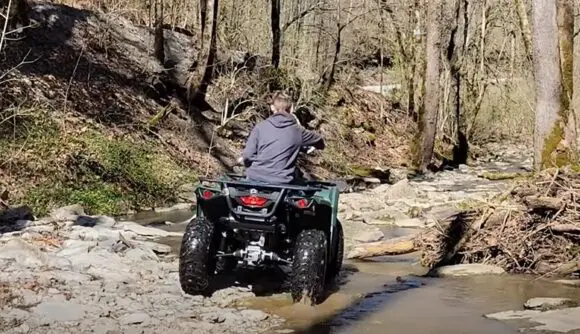
Sputtering, hesitation, and backfires under load
The most common 570 complaint on the forums is an engine that stumbles when you crack the throttle, especially from a stop or with the machine in gear. It can sound like detonation: a loud, periodic knock plus sputtering, and the ATV loses all pulling power.
In one long thread on the Can-Am ATV forum, an owner of a 2018 Outlander 570 Max DPS described exactly that after a short trail ride. The engine idled fine and revved in neutral, but in gear it knocked and sputtered and would not move the machine under load.
Another owner bought a leftover 2018 with just 50 miles on it and got hard starts, chugging, and backfires the instant he touched the throttle, followed by a stall. Neither bike threw a check engine light.
What causes it varies, and that is what makes this one frustrating. Start with the cheap stuff. Fouled plugs are common on machines that sit, and one owner in the same thread found a bad plug after replacing fuel and filters. Next comes fuel quality. These bikes sit for months between rides, and ethanol gas absorbs water.
One 570 owner drained his tank, refilled with fresh gas and a dash of injector cleaner, and still had the problem, which is the point where the fuel pump and injectors become suspects. The forum consensus: check fuel pressure with the machine running, because a weak pump can cause weird rpm and power issues without throwing a code. You can also pull the line off the pump and confirm it streams fuel with the key on.
If pressure is fine, the idle air control valve and MAP sensor are next on the list, and both are worth cleaning before you pay a shop. Finally, there is a fuel sock inside the tank that acts as the filter, and a clogged one starves the pump the same way a dead pump does.
The practical order of operations from that thread: new plugs gapped to spec, fresh fuel, clean the IACV and check the MAP sensor, then a fuel pressure test before you replace anything expensive. Most of these machines come back to life with plugs and fresh fuel, and the rest respond to a fuel pump. If yours hesitates only from a stop and pulls hard once rolling, fuel delivery is still the first place to look, not the transmission.
Stator and voltage regulator failures
On the shared 450/570 platform, the charging system is the most expensive recurring electrical failure, and it is rarely the stator’s fault alone. When the voltage regulator overcharges, it cooks the stator windings, and owners who replace only the stator end up doing the job twice.
The 570 uses the same charging architecture as its little brother, and the symptoms are identical: a battery that keeps dying, dim lights, and, on some machines, a gauge that flashes a fail warning before the electrical parts start dying. One owner measured charging voltage climbing toward 17 volts with a bad regulator still in place, which is the smoking gun.
The fix starts with a multimeter on the battery. You want roughly 12.6 volts at warm idle and about 14.4 volts when you rev the engine. Anything north of 15 volts points at a regulator that will fry a stator, and a battery that reads low at rpm points at a stator that is already weak. If either reading is off, replace the regulator and stator together, because a cooked stator usually means the regulator killed it.
The Can-Am Outlander 450 has its own documented charging failures, and the same threads apply to the 570 since the systems are shared.
DPS drift that pulls the handlebar right
570 DPS models use the same dynamic power steering as the rest of the line, and the known failure shows up as a machine that drifts or slowly cranks the wheels to the right even with the front end off the ground. Air pressure and tie rods check out fine, because the problem lives in the steering electronics. The steering angle sensor, the SAS, loses its zero point, and the DPS motor fights to steer the bike even when you want to go straight.
There is no home adjustment that fixes it properly. A dealer reset with the BUDS diagnostic tool re-zeroes the sensor, and owners who tried to beat it themselves got nowhere until the shop did the reset. Have them verify the DPS firmware is current while they are in there, since Can-Am has changed steering behavior in software over the years.
Before you book that appointment, do the cheap checks: tire pressure, tie rod ends, and a wheel alignment. If all of that is good and the wheels still drift in the air, it is the SAS. This is the same failure path we documented on the 450, so read the full DPS breakdown in the Outlander 450 writeup if you want the thread details.
Overheating and radiator air pockets
The liquid-cooled 570 twin runs warm in normal use, so when a machine drops into limp mode after half an hour of riding, something specific is usually wrong. The most common cause on this platform is an air pocket in the cooling system, often from day one. Dealers doing setup regularly top up the overflow tank and never check the actual radiator, and a partially empty radiator overheats exactly like a failed pump.
Check the level at the radiator cap with the engine cold, bleed air from the bleeders on top of each cylinder head after any coolant service, and confirm the fan kicks on when the gauge climbs.
Mud is the other killer. The radiator sits low in the front, and packed mud between the fins will defeat any cooling system, so blow the fins out after every ride in wet conditions. A winch fairlead or accessory mounted in front of the radiator deserves a look too.
Heat complaints are common enough on the 570 engine family that a 2019 Renegade 570 owner started a thread about the bike getting so hot it burned his legs, and the discussion landed on the fan threshold, with one owner having his fan reprogrammed to kick on at 185 instead of the stock 202. The Outlander 570 does not cook riders the way a Renegade does, but the cooling system is the same size, and the same air pocket and airflow checks apply.
The overheating section of the Outlander 450 guide covers the bleeding procedure in detail.
CVT belt wear and the aftermarket belt trap
The CVT is the 570’s best feature on the trail and its weak point in the mud. Belt life collapses when the belt gets wet and gritty, and owners who ride deep mud budget for belts the way other riders budget for tires. Squeal on takeoff and sluggish engagement are the early warnings. When you run a belt hard, pull the cover, clean the clutch faces, and check for glazing before you park it for the season.
A cheap belt job beats a smoked clutch every time.
There is also a pure aftermarket trap. A 2022 Outlander 450 owner bought a heavily advertised belt for $170 and found it sat a quarter inch proud of the secondary clutch, with plastic shavings blowing out of the CVT snorkel on a short test roll. The forum identified that belt number, WBB302, as correct for the Outlander 570 and some of the twins, but not for the 450.
So if you own a 570, the WBB302 family is the one to cross-reference against your OEM part number, and if you own a 450, stay away from it. The same belt family carries into utility duty on the Can-Am Defender HD5, where owners see matching wear.
Verify fitment against the OEM number for your exact model before buying aftermarket, and keep a spare belt in the trailer if you ride mud.
Low range that slips back to neutral
A 570-specific complaint that shows up on the forums is low range that pops out under load. One owner of a 2017 Outlander Max 570 detailed it after a CVT service: he cleaned the primary clutch, replaced the one-way bearings and friction washer, and installed a new Gates belt, and everything worked until he selected low. A few feet of acceleration and the machine slipped out of low with a grind from the front diff, then no forward movement.
The replies pointed at the gear selector linkage being out of adjustment, or the shift lever not being fully seated in the low notch. It is worth knowing that a low range that drops out is a linkage issue, not a transmission rebuild, and the fix is adjusting the linkage and making sure the lever clicks fully into the notch.
The full exchange is in the low range thread on the Can-Am forum.
Clunks from the rear: sway bar bushings
If your 570 develops a loud metal clunk from the back end when your weight shifts or the trail rocks the machine side to side, check the rear sway bar before you suspect the driveline. The bracket bolts work loose and the bushings wear, and the bar starts banging against the frame. It has been reported on machines with only a few hundred miles. Have a friend rock the machine side to side and watch where the sway bar mounts to the frame.
Tighten the four bracket bolts and re-check, and replace the bushings if they are worn. The BRP cushion part is 706 001 098 and you need two. Owners describe it as a 30 dollar fix you can do in the driveway, and the same part and procedure apply across the 450/570 platform, as covered in the Outlander 450 guide.
Cold-start and starter clutch troubles on 2018-2019 units
On 2018 and 2019 machines, cold weather starting is a known weak spot. The starter clutch refuses to engage on cold mornings, so the engine clicks or spins without firing, and the fix is the updated bendix spring, part 420238311. If you own one of those years and the starter sounds lazy on cold mornings, that spring is the first thing to ask about at the dealer.
If you are buying used, arrange a test start on a cold morning before you hand over cash, because this is a hard one to spot on a warm afternoon test ride. It is the same failure and the same updated part across the 450/570 platform, detailed with owner reports in our Outlander 450 problems article.
Weak headlights and small electrical nags
The factory headlights are a running joke among owners, who describe the 35 watt bulbs as two candles on the front bumper. A 2017 570 XT owner started a thread asking what fits in the opening next to the headlights, and the answers ranged from higher wattage bulbs to LED conversions to full light bars, with plenty of warnings that cheap LED bulbs do not fit without work.
This is cosmetic rather than a reliability issue, but it is the most common reason owners open the front end. While you are in there, check the battery terminals and grounds, because corrosion at the connectors is what turns a small electrical fault into a burned stator down the road.
What to check before buying a used Outlander 570
Most 570s are honest machines with simple issues, so a used one is a good buy if you run a few tests first. The charging system is the first thing to check, because it is the most expensive failure on this bike. Put a multimeter on the battery and note the voltage at idle and again above 4,000 rpm. You want roughly 12.6 volts at warm idle and 14.4 volts when you rev it. North of 15 volts means a regulator that will fry a stator.
Test start it cold if you can, especially on a 2018 or 2019, and ask whether the starter clutch spring has been updated. Check the steering for drift on a straight flat road, and let it idle long enough for the cooling fan to cycle. Try low range on a short test run to confirm it holds. Look inside the CVT cover if the seller allows it, because belt condition tells you how the machine was ridden, and rock the rear end for sway bar clunks.
With the 570’s numbers, a 5.4 gallon fuel tank and a 1,300 pound towing rating on a 51 inch wheelbase, a clean example with a sorted charging system will give you years of trail time.
If you are cross-shopping, the Yamaha Grizzly 700 has its own set of known issues, and the Polaris Predator 500 is a lighter sport quad from another era.
If you want more machine for similar money, the CFMoto Uforce 1000 is worth a look, with its own quirks to learn.
Maintenance that keeps a 570 out of the shop
Most of the problems above are preventable with a seasonal routine. Test charging voltage at the battery every spring, and clean and dielectric-grease the connectors between the stator, regulator, and battery. Flush and bleed the cooling system per the manual, and blow out the radiator fins after every ride in mud or fields.
Keep the battery on a tender when the machine sits, since a deeply discharged battery makes the regulator work harder than it should. Give the CVT attention after any water crossing: open the cover, wipe down the clutches, and inspect the belt for glazing or fraying. Keep the rear sway bar bolts on the same check schedule as your grease fittings. If you buy a used 570, do all of this in the first month and you will be ahead of most owners.
Bottom line: the Outlander 570 is a capable, honest ATV whose problems are well documented and mostly cheap to fix. Fuel delivery causes the sputtering most owners chase, the charging system deserves respect, and low range that drops out is usually a linkage adjustment, not a rebuild. None of it is a dealbreaker if you know what to look for.
Check the voltage, test it cold, and treat the belt and cooling system right, and the 570 will keep running for a long time.
If you’re ordering supplies, CVT belt and battery maintainer are the items owners reach for first when they start working on these machines.

