
As an Amazon Associate I earn from qualifying purchases. This article contains affiliate links that may earn a commission at no extra cost to you.
The Bombardier DS650 is the big-bore sport quad BRP built from 2000 through about 2006, and it earned a loyal following because it does one thing that matters on fast open ground: it stays planted at speed. Under the tank is a 653 cc liquid-cooled Rotax single that owners say will run right up near 75 mph on stock gearing, with a wide stance and long wheelbase that make it far calmer at speed than most quads of its day.
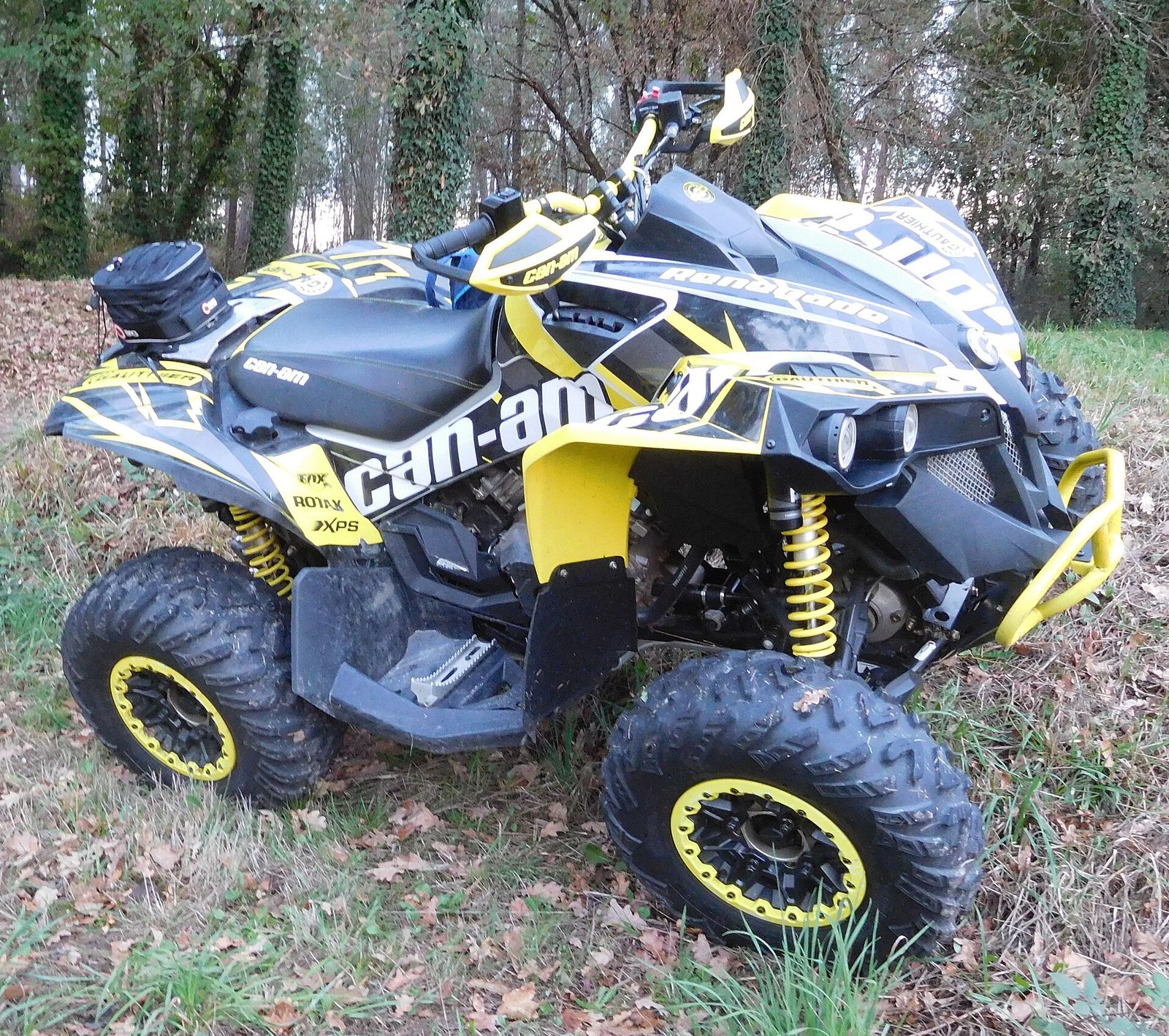
This article covers the verified specs, the top speed owners actually measure, and the clutch, carb, and brake problems that show up on aging examples. It ends with what to inspect before you buy one used.
DS650 Top Speed: What Owners Actually Report
Bombardier never printed an official top speed for the DS650 in the spec sheets I could pull up, so treat any hard number as a real-world figure, not a factory claim. The honest answer from the forums is that a bone-stock DS650 is gear-limited at roughly 72 to 75 mph.
In the long-running “DS650 A good Quad?” thread on ATVConnection, an owner holding a stock DS with just a 15-tooth front sprocket lined up three times against a fully piped and re-jetted Raptor 660 and ran dead even every pass. Gearing is the lever here.
Dropping the front sprocket trades away some top end for stronger pulls, while a taller count lets the motor wind out further on open sand.
What you won’t find is a DS650 that feels frantic. Owners describe the power as smooth and torque-rich rather than peaky, which is exactly what you want when the rev-limiter comes up on long dune runs. The rev-limiter is the speed governor in practice. On stock tires and gearing the motor pulls to the limiter in sixth gear, and that limiter is what caps the run near 75 mph.
Heavier riders, softer terrain, and a tired clutch all shave a few mph off the top.
Bombardier DS650 Specs at a Glance
The numbers below are the figures that match across the archived Bombardier material and what owners confirm on the forums. This is a 2000 to 2006 sport quad, so specs held steady across the run with a few model-year tweaks on the Baja and X editions.
| Engine | 653 cc Rotax single, liquid-cooled, DOHC |
| Bore x stroke | 100 mm x 83 mm |
| Carburetion | Mikuni BSR 42 mm |
| Ignition | Digital CDI |
| Starting | Electric |
| Transmission | 5-speed manual with reverse |
| Drive | 2-wheel drive, chain driven |
| Front suspension | Double A-arm, adjustable preload |
| Rear suspension | Swingarm, adjustable preload and compression |
| Brakes | Dual front hydraulic discs, single rear hydraulic disc |
| Front tires | 21 x 7 x 10 |
| Rear tires | 20 x 10 x 9 |
| Dry weight | About 455 to 475 lb |
| Fuel capacity | 3.7 gal (14 L) |
| Top speed | Roughly 72 to 75 mph, gear and rev limited |
The Engine: A 653 cc Rotax Single, Not an Aircraft Motor
A rumor has circled these quads for years, and it deserves a straight correction. The DS650 does not use a Rotax 912S aircraft engine. The Rotax 912S is a 1211 cc flat-four built for ultralight and light-sport planes, a totally different powerplant from anything Bombardier bolted into an ATV. No DS650 ever shipped with wings attached, and the aircraft-engine story is a myth that refuses to die online.
The real motor is a Rotax 657 single, a 653 cc liquid-cooled DOHC four-stroke with a 100 mm bore and 83 mm stroke. It is a desert-race-derived thumper, the same family that ran in Baja, not a repurposed flying-machine engine.
That distinction matters for buyers. The Rotax motor built its reputation the hard way, hours on the sand and in race conditions. In the ATVConnection good-quad thread, an owner with multiple DS650s and about 7,000 miles of riding reported no reliability problems at all beyond a rear axle bearing replaced under warranty, and another owner called reliability “on a par with or surpassing Honda.” The engine is not the weak point on these.
The weak points live in the peripherals around it.
Clutch and Transmission: Hard Shifts When Hot
The most common driver complaint on the DS is gear shifting that gets stubborn once the motor is hot, usually after half an hour or more of hard riding. That matches the experience shared in a 2013 asking-for-help thread about a 2003 DS650, where the owner described clean changes when cold and crunchy, difficult shifts at high RPM once the machine warmed up.
Most of the time this is a clutch-adjustment or oil issue rather than a gearbox failure. The clutch on these has a cable that stretches, and if the slack grows the clutch drags slightly even with the lever pulled, which makes shifts crunch at high RPM. Owners fix it by adjusting free play at the lever, switching to a fresh synthetic 4-stroke oil, and, if it persists, replacing the fiber plates.
A dragging clutch also explains the common symptom of the quad creeping forward with the lever pulled when it is hot. Catch it early and you avoid a much bigger transmission bill.
Carburetor Reality: Not the Dreaded Unit Some Make It Out to Be
Every carbureted quad of this era gets blamed for starting trouble, and the DS is no exception, but the actual nagging problem is frequently not the carb at all.
A repeated 2004 DS650 Baja X rough-starting thread traced a grinding, knocking noise on startup to the starter sprag, the one-way bearing on the flywheel, that had to be replaced more than once.
One forum regular pointed out these Rotax singles make real compression and “kick back” loudly on a failed start, which spooks riders into thinking something broke when the motor is actually fine.
Still, the Mikuni BSR 42 does need regular care. Stored fuel leaves gum that jets hate, and the common symptom is a bike that idles fine but stumbles on throttle. The fix is straightforward: drain the float bowl, clean the jets, and run fresh fuel. The 42 mm BSR is a well-built unit and not a tuning nightmare once you keep it clean. If the motor cranks but won’t catch, check the sprag first and the carb second.
Brakes: Keeping the Discs Sharp
The DS650 stops with dual hydraulic discs up front and a single disc out back, which is plenty for a 475 lb quad, but age brings its own set of issues. Seized caliper sliders are the common one. Moisture and years of sitting bind the pins so one pad drags constantly, which glazes the rotor and shortens pad life. Owners notice a pull to one side or a soft lever that then grabs.
The remedy is simple and cheap. Pull the calipers, clean and grease the slider pins, and check both rotors for warp before you spend on pads. Replace brake fluid every couple of years because the fluid soaks up water and the lever gets spongy. The rear master cylinder sits low and can trap dirt, so keep the boot and vent clean. Checked regularly, the stock brakes are strong and predictable at the speeds this quad can reach.
The Cooling Fan: The One Breakdown Owners Report
If there is a legitimate known weakness on the DS, it is the cooling fan, not the engine. In the good-quad thread a long-time owner noted the stock fan on his older DS lasted about a year before failing, and the fix was a Spal aftermarket replacement for around $70 that ran trouble-free for four years. A quiet fan is an overheated motor waiting to happen on a trail day, so this is the first thing to verify on any used DS650.
Watch the temperature light during a slow crawl or on a hot day. If the fan does not pull on, check the fan motor itself, then the relay and the temp switch before assuming the worst. It is a ten-minute diagnosis and a cheap part, and replacing the bearing on the fan motor is even cheaper if you catch it before the motor burns out.
Suspension and High-Speed Stability
The DS650’s party trick is how calm it is at speed, and the suspension is why.
In the archived DS650 Baja initial impressions test by ATVConnection in 2002, the editors called the then-new Baja edition nimble despite the 475 lb curb weight, praised the plush sport-tuned suspension as a big upgrade over the earlier twitchy steering, and noted the wide stance inspired real confidence at speed.
That is the DS character in a nutshell: heavy, but planted and smooth.
Owners do two things to keep that feel. They set sag and preload for their weight, because the factory settings skew soft for lighter riders, and they service the shocks as the years pile on. The rear shock’s compression adjuster is a known sore spot on heavily used bikes, so check it moves freely. A well-sprung DS holds its line through whoops and sand bowls that would toss a narrower, taller quad around.
synthetic atv engine oil
Owners of this machine rave about it. See today’s price on Amazon.
What to Check Before Buying a Used DS650
Check the fan first. Test it hot or force it on with the dealer connector, because a dead fan is the most common genuine failure. Feel the sprag by cranking the bike; any grinding or clatter on startup points to the one-way bearing, a known wear item. Test the clutch with the machine hot; a creeping or crunchy shift is a warning that adjustment or plates are due.
Inspect the chain and sprockets, since chain drive on a torque-heavy single wears them fast and a neglected chain can take out the carrier. Check the brakes for dragging calipers and warped rotors, and look under the plastics for rubbed wiring, because the tidy fairings hide damage well.
A DS that shifts clean, starts without clatter, and pulls air in the fan is a quad that will run for a long time.
Keeping the DS650 in Shape
Stick to a simple routine and the DS gives most of what it promises. Change the oil with a quality synthetic 4-stroke oil designed for wet clutches, and remember that a dirty air filter is the fastest way to foul a carbureted single. Drain and replace the brake fluid every couple of years to keep the lever firm, and grease the suspension pivots and axle before each season.
A battery that sits over winter should live on a trickle battery tender, because a drawn-down battery is a common cause of weak cranking that riders blame on the starter.
Keep a bottle of good synthetic quad oil on the shelf and do the clutch cable adjustment before every big ride, not after the shifts start to crunch.
If you are weighing a used Bombardier purchase beyond the DS, the Bombardier Rally 200, Outlander 330, and 2004 Outlander 400 each have their own quirks worth a look, and the Can-Am Outlander 450 is a solid modern alternative if you would rather have four-wheel drive. If a more capable side-by-side is on the list instead, the Yamaha Rhino 450 has its own honest set of issues to consider.
Bottom Line
As a genuine Bombardier DS650 owner myself, the spec sheet only tells you part of the story. It is a 653 cc Rotax single that will honest-to-goodness top out near 75 mph on stock gearing, but the reason people love it is how planted it feels while doing it. The engine and gearbox are durable and honest, and the real-world annoyances are the cooling fan, the starter sprag, and the clutch cable needing attention.
Keep the fan alive, the sprag healthy, and the clutch adjusted, and a DS650 will reward you with years of fast, stable riding. It is a heavy, stubborn, wonderful machine.

